Times of Israel banner


Negev Desert Wins Recognition as a Unique International Wine Region


The Negev is home to over 60 winemakers and received a terroir appellation this year after showing that Negev wines have an identifiable profile.

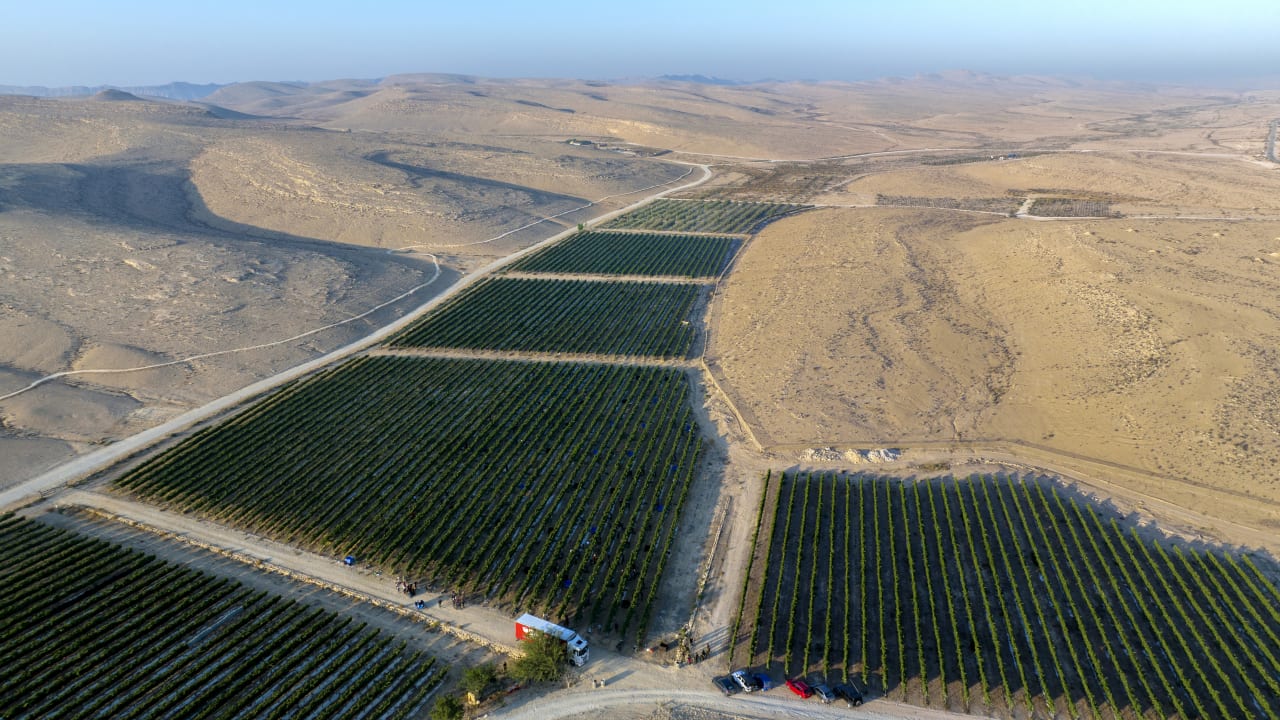
Nana Estate Winery in the Negev, Israel.

An aerial view of the Nana Estate Winery vineyards at the start of harvest season on August 3, 2022 near Mitzpe Ramon in Israel’s Negev Desert. (photo credit: David Silverman/Getty Images)

June 2026 – The lack of water in the Negev Desert helped vintners create a fruity grape that’s unique and easy to drink.

Now the dry, sandy landscape stretching from Kiryat Gat to Eilat is being officially recognized as the Negev appellation, an international wine region, placing Israel’s south and its distinctive desert terroir on the global wine map.

The recognition follows a four-year process in which a consortium of Israeli wine experts demonstrated that wines produced in the Negev have their own identifiable profile.

“If you want to create a wine region, you need to prove that you have something unique and specific to offer,” said Guy Haran, a wine tourism expert who has been part of the process since its inception.

That process includes demonstrating that the region in question has vineyards, wineries, an ancient and modern culture of wine and community, and a specific terroir and soil that’s unique to the region and climate. Haran and his fellow wine experts consulted with historians, geographers, and anthropologists, aiming to show where the Negev terroir begins and ends, eventually compiling a 150-page paper on the region.

“We did official tastings,” said Haran, “including a blind tasting to prove that Negev wines have a specific flavor.

The documentation was handed over to Israel’s Justice Ministry, which manages Israel’s participation in the Lisbon Agreement, an international treaty that enables producers of agricultural goods, including food, wine, spirits, and handicrafts, to create and protect their appellations of origin.

Once the Justice Ministry approved the documentation in April, the Negev appellation became official and globally recognized, said Haran.

The Negev now joins the ranks of globally recognized wine regions such as Champagne, Chianti, Bordeaux, and Napa Valley.

The geographic appellation serves as a legal assurance to consumers that the wine originates from a specific climate and soil environment and is produced according to global standards.

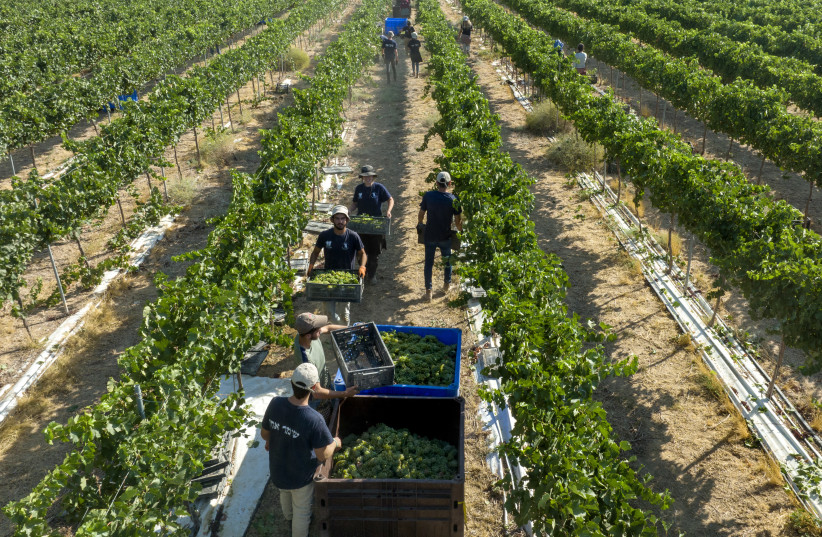
Harvesting white wine grapes in the Negev.

Israeli workers harvesting Chenin Blanc grapes at the start of harvest season on the Nana Estate Winery vineyards near Mitzpe Ramon in Israel’s Negev Desert. (credit: David Silverman/Getty Images)

Israel was first included in the Lisbon Agreement in the 1950s, when the country wanted to preserve and secure the Jaffa brand of oranges.

The Negev now joins the ranks of globally recognized wine regions such as Champagne, Chianti, Bordeaux, and Napa Valley.

In August 2020, a declaration was made for the Judea appellation, Israel’s first official wine region. The Negev wine brand is Israel’s third appellation. “We started with 12 vintners and winemakers in the Negev; now we have 60, producing more than one million bottles annually,” said Haran.

The initiative was led by the Merage Foundation Israel, which has long spearheaded efforts to position the Negev as an internationally recognized wine tourism destination.

The Negev wine region recognition is a milestone, said Nicole Hod Stroh, executive director of the Merage Foundation Israel.

“I see wine tourism as a modern and meaningful expression of contemporary Zionism,” said Hod Stroh. “This recognition strengthens the region’s economic and tourism potential while positioning the Negev internationally as an innovative, high-quality wine region.”

Haran, who travels frequently, leading wine tours around the globe, said he regularly receives support from international wine colleagues for the Negev appellation, even as Israel continues to be the subject of pro-Palestinian hate and boycotts. “When people see pictures of vineyards in the Negev desert, it’s jaw-dropping for them,” said Haran. “Wine connects people; it’s not an arena for fighting.”

Now, after three years of war, he sees the Negev appellation as a designation of national importance. “It’s time for us to celebrate what’s beautiful about Israel,” said Haran. “For me, this is real Zionism. I look at Italian regions that have become wealthy through wine tourism. Hopefully, we’ll be able to do the same for the Negev.”

Read the original article here.

The Negev Foundation is committed to supporting the residents of the Western Negev. Please help these communities rebuild and thrive.

U.S.-Israel AI Hub Planned in Negev Amid Global Tech Race

“Project Spire” would create a secure AI research and manufacturing corridor in southern Israel.

Negev Hebron Hills

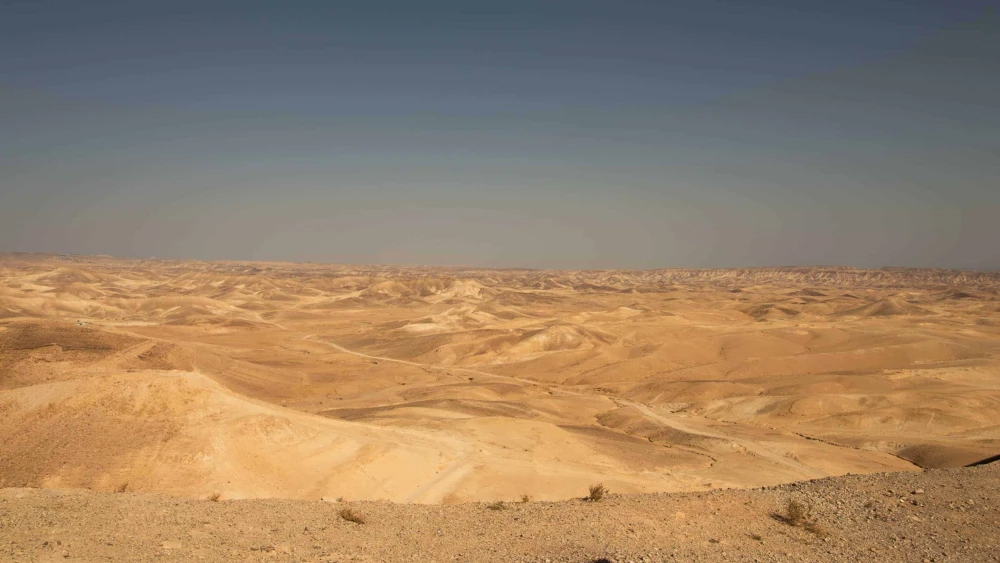
View overlooking the Negev Desert from Mitzpe Midrag, the former Um Daraj police station in the Hebron Hills, Nov. 27, 2025. Photo by David Isaac.

A proposed U.S.-Israel initiative known as “Project Spire” could establish one of the world’s most secure artificial intelligence campuses in Israel’s Negev Desert, according to a new Hudson Institute report. The project is designed to strengthen Western leadership in AI while reducing dependence on Chinese-controlled technology infrastructure and supply chains.

The proposed campus would span three locations in the western Negev and combine AI research, semiconductor manufacturing, data centers, and energy infrastructure into a tightly secured ecosystem. Hudson Institute analysts Michael Doran and Zineb Riboua described the vision as blending “the security of an American military installation and the creative output of a Silicon Valley hub.”

The project comes as global powers increasingly view AI dominance as a defining geopolitical issue. Modern AI systems rely on complex supply chains that include semiconductor production, rare-earth minerals, massive computing infrastructure, and advanced energy systems. Supporters of Project Spire argue that concentrating these elements in a secure allied environment could help protect sensitive technologies from espionage and disruption.

Brig.-Gen. (Res.) Erez Askal

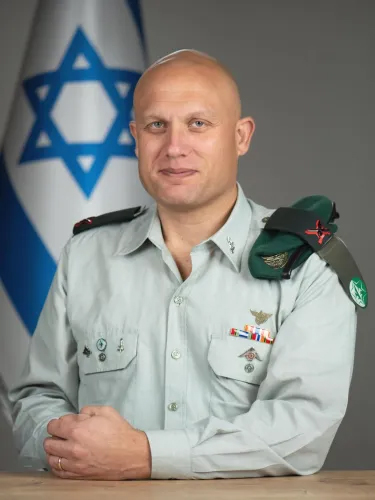
Brig.-Gen. (Res.) Erez Askal, director of the National AI Directorate in the Israeli Prime Minister’s Office, 2025. Credit: PMO.

AI Partnerships

Project Spire is part of the broader “Pax Silica” initiative, a U.S.-led strategy focused on creating trusted AI and semiconductor partnerships among allied nations. The diplomatic foundation for the partnership was formally launched on Jan. 16, 2026, in Jerusalem, where U.S. and Israeli officials signed agreements expanding cooperation in artificial intelligence, semiconductors, space technology, and energy production.

Brig. Gen. (res.) Erez Askal, director of Israel’s National AI Directorate, said Israel has been “working vigorously” to deepen partnerships with leading AI nations, “foremost among them our great friend, the United States.”

The Negev Advantage

The Negev location offers several strategic advantages. Israel already operates highly secure facilities in the desert, including the Shimon Peres Negev Nuclear Research Center near Dimona, while the Defense Ministry continues expanding military and intelligence infrastructure through its “Move to the South” initiative.

The region also provides large open areas suitable for hardened security perimeters that would be difficult to establish in dense urban centers. Planned infrastructure reportedly includes advanced AI data centers, independent energy grids, localized semiconductor fabrication facilities, and specialized research laboratories.

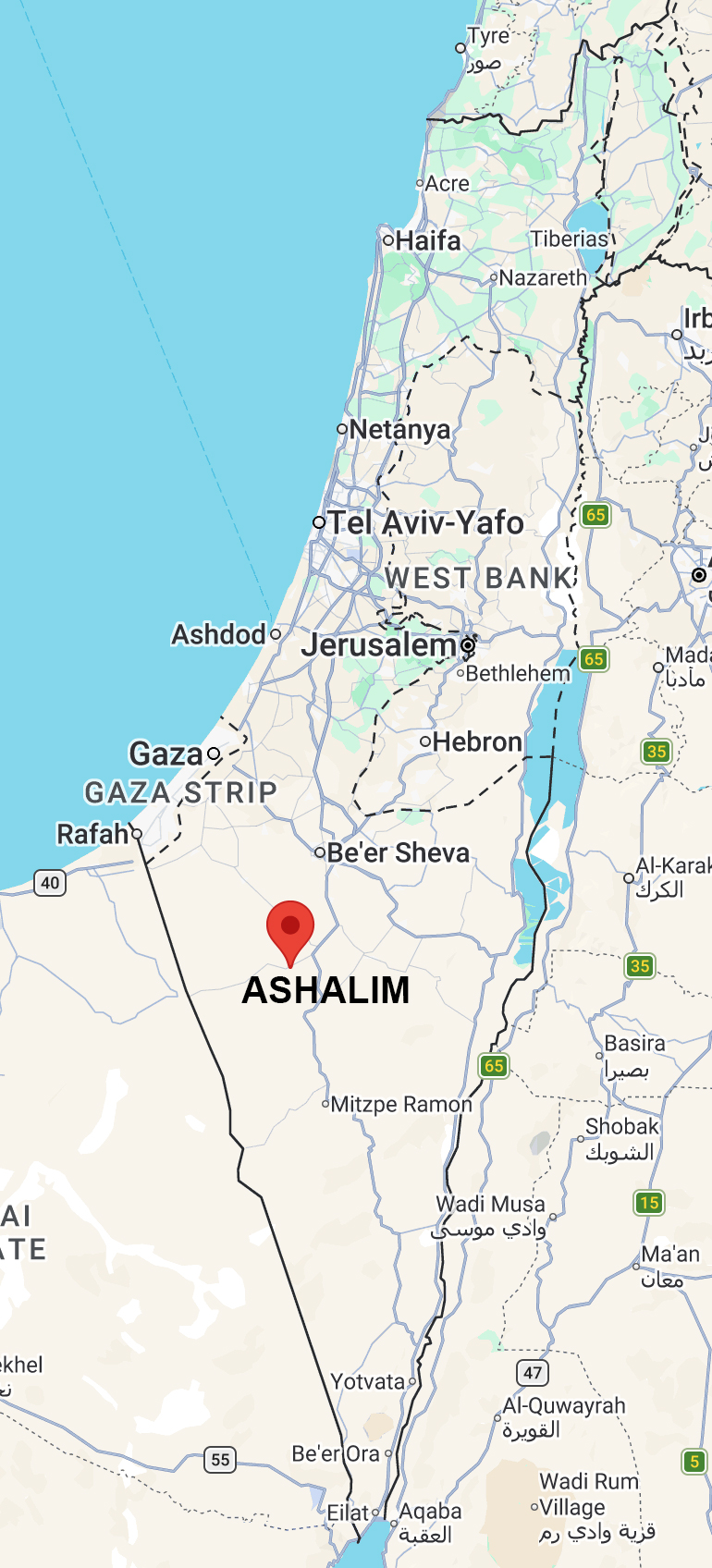
Despite the harsh desert climate, planners believe the Negev can support such a massive project through renewable energy and water-recovery technologies. The nearby Ashalim Solar Thermal Power Station already generates 121 megawatts of electricity, while advanced wastewater recycling systems could help offset the enormous water demands associated with AI data centers.

Israel as a Global Tech Hub

Israel’s existing technology ecosystem is another major factor behind the proposal. More than 400 multinational corporations operate research and development centers in Israel, including Intel and Microsoft. NVIDIA, currently one of the world’s leading AI hardware companies, employs more than 5,000 people in Israel and recently announced plans for a multibillion-dollar campus expected to house 10,000 workers.

The Israeli government is also expanding domestic AI capabilities. Earlier this month, Israel approved a plan to secure 5,000 advanced AI processors annually through 2032 and launched a national AI supercomputer project operated by cloud provider Nebius.

Supporters say Project Spire could transform southern Israel economically by bringing major infrastructure investment, high-paying jobs, and new opportunities for startups and research institutions. They also argue the initiative would further deepen the U.S.-Israel strategic alliance and strengthen Israel’s position in the global AI race.

However, critics have raised concerns about sovereignty and technological independence. According to the report, the proposed framework would place ownership of core AI intellectual property and advanced chip designs under American control. Long-term land leases for U.S. use and strict American security protocols have also sparked concerns about creating a heavily restricted American-controlled technology enclave inside Israel.
Others warn the initiative could draw Israeli AI and cybersecurity talent away from local startups and defense agencies. Doron Levin, CEO of Israeli AI cybersecurity company Harpsicord, called the proposal “a double-edged sword,” noting that while Israel must remain competitive in AI for national security reasons, “there is no such thing as a free lunch.”

The U.S. State Department has not officially confirmed details regarding Project Spire.

Read the original article here.

The Negev Foundation is committed to supporting the residents and communities of the Negev. 


YOUR SUPPORT MATTERS

Blending Ingenuity and Practicality

Sharon Cherry transformed harsh desert conditions into an opportunity and a successful farm.

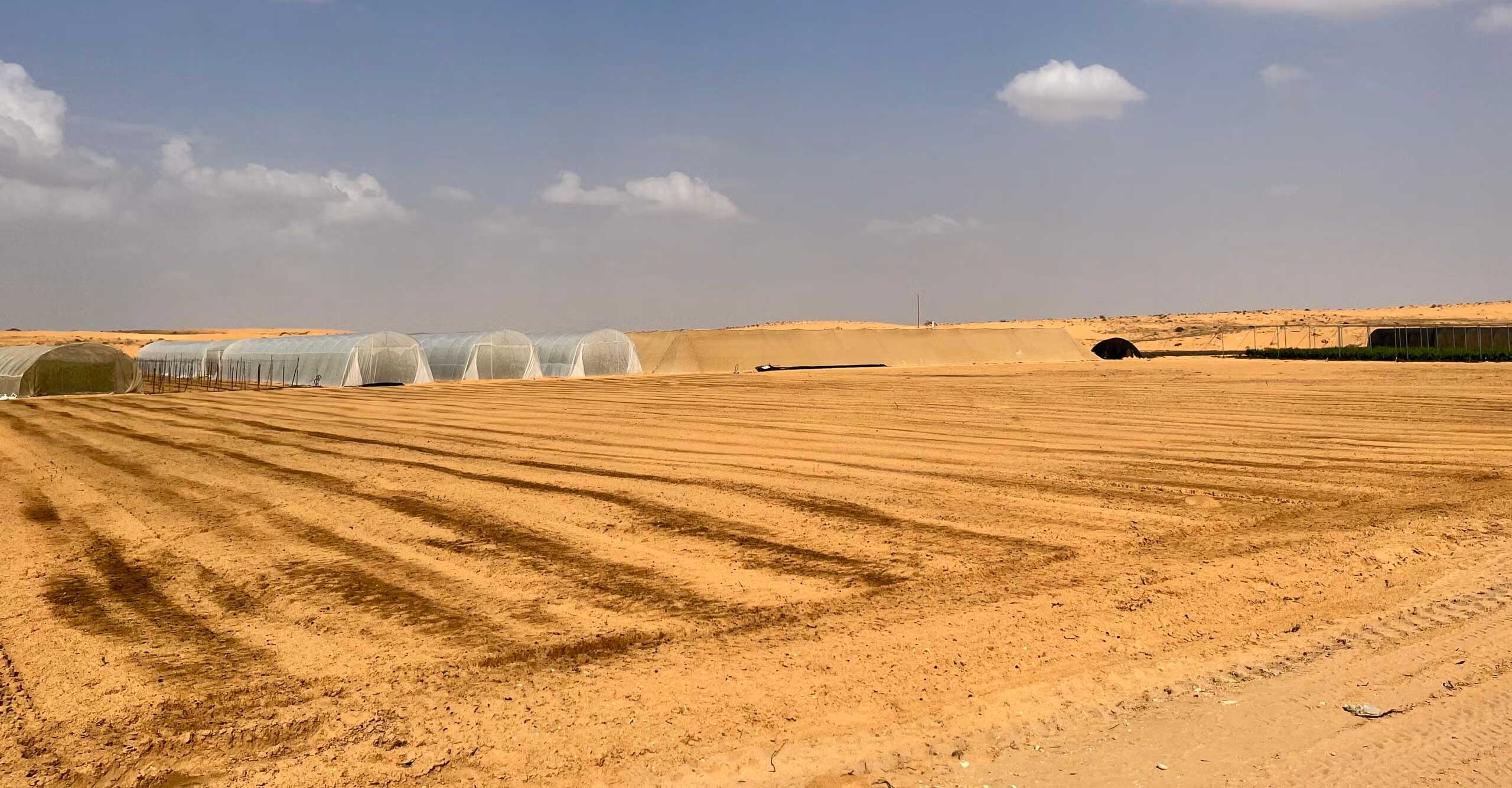
Be'er Milka Farm in the Negev.

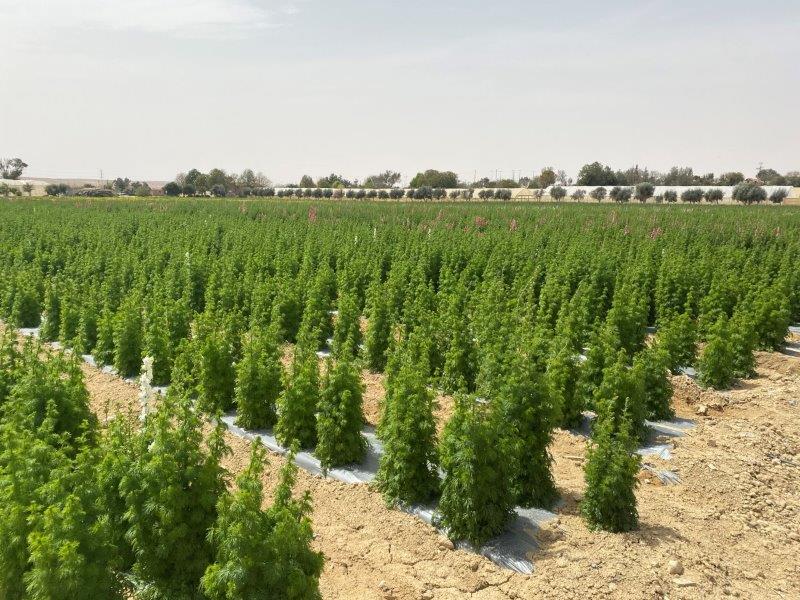
Farm Be’er Milka in the Negev.

Deep in the Negev Desert, not far from Israel’s border with Egypt, lies Be’er Milka, the farm of Sharon Cherry. Cherry was offered a sun-scorched plot of sandy land by the Israeli government ten years ago, after he and his wife decided to move from Tel Aviv. “We had no experience, we had never even grown flowers before,” Cherry explains. “Everybody told us: You are crazy. You are going down. Don’t do it.” 

Farmer Sharon Cherry

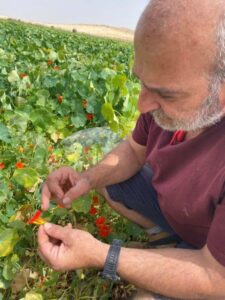
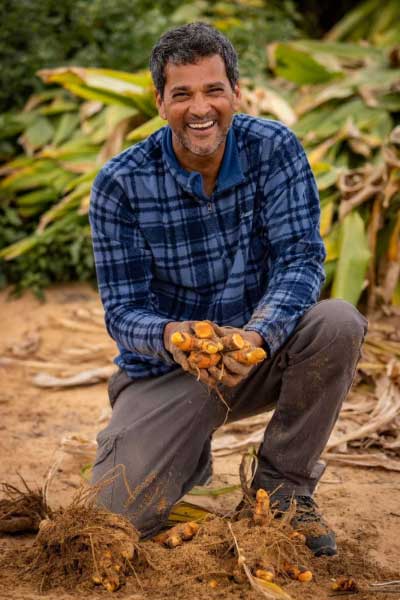
Sharon Cherry holding turmeric grown in his greenhouses.

Cherry was provided with access to electricity, a pipe of brackish desalinated water from the sea, a pipe of fresh water, as well as technical assistance from the nearby Ramat-HaNegev Desert Agro Research Center. Today, he runs the biggest farm in Israel, specializing in vegetables from India, which is the country of his parents’ birth. These include spinach, fresh turmeric, mushrooms, and okra; Cherry says he is the only grower in the world growing okra in greenhouses, where conditions allow the plant to turn from flower to fully grown vegetable in just a few days.

“Where our farm is situated is actually the area of the world best suited to cherry tomatoes, as a result of the hot climate, soil and the salty water from the sea, but this is a very competitive market, and my wife and I did not want to be controlled by fixed market prices,” says Cherry. “Therefore, we brought something new to the Israeli market.” 

Cherry uses a combination of low-tech solutions, such as a network of vents, water pipes, and screens that heat and cool his plant nursery, alongside more high-tech, computer-controlled methods. When it is 40°C outside, he can make it 26°C in his greenhouses; when it is 2°C outside at night, it can be 12°C inside. 

I was drawn to the stark beauty of the desert landscape and the immense potential it held for agricultural innovation.
Sharon Cherry

The highest cost, says Cherry, is labor, which is close to 50% of his expenses. “On my farm, we see declining soils and salty water as an opportunity, not a problem,” he says. Cherry also generates power from solar PV panels, which is sold back to the grid, presenting the opportunity to become a net-zero enterprise one day. 

Cherry says, “I’m optimistic about the future of desert agriculture and the potential for continued innovation in this field. With ongoing research and collaboration, I believe we can unlock even more sustainable solutions to feed a growing population while preserving our natural resources. By harnessing the power of technology and embracing a spirit of innovation, we can create a brighter, more sustainable future for generations to come.”

The Negev Foundation is committed to supporting the residents of the Negev. Please help these communities thrive.


YOUR SUPPORT MATTERS

  Featured Post: Maureen Gilmer

One Drop of Water Changed Everything

Sometimes, the biggest solutions really do start with a single drop.

Drip Irrigation illustration

Simcha Blass’ discoveries have transformed arid regions around the world, feeding millions where drought and famine have been historic.

Agriculture was forever changed in the late 1950s when three monumental issues collided. First, the scarcity of rubber during World War II stimulated the rapid development of plastics.

Second, Holocaust survivors streamed out of Europe and Russia to found a homeland in Israel.

Third, the desert of Palestine had to be made fertile again to support a rapidly growing population of refugees. It was in the midst of this whirlwind that Ben Gurion challenged his people to “make the desert bloom.”

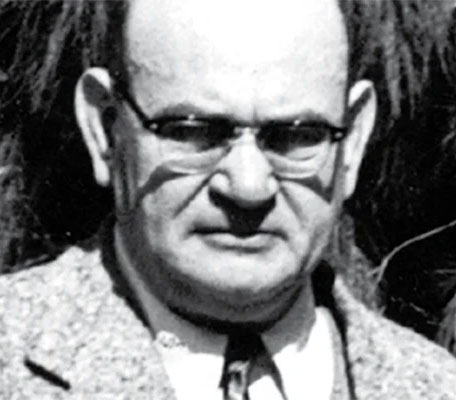
Simcha Blass

Simcha Blass

A Polish-born Jewish engineer and immigrant, Simcha Blass, working at the epicenter of Israeli hydrology, sought to help his people grow crops in the desert where water was in extremely short supply. It was he who purchased the pipes used in London to fight fires during the Blitz and shipped them to Israel to provide water to formerly dry lands. This pipeline enabled the establishment of eleven new Jewish settlements in the Negev on that historic Yom Kippur night in 1946.

Blass was well aware of the development of polypropylene and polyethylene between 1930 and 1940. American scientists had rapidly put these plastics to use in the war effort, and Blass studied their new applications. Armed with the latest science, Blass put his mind to solving the agricultural irrigation problem in Israel.

His story of the birth of a new form of irrigation reads much like a Biblical parable with many different versions, but in all, the result was the same.

While Blass was the primary hydraulic engineer in Palestine, he spent much time in the desert. One day, he sat beneath a large fig tree to eat lunch. A pipe coupler nearby was perpetually dripping, and was the only sign of moisture to this tree. The engineer could not understand how such a large tree could survive with so little moisture, so he dug a hole to determine exactly how the drops of moisture could feed such a large plant. His discovery was a deep, onion-shaped wet zone underground that remained perennially moist because there was no surface evaporation. The fig had tailored its root system to feed off this single column of moisture in the ground, growing just as productively as other fig trees under flood irrigation.

This epiphany drove Simcha to recreate such a scenario with a new kind of water-conservative irrigation.

The solution had to be affordable and easily manufactured to meet the growing demand of the Negev kibbutzim. Using new plastics, he worked to solve problems and exploit the hydrology of flow rates, friction loss, and pressure changes. By 1960, Blass had a prototype emitter about the size of a thimble that compensated for pressure delivering water at a static rate.

The story goes that there was much skepticism because agriculturists who were trained on the large spreading root zone mentality simply did not trust such a solution. They could not think outside the box.

Blass approached each kibbutz with his prototype but most were naturally unwilling to invest in such a curious new irrigation product.

Finally, Kibbutz Hatzerim, was willing to give it a try. The new emitters were such a success that Blass patented his new products. In 1965, he established Netafim (Hebrew for “drops of water”) Irrigation Company, giving the kibbutz 80 percent ownership and himself just 20 percent to better support the emerging nation.

Today, Netafim is a worldwide presence wherever there is a need to solve problems of aridity and desertification.

Every drip irrigation system in our desert can be traced back to Simcha Blass and his pioneering work in Israel. Necessity became the foundation for many innovations in this unusual style of water delivery. His discoveries have transformed arid regions around the world, feeding millions where drought and famine have been historic.

Read the original post here.

The Negev Foundation is committed to supporting the residents of the Negev. Please help these communities thrive.


YOUR SUPPORT MATTERS

Connecting to the land: Israeli agriculture for growth and healing

I went looking for hope for the country, and found it with young people, in the fields, under an open sky, nary a cellphone in sight.

Founder Nir Amitay, at the Lahav Farm for trauma treatment. (courtesy)

Many Israelis have a growing sense that we are in a time warp, resonant of other dark periods; that the “vacation from Jewish history” is over. With that, a hopeful sense that while our leadership is beyond disappointing, our nation is resourceful and brave. While those in charge look for ways to blame others and pass the buck, a surprising new generation looks for ways to take responsibility and initiative, drawing inspiration… from history.  An eager return to the earth is one such example — seen as both a national duty and a tool for facing our many challenges. The resurgent dominance of Israeli agriculture — particularly in education and in healing the trauma wrought by war — is a window into the DNA of the Israeli national ethos: resilience, innovation, and community. 

I hit the road and went looking for hope… and I found it. Lots of it. Where I usually find it: with young people, under an open sky, a hundred kilometers away from any city street named after a Zionist founder, but much closer to what those founders believed.

A dozen teenagers in work boots sit eating breakfast at the far end of a vineyard, four hours into their school day. It is barely 9 a.m. Against the charcoal skies and deep mountain shadows of the Golan Heights, near Kibbutz Ortal, they could be a sportswear ad, but they soon pack up the picnic with zero selfies taken (no phones allowed!) and resume the day’s task of attaching irrigation pipes to a trellis. Purposeful, efficient, and completely relaxed with each other, the performative nihilism we’ve come to expect in this demographic is noticeably absent. Instead, there is easy competence and ambient optimism. 

Later, they will attend required classes on the way to achieving full matriculation, like their peers in more conventional schools back home, who, as one of them puts it, “are in a constant loop of boredom.” These kids will participate in enrichment activities, such as guest lectures on a topic of interest, which they have organized themselves. They will prepare food and do laundry, and tend to a communal garden that the previous graduating class planted for them as a going-away gift. (They will not use their phones at lunch, even when allowed to.) 

One of the kids will take inventory of the laptops the students use; one will work on the menu, shopping list, and food budget; and another will coordinate tomorrow’s shift work with the farmer.

“If we don’t do it, it won’t happen,” shrugs Telem, a senior from Malkia, a kibbutz not far from Kiryat Shmona, who will be drafted to an elite infantry unit at the end of the summer. With this offhand comment, he sums up not only an educational philosophy at the junction of Montessori and Transformative Leadership theory — building excellence and agency as internal processes, in the context of communal goals — but the century-old ethos of the halutzim (pioneers) who built Israel.

The same gritty frontier that was tasked by Zionist farmer-philosophers a century ago with growing a people is now doing another shift… growing people.

The resurgent dominance of Israeli agriculture — is a window into the DNA of the Israeli national ethos: resilience, innovation, and community.

New Old Things

The Adam V’Adama high schools — founded a decade ago in Hatzeva in the Arava region, and now operating in six locations throughout Israel’s North and South — were established by the HaShomer HaChadash organization to address two major challenges. One, a long-faltering and uninspiring national education system, alongside a serious shortage of agricultural human resources. The average age of the Israeli farmer now approaches 65; this sector’s workforce is mostly transient, and the industry needs some 700 new farmers annually, according to HaShomer HaChadash co-founder On Rifman, who sees part of his ambitious mission as providing them.

This agricultural crisis was already years in the making due to Israel’s land shortage and arid climate, before being exponentially magnified by the ongoing October 7th war — a war that points to the central, overarching challenge addressed by HaShomer HaChadash: the importance of agricultural communities in securing Israel’s geographic periphery, and the crucial role of empowering those communities with volunteers doing security and agricultural work. 

Ran Kaminsky founded the Golan branch of that organization’s Adam V’Adama school just over six years ago, in honor of his native Kibbutz Ortal’s 40th anniversary, and he serves as its principal. With over 60 students on that campus alone from religious, traditional, and secular homes, the student body is the same kind of self-selecting national microcosm that one finds in elite army units: a melting pot that is more of a refinery.  

“These kids bring a youthful spirit that revives everything,” he says, “which is required for agriculture’s future.”  Young high-achievers have, for decades, been aiming their excellence and idealism at “the next big hi-tech exit,” but he is seeing an ideological shift, particularly in light of Israel’s current state of emergency. 

Co-founder Rifman, an ex-special forces officer and legacy farmer (his grandparents helped establish Kibbutz Revivim in the pre-state era Negev), post-high school educator, and rancher’s rights activist, agrees. He notes that the kibbutz-driven practical Zionism that founded the country, failed to pass its ideological DNA to secular Gen Xers and millennials; the vacuum created by a lack of spiritual confidence left the kibbutz movement in crisis. But an increasing number of kids with an entrepreneurial spirit are turning their passion for fixing the world back toward the national interest of agriculture. 

While agricultural educational boarding schools have been available in Israel since its inception, more recent iterations of the model have had different missions, such as addressing kids with attentional, emotional, or behavioral challenges; or a national-religious ideal in which working the land has a redemptive component, and in which the entire land of Israel is considered holy. 

Apparently, like a long forgotten bulb yielding a surprise plant a few seasons down the line, the love of land and labor as a foundational, mainstream Israeli value – and as a “way to become” –is back. 

Doing the Work

Tzuriel Assaf is a poet and eco-philosopher behind the content-rich program curriculum at HaShomer HaChadash. When asked what it is about agricultural work in particular that provides their volunteers and students with a sense of purpose, agency, and mental clarity, he cites agricultural Zionism’s high priest, AD Gordon: human development — and by extension, Jewish national rehabilitation — is contingent on physical work and nature. He adds Scottish-American wilderness advocate John Muir’s assertion that “going in” to enact personal processes requires “going out,” and observing nature’s own way of moving forward. 

Assaf further contemplates, in a post-October 7th Israel, the role of a physical place in providing comfort — evoking the mourner’s greeting of “HaMakom yenachem etchem” — May the place (God) comfort you.

 As it turns out, agricultural work and nature are being widely employed not just for a better educational process, but also to help heal the trauma wrought by war. …Because you connect most intensely to a land that is home.

Yair W. is a Battalion Medical Officer (Ta’agad) in the Givati Brigade who has spent much of the last year in Gaza. He recently participated, with other members of medical combat teams, in a healing retreat at Lahav Farm, part of the Rimon Farm network, “for people who saw things. “Saw things” — like “friends dying in your arms.” 

The farm is located at the edge of the Lahav Forest south of Lachish, overlooking the arid landscape en route to Be’er Sheva — a visual metaphor for the work done in this place, to reconcile growth with loss. To wit: it is named for shepherd and counter terrorism (reserves) officer Liran Almosnino, who was killed in action on October 7th at Holit, just as he had taken the helm managing Havat Lahav. 

What Grows Here

Rimon Farm, a quiet, well-kept homestead down a dusty country road through the woods, runs on a day model, where students who have fallen between the cracks of other frameworks come to work, learn, and heal. They are referred, usually by the Department of Welfare, for another chance at turning themselves around. 

“They come to return to the basics, to themselves,” says Rimon’s Director of Youth Programming, Gidi Wolfson, a criminologist who spent nearly 20 years in youth crisis and welfare educational frameworks before joining the farm. His first day on the job was, incredibly, October 8, 2023.

“Screens and other addictions take them away from themselves. Farming brings them back.” He adds another important feature of farm work that has specific relevance for kids having trouble at home, or in trouble with the law: “Working with nature, slow processes, raises frustration and allows people to learn distress tolerance and patience — so they can grow into adults motivated and capable of benefitting society.”

On weekends, in a scene straight out of a Morgan Wallen song, the farm opens its doors to young families from neighboring southern communities for a country fair — where the Rimon youth are in charge of food, activities, and selling the produce they grew. These events are part of Amitay’s vision to have every central growth process be mutual for those treated on the farms and those in their communal vicinity. Symbiosis, after all, is one of nature’s greatest techniques.

Wolfson says it is also part of the process. “The kids learn to be in charge, accountable, serving people in a normative situation, with some amount of pressure. They learn to be assertive, but polite and patient. Boundaries, connection, caring for others… Part of a community.”  This community model is expanding to two campuses near the Gaza border, with farms recently opened to serve the needs of long-battered communities like Sderot, with an additional focus on secondary trauma.

More than 5,000 soldiers and security personnel — including some of the police officers who arrived at the scene of the Nova massacre and have had trouble communicating in its aftermath — have undergone trauma processing workshops at Lahav and a newer campus near Shekef since October 7th, in cooperation with the IDF’s Rehabilitation Division, the GOI’sDefense, Welfare, and Health Ministries, and other governmental organizations.

In some cases, coming to the farm stands in for psychiatric day treatment hospitals. The JNF-KKL and several North American Jewish Federations are major partners as well, and Amitaysees the support of the Jewish community abroad, as more of the aforementioned symbiosis: “We can not live without each other,” he says, and mentions a new project being explored, sharing methodologies with addiction treatment farms in the US.

I wonder aloud to Amitay: Is it simply the agricultural process, or the quiet community, that does the healing, or is there some specific, possibly spiritual, land-of-Israel element in the mix, a sentiment I have heard many times from religious farmers.

“Our healing comes from the land of Israel,” he answers, reconciling multiple streams of Jewish and Zionist thought in his straightforward, but poetic way, “because you connect most intensely to a land that is home.”

Read the original post here.

The Negev Foundation is committed to supporting the residents of the Negev. Please help these communities thrive.

Strengthening the south: A new headquarters for ICL in the heart of Be’er Sheva

ICL, considered the largest private employer in the Negev, is inaugurating a new building in Be’er Sheva for hundreds of the company’s headquarters employees.
ICL ceremony new headquarters in Be'er Sheva

ICL inaugurates new headquarters in Be’er Sheva, attended by the President of the State, Isaac Herzog, the Mayor of Be’er Sheva, Rubik Danilovich, the Mayor of Dimona, Benny Biton, leaders of the Negev region, company management, and other officials from the Negev. (photo credit: B. Rabinovitch Productions Ltd.)

The minerals and specialty solutions company ICL, considered the largest employer in the Negev, has inaugurated the company’s new headquarters in Be’er Sheva, at a ceremony attended by President of the State, Isaac Herzog; the Mayor of Be’er Sheva, Rubik Danilovich; the Mayor of Dimona, Benny Biton; leaders of the Negev region, company management and other senior officials from the southern region.

The building, which was designed according to green building standards, covers an area of approximately 5 dunams and approximately 15,000 square meters of built space, and includes 12 office floors, commercial areas, a dining complex, and an advanced services application. Approximately 1,000 company employees who were previously dispersed across various buildings throughout the city will now be housed in the new structure.

According to President Isaac Herzog, “ICL is a very important employer. Many hundreds of families in the city find their livelihood in ICL. And thousands upon thousands of Negev residents have chosen to build their homes and lives here, thanks to the presence of such a significant company. ICL’s achievements do not end with a blessed impact on the Negev.

ICL’s strategic asset does not lie only in natural resources, but in the excellent human capital that grows here. In an era of global instability, the State of Israel must understand that national independence and economic security are built here in the south.

– Rubik Danilovich, Mayor of Be’er Sheva

Alongside being a growth engine for the entire Israeli economy, ICL is also a source of Israeli pride, as the innovation, entrepreneurship and excellence found within it receive a place of honor and leadership throughout the world. The establishment of the company’s new offices here in Be’er Sheva is an important declaration of intent for the Negev and its residents, further sharpening the commitment to the economic future of the entire Negev: For it is here that thepeople of Israel will truly be tested.”

ICL employs approximately 4,500 direct employees, most of them residents of the Negev, from the cities of Be’er Sheva, Dimona, Arad, and Yeruham; while the impact reaches approximately 19,000 families in the southern region. According to a special report by the consulting firm BDO, ICL’s contribution to Israel’s economy is estimated atapproximately NIS 17.6 billion per year, constituting approximately 10% of the GDP in the south.

The company’s impact is particularly prominent in the field of industry, and it is responsible for approximately 27% of the industrial GDP in the Be’er Sheva subdistrict and more than 50% of the region’s industrial exports. The total state revenues from ICL’s activity in 2024 amounted to NIS 1.3 billion.

ICL’s contribution extends beyond the country’s borders, and through its products, helps safeguard the food security of approximately 400 people every day, approximately 5% of the world’s population. ICL CEO, Elad Aharonson, “The establishment of the new headquarters in Be’er Sheva is much more than a business decision; it is a declaration of our deep commitment to the Negev and our full confidence in the people who are the driving force of the company. A stable and strong industry is the infrastructure that enables tens of thousands of families in the south employment, economic security, and a thriving community. From here, in the capital of the Negev, we will continue to operate out of mission and responsibility, to ensure that industrial activity continues to lead the region’s growth and the national resilience of the State of Israel.”

Mayor of Be’er Sheva, Rubik Danilovich, “The inauguration of the ICL House in the heart of Be’er Sheva is the realization of a Zionist and economic vision in the capital of the Negev. The company’s true strategic asset does not lie only in natural resources, but in the excellent human capital that grows here. In an era of global instability, the State of Israel must understand that national independence and economic security are built here, in the south. We must ensure that ICL continues to grow and doubles the employment in the region. If we do not nurture our industry ‘at full capacity’, we will miss the opportunity to establish the future of the Negev. Be’er Sheva is proud to be the home of the company, and from here we will continue to lead together the technological message and the national resilience of the State of Israel.”

Mayor of Dimona, Benny Biton, “ICL is a central employment anchor forthousands of families in Dimona and throughout the eastern Negev. The historical and deep connection between the company and the residents of Dimona continues in a new and significant chapter. Strengthening the headquarters in Be’er Sheva does not come at the expense of the periphery – on the contrary. It strengthens the entire Negev region and creates a strong regional continuum in which industry, human capital and local authorities operate together for a more prosperous future.”

The company began its path from the vision of a Jewish-Russian scientist, Moshe Novomeysky, who discovered the unique advantages of the Dead Sea approximately one hundred years ago, and the preservation of his legacy was carried out several years ago when a visitors center was established in his name, reviewing the historical story of the region and of his work. Since then, and to this day, the company has expanded globally, operating in more than 120 countries and generating approximately $7 billion in annual sales revenue.

The building inauguration event included a mezuzah affixing ceremony and the unveiling of an exhibition featuring historical photographs from one hundred years of the company’s activity. The company, which supports communities in the south in a variety of ways and includes a broad volunteer network that invests tens of thousands of hours each year, brought an emotional representation to the event. A youth band of Ethiopian immigrants from the Charuv Absorption Center in Be’er Sheva performed as part of the ceremony. The center and the company have maintained a longstanding relationship, and company employees volunteer with them throughout the year.

Read the full story here.

The Negev Foundation is committed to supporting the residents of the Negev. Please help these communities thrive.


Solar Energy Boom Gains Momentum in the Negev

Financing has been closed for the biggest solar energy project in Israel.

Bekat Arad Negev project credit: Bilktrick Israel

Bekat Arad Negev project credit: Bilktrick Israel

Major steps were taken yesterday as a huge solar energy project moved forward towards the production stage. In Israel, Rapac Energy and Mivtach Shamir unit Shamir Energy closed financing with Israel Discount Bank for the construction of Israel’s largest solar energy project, which will include a full gigawatt-hour of storage capacity.

Rapac Energy and Shamir Energy signed a financing agreement with the bank for NIS 800 million to build the large solar energy production facility in the Negev, on 1,400 dunams of land (350 acres) owned by a “large industrial company in the Negev” south of Beersheba. The facility will have a production capacity of 174 megawatts and will have a storage capacity of 974 megawatt-hours. The project will be 75% owned by Rapac and 25% owned by Shamir Energy.

Discount SVP business division head Hilla Eran Zick said, “Financing for this project, together with our leading partners, reflects our uncompromising commitment to creating a long-term positive impact on the environment and the development of the Negev.”

Rapac Energy CEO Itai Hagai added, “We are pleased to complete the financial close and launch the construction of the largest photovoltaic project in Israel, operating in the market regulation model in the transmission network. The project is based on an innovative dual-use solution that allows optimal utilization of the land resource and significantly shortens the schedule for connecting a facility of this scale to the grid.

Shamir Energy CEO Lior Farber said, “This is one of the largest and most advanced infrastructure projects ever seen in Israel, combining solar production with storage on a significant scale.”

Read the full story here.

The Negev Foundation is committed to supporting the residents of the Western Negev. Please help these communities rebuild and thrive.


Israel Needs to Safeguard Land and Water Resources to Ensure Food Security


A new report warns of widening gaps between available resources and future needs, urges coordinated near-term and long-term action to 2050.

The Samuel Neaman Institute released a comprehensive report assessing Israel’s land and water resources and their capacity to support national food security goals through 2050. Authored by Dr. Merav Tal-Maon and Prof. Eyal Shimoni, the study identifies significant gaps between current resources and Israel’s projected needs amid population growth, climate change, and shrinking agricultural land.

https://www.neaman.org.il/en/water-and-land-resources-in-israel-2050-2/

According to the report, Israel will face severe shortages of arable land and agricultural water in the coming decades. Shortfalls are especially acute for grains and legumes, which are foundational for a stable and healthy diet. Climate change is projected to reduce yields by more than 15% across most agricultural areas, amplifying these risks.

Strategic recommendations:

Short to medium term: adopt precision agriculture, implement smart water management, and optimize crop allocation by region.

Long term: invest in soil rehabilitation, expand and modernize water infrastructures, and scale advanced greenhouses and controlled-environment agriculture.

“The food security of Israel is not a distant concern. It is a strategic challenge that requires action now,” said Prof. Eyal Shimoni, Senior Researcher at SNI. “Only by combining agricultural innovation, prudent resource management, and national investment can Israel secure genuine food independence by 2050.”

Read the original article here.

The Negev Foundation is committed to supporting the residents of the Western Negev. Please help these communities rebuild and thrive.

i24 News logo


Israel unveils its first official map of national wine regions


The seven major wine-producing regions include the Galilee, which also includes the Golan, the Carmel range, Samaria, the coastal plain, the Negev, the valleys, and Judea.

December 12, 2025 – Israel has, for the first time, equipped itself with an official map of its wine regions — a strategic tool that places the country alongside the great wine nations such as France, Italy, and Spain.

The Ministry of Agriculture and Food Security, in partnership with the Ministry of Health, has presented this new classification, which defines seven major production areas: Galilee (which also includes the Golan), the Carmel mountain range, Samaria, the coastal plain, the Negev, the valleys, and Judea.

This division, based on the geographical, climatic, and soil characteristics of each zone, aims to strengthen the identity of Israeli wine, improve its international visibility, and develop local wine tourism.

Producers will now be able to indicate the geographical origin of their wine, provided that at least 85% of the grapes come from one of these zones, following a model inspired by European controlled designation of origin systems.

Wine map of Israel

According to Nataly Brodner Mor, deputy director of the Ministry of Agriculture and president of the Vine and Wine Council, this structuring will allow winegrowers “to present the world with a precise and distinctive business card,” by promoting a sector where millennia-old history and agricultural innovation meet.

Tzachi Dotan, director of the council, emphasizes that this reform, the first since the 1980s, brings Isra

el in line with international standards and reflects “the cultural and agricultural importance” of wine in the country.

The sector is experiencing sustained growth: around 45 million bottles of wine are produced each year, to which are added 11 million bottles of grape juice.

Red grape varieties account for 70% of the plantations, notably Cabernet Sauvignon, Carignan, and Merlot. Israeli wines are increasingly standing out in international competitions, and exports reached 65 million dollars in 2024, mainly to the United States, but also to France, the United Kingdom, Canada, and Germany.

The concept of terroir, the cornerstone of the wine world, is at the heart of this new menu. From the cool climate of the Golan Heights to the cold nights of the Judean slopes, passing through the limestone soils of Carmel and the desert lands of the Negev, each region leaves its mark on the wines produced there.

With this classification, Israel hopes to sustainably structure its wine industry, strengthen its image abroad, and encourage agricultural and tourism development rooted in its territories.

Read the original article here.


The Negev Foundation is committed to supporting the residents of the Western Negev. Please help these communities rebuild and thrive.

Times of Israel banner

Resilience in rebuilding: Gaza border kibbutz Kissufim seeks to double population

As demolition of damaged buildings continues, new construction is set to begin, with aim of resettling evacuees and absorbing dozens of new families – especially those with babies

Kibbutz Kissufim

Kibbutz Kissufim, close to the Gaza border in southern Israel, before it was invaded by Hamas terrorists on October 7, 2023. (Kibbutz Kissufim)

KISSUFIM — Looking to build a brighter future, Kibbutz Kissufim, near the Gaza border, is planning to double its population and already has dozens of new families eager to settle in the war-torn community.

Since the devastation wreaked upon it on October 7, 2023, when Hamas gunmen slaughtered 14 out of 270 residents, plus six foreign workers, the community is residing in temporary accommodation in Omer, near the southern city of Beersheba. It hopes to go home next summer.

Lior Carmel, chairman of Kibbutz Kissufim.

Lior Carmel, chairman of Kibbutz Kissufim. (Courtesy)

The kibbutz chairman, Lior Carmel, who resides in another kibbutz, Netzer Sereni, told The Times of Israel that 40 percent of Kissufim’s population was older than 60, and that the kibbutz had decided to add around 10 new members each year, focusing on young people and families.

“Dozens of families have already applied to live here,” he explained, “but we’ll start the process when we start to build, in around six months.”

Those who have already applied to join fall into three groups, he said: young singles, aged up to 30, who had fallen in love with Kissufim while volunteering in the fields, cleaning up, or helping with security duties after October 7; six families who had rented accommodation before the Hamas invasion, and decided to apply for membership; and others whom he had not yet met.

“A lot of young people want to feel part of the post-October 7 rehabilitation of Israel, and moving to the Gaza border area is a way of doing it,” he said.

The kibbutz plans to build 25 housing units over the next two to three years. The Tekuma Directorate, the state organization tasked with rehabilitating the Gaza border communities, will provide NIS 14 million ($4.3 million), to which the kibbutz will add NIS 6 million ($1.86 million) for the project.

“We’re looking for people who want a community life, with all the pros and cons,” Carmel said.

Kissufim’s communal way of life means members respect each other’s right to practice religion in their homes, and the pool is open on the Sabbath, with barbeques and community activities taking place.

“There’s solidarity and mutual commitment here, but you also have to respect group agreements, volunteer a lot, and contribute at least NIS 1,000 ($300) per month per household towards subsidies for services such as education, health, and community and cultural activities,” he said.

Dairy, Kibbutz Kissufim, Negev, Israel

The newly built dairy on Kibbutz Kissufim, southern Israel, November 5, 2025. (Sue Surkes/Times of Israel). Renovations of houses and public buildings are underway.

Rising from the ashes
On October 7, according to an IDF investigation, around 150 members of Hamas’s elite Nukhba force reached the Kissufim area. Around 40 attacked the IDF’s Kissufim post, located within the kibbutz, while some 60 rampaged through the area, murdering civilians.

Also among those slain was Reuven Heinik, 56, a resident of Ashkelon and the longtime manager of the kibbutz dairy. On October 9, two days after the Hamas invasion, he drove to Kissufim to tend to the cows, only to be surprised and killed by terrorists still hiding inside the dairy. To eliminate the gunmen, IDF helicopters and tanks destroyed the building, with the cows inside.

Other physical wreckage includes the kibbutz supermarket and a structure housing artists’ workshops, where Mantzur produced his jewelry.

Carmel said that 97% of 140 residential and public buildings sustained damage during the terror attack, of which 28 were demolished. Another nine, including Mantzur’s house, are being pulled down at this time.

The dairy has been completely rebuilt, modernized, and named for slain manager Heinik, with NIS 17 million ($5.3 million) provided by property tax compensation and donations.

The construction of 20 new residential units for those returning from Omer will begin soon.

Carmel expects 90% to return home within the next two years, including young people.

‘The state has behaved fairly’
Kibbutz Kissufim is privatized and residents own their own homes. Given the need to involve and consult every family individually, there has been a time lapse between the announcement of the funds available and the commencement of the actual works, Carmel explained.

An ongoing shortage of Palestinian construction workers, together with a global rise in the cost of raw materials, has meant that the money residents initially believed they would get to renovate their homes has lost value, leading to frustration.

“We’re just farmers,” said Benny Hasson, who until recently headed the kibbutz poultry houses, and whose home was damaged on October 7. “Where are we supposed to get the difference from?” he asked.

Said Carmel, “It’s true that for private homes, some members won’t get what they thought they would get. They were given a sum, built a dream, and the money has lost value. They have to adapt their plans and are disappointed.”

Still, as a kibbutz with agriculture, solar power generation, and people working both on and outside of the community, the economic situation was relatively good, according to Carmel. It was people with private jobs who could not work remotely who were worst affected economically by October 7 and who would need to be reintegrated into the workforce.

“There is never enough, but the state has behaved fairly,” he said, budgeting NIS 76 million ($23.6 million) for the overhaul of public and residential buildings, and an additional NIS 16 million (just under $5 million), which the kibbutz will use to upgrade old and damaged infrastructure. The state is even paying the 12% overhead charged by the management company responsible for the physical works.

“What we are getting will more or less cover the actual cost of the physical rehabilitation,” said Carmel, adding that an additional $3 million in donations would be used to upgrade an educational building and undertake improvements that were needed for years.

What worried him was the emotional state of the community.

“In a community of 270, 50 people were murdered [kibbutz members and residents, foreign workers, and soldiers]. Around 80 terrorists came, with the last five holing up in the dairy and in the bushes until October 11. It’s crazy,” he said.

“People need to build trust again. One example of this is trust not in Arab people, but in the Arabic language. Many workers on Kissufim are Arab speakers. They have Israeli identity cards and are totally loyal to the state. But when people hear them speaking Arabic, it awakens memories of October 7.”

Carmel is among those voices in Israel pushing for a state commission of inquiry after all the hostages are returned. “People need to know that what happened is investigated in depth, that the truth comes to light, and that the prime minister takes responsibility and apologizes,” he said. “The fact that he and his government are not doing that is very weakening. People talk about this a lot.”

Prime Minister Benjamin Netanyahu is resisting calls for a state commission of inquiry, and has said his government wants to establish a commission of inquiry “with as broad public support as possible,” and not one rejected by what he claimed is “at least half the country.”

Some 25 people have already returned to live on the kibbutz, and, added Carmel with excitement, “We’ve opened a kindergarten with seven children, aged 0 to 6.”

The Eshkol Regional Council is building the kibbutz a new protected kindergarten.

Said Carmel, “It’s very important for us to hear the sounds of babies.”

Read the original here.

The Negev Foundation is committed to supporting the residents of the Western Negev. Please help these communities rebuild and thrive.