
Times of Israel banner

Desert flavors are revived after Oct. 7 at a southern Israel winery, brewery and kitchen

The devastating Hamas attack changed the region, but the local culinary scene is adapting and persevering amid the uncertainty and ongoing conflict

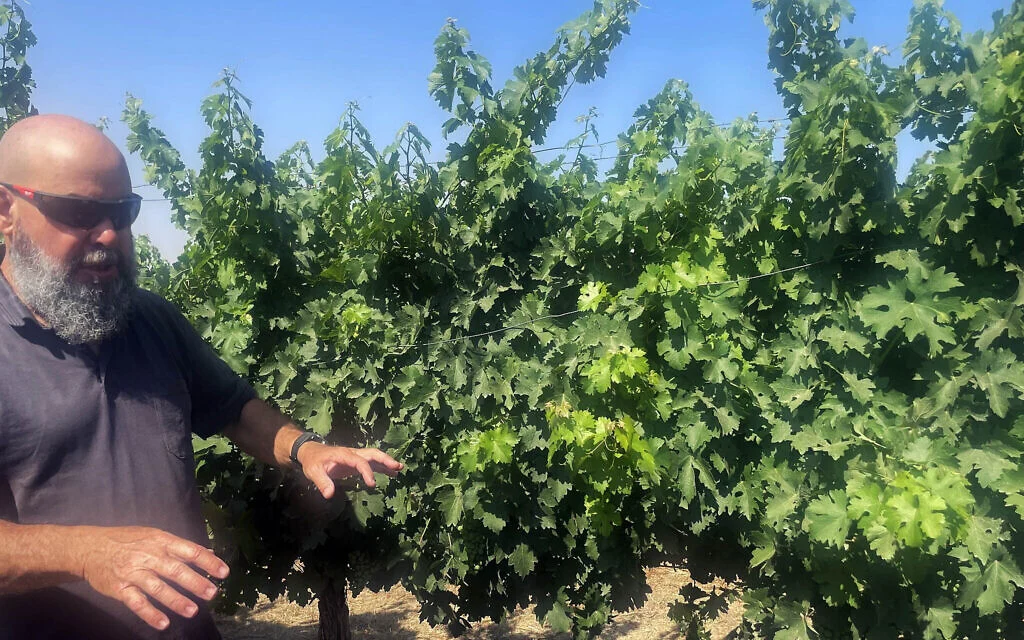
Winemaker Asaf Gilai with his Cabernet grapes in Moshav Nir David in June 2025.

Winemaker Asaf Gilai with his Cabernet grapes in Moshav Nir David in June 2025. (Jessica Steinberg/Times of Israel)

The grape harvest is nigh, and in one vineyard close to Gaza, visitors are again coming to taste wine and cheese, even as the region struggles to find its footing after nearly two years of war.

Though it’s just 10 kilometers (six miles ) from the Gaza border, Moshav Nir Akiva, home to the Galai Winery, was not breached during Hamas’s terror onslaught on October 7, 2023.

As a Negev region vintner, Asaf Galai had planned to meet with other local winemakers the following week — something they often did to taste their wines together.

He tried reaching those friends throughout the day on October 7, and later found out that winemaker Gideon Pauker from Kibbutz Nir Oz had been killed, while other fellow wine-loving friends from the area were taken hostage.

For the next several months, Galai continued tending his Cabernet grapes, always aiming to gain as much concentrated juice as possible from each fruit grown in the desert terroir.

Now, nearly two years later, Galai is thrilled to have visitors slowly returning to his winery and he’s planning for the upcoming harvest, around the end of September.

“I never do it the same way every time. I harvest when the grape is ready,” said Galai. “I see what’s happening in nature and do what works for me.”

Galai planted his first vineyard in 2000 and his second in 2014, outside his Nir Akiva home. Since its first harvest in 2002, the winery has produced several thousand bottles of wine each year.

He began with red wines, most of which are blends of a variety of the vineyard’s grapes. In 2015, he produced white wine from black grapes and then added a rosé.

The winery’s Casa Negev wine, a blend of merlot and cabernet sauvignon, is an award-winning wine described as having notes of black fruit, oak, chocolate, vanilla, pepper and licorice. Its blanc de noir, a white wine made from cabernet sauvignon grapes, is also a bestseller.

Galai has learned to be precise and consistent in his wines. “I have to be super-exact, because I keep sending the same wine to competitions,” he said.

He and his wife, Sigalit, kept working on their wines after the trauma of October 7.

“We had no choice,” said Galai. “We do everything around here. We’re the farmers and vintners, bottlers and marketers.”

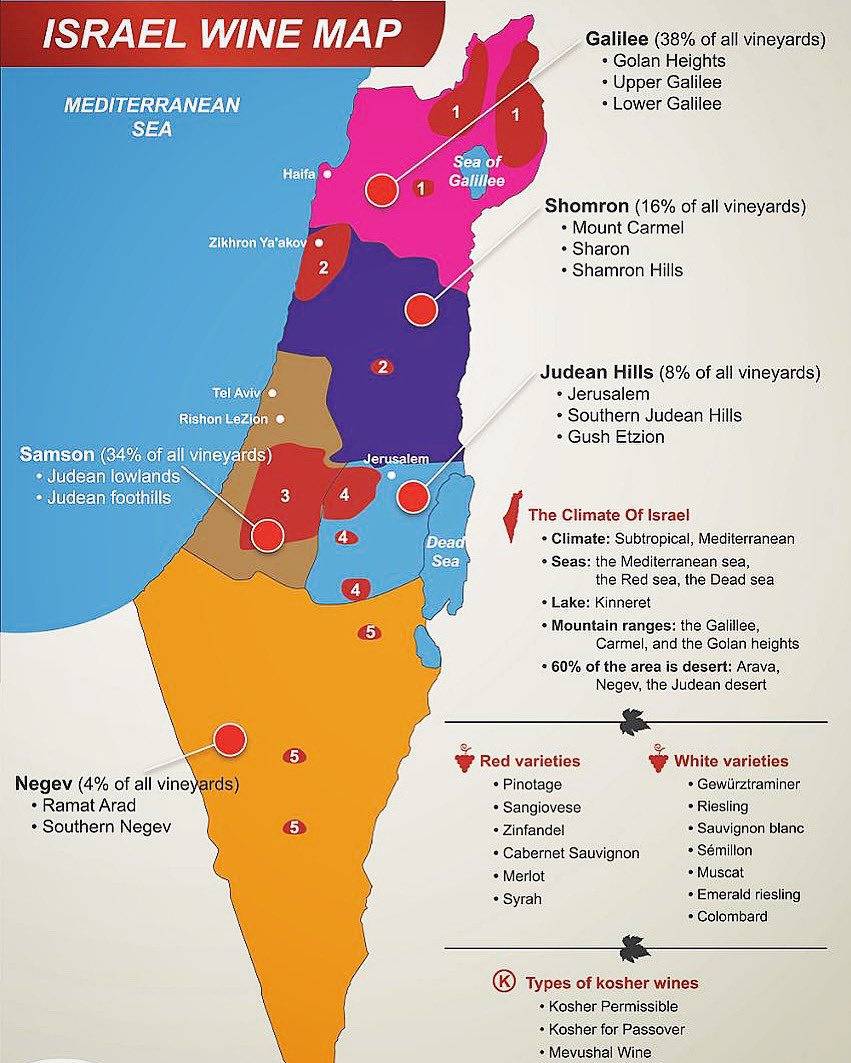
Galai is part of the Negev Wine Consortium, whose 50 member wineries and vineyards receive business coaching and training. These local vintners have been deeply affected by the war, and traumatized by the deaths of friends and neighbors. There were few visitors for months on end as even the most dedicated of Galai’s customers stopped making weekend wine-tasting trips.

One of the main drivers of business in the region, the annual Darom Adom festival in February, when Israelis flock to see the blooming fields of anemones in the south and frequent local businesses, has been all but canceled for the past two years.

Yet the war hasn’t been felt as keenly in this small agricultural village located near Netivot.

“We’ve heard the booms from war in Gaza and the helicopters of released hostages heading back to Israel, but we’re an enclave here, we’re not affected,” said Galai.

Galai and his wife moved to Nir Akiva from Haifa some 25 years ago, looking for a way of life far from city living and office work.

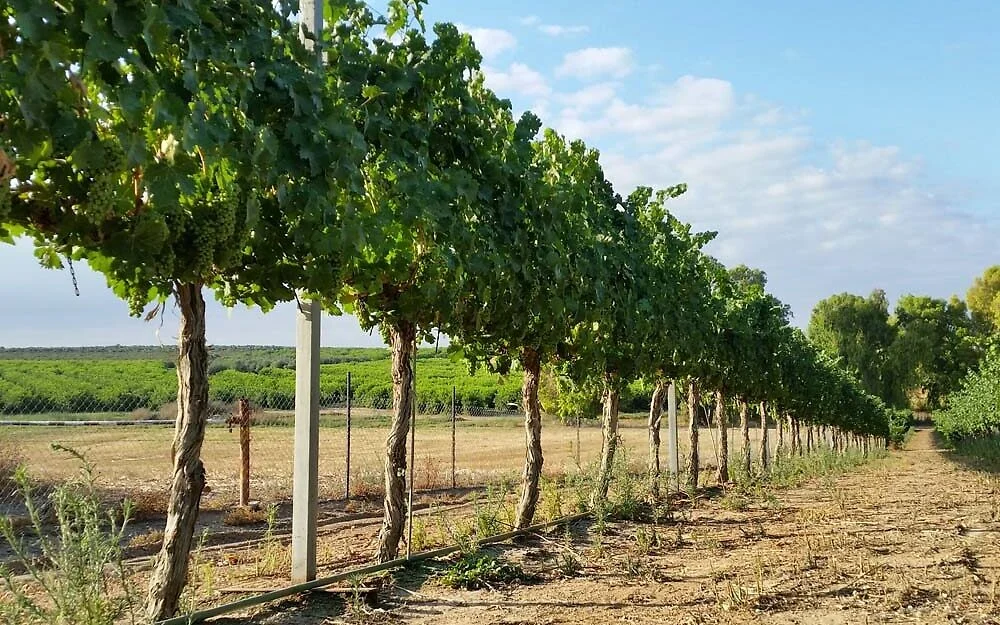
A view of the vineyard at Galai Winery in the Negev.

A view of the vineyard at Galai Winery in the Negev.

“There was nothing here, just thorns and an old, ruined house,” said Galai, who took a winemaking course at the Soreq Winery before planting his vineyards. “It was like coming to outermost Africa.”

Over the last two and a half decades near the Gaza border, they’ve mostly avoided the steady stream of rockets from the Strip, thanks to their location just far enough from the immediately adjacent area.

Now, nearly two years after October 7, visitors have finally begun returning to Galai.

“They’re our groupies,” said Galai.

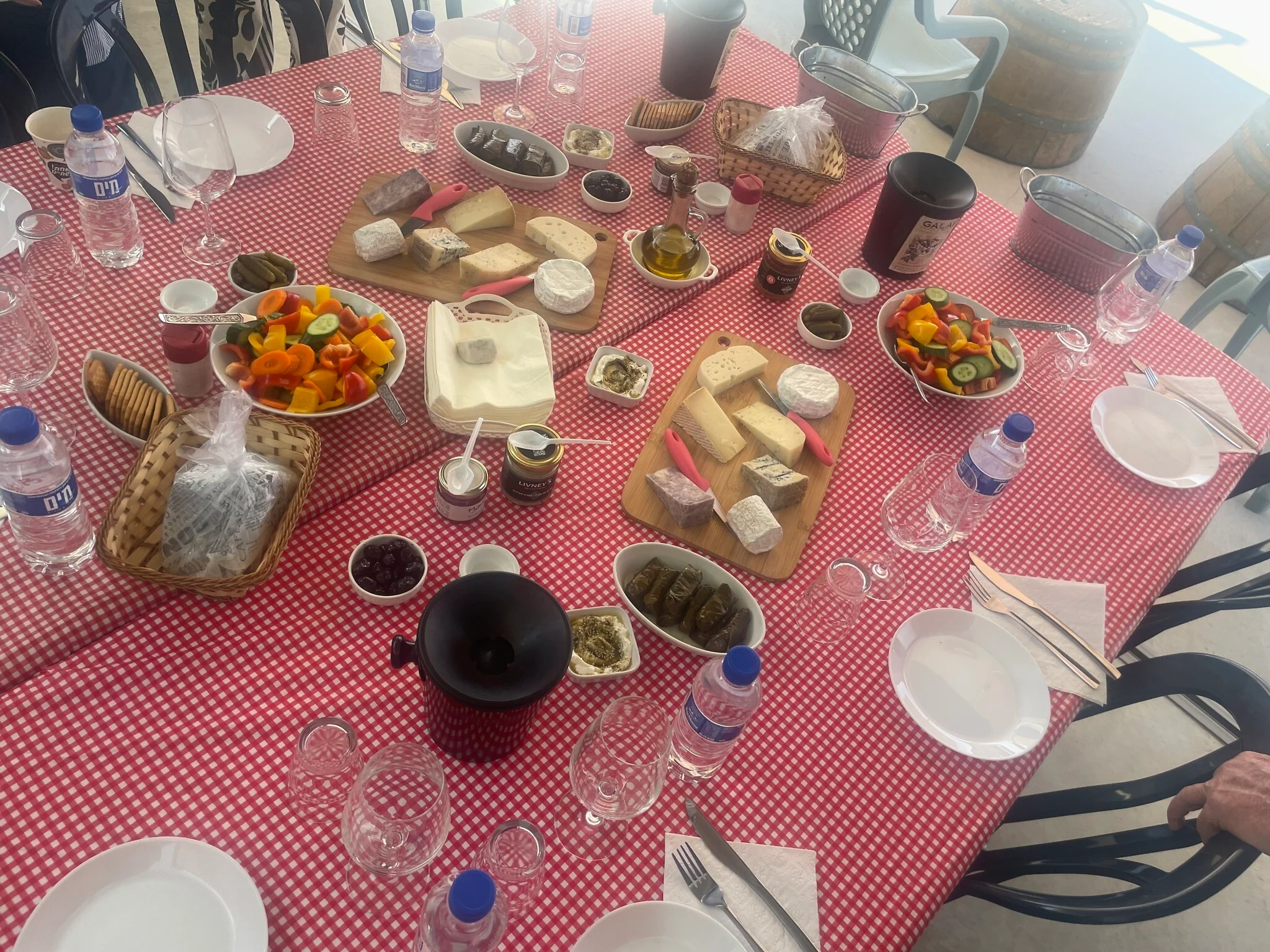
The setup at the winery is casual, allowing visitors to choose their wines, pick cheeses made by Kibbutz Be’eri and Barkanit from refrigerators, and enjoy them with breads, crackers, jams and fresh vegetables. They can purchase and make themselves a picnic basket, and any leftovers can be packed up and taken home.

Visitors are welcome to show up on weekends, and groups can make reservations during the week. An NIS 100 visit includes wine and cheese, and an NIS 150 per person ticket features a five-wine tasting.

A wine and cheese spread at Galai Winery in Moshav Nir David, near the Gaza border, in June 2025

A wine and cheese spread at Galai Winery in Moshav Nir David, near the Gaza border, in June 2025 (Jessica Steinberg/Times of Israel)

Wine, beer and Thai food, too
There are other options in the area for beer and wine tasting, as well as an authentic Thai restaurant.

At nearby Kibbutz Ein Hashlosha, where Hamas terrorists killed four residents and looted and burned many houses on October 7, four young members, Yogev Nathan, Nitai Leffler, Meital Leffler and Ofer Pekerman, have continued brewing Sabresa beer throughout the war.

Sabresa is named for the sabra prickly fruit fused with the Spanish term cerveza, or beer, for all the South Americans who helped establish the kibbutz.

Nitai Leffler, a member of the kibbutz security team, sometimes welcomes guests with a gun strapped to his back. Still, he is more than happy to open bottles and talk about the brewery’s beers, which include an IPA, lager, Belgian-style and wheat beer.

It’s best to call ahead to check that the very low-key brewery is open for visitors, and it’s worth a stop. It also delivers throughout the country.

While in the south, visitors can stop for lunch at the well-known Thailandi, a non-kosher restaurant located in Moshav Ein Habsor.

The authentic Thai eatery began as resident Eitan Nakar’s passion project.

He invited Thai workers from the community to grow their own produce, from bok choy, kefir lime and papaya to pineapples and lemongrass, in order to cook their food from home.

It became customary on the moshav for members to eat Thai soup together on Fridays, and he first opened a small restaurant offering some of the authentic dishes.

“It’s the kind of food that Thai people eat themselves,” said Nakar.

On October 7, Nakar was defending the community as a member of the security team. Though he sent his own family to Eilat, he never left the moshav and recalls the days after October 7 as a terrifying period.

Months later, his workers returned from Thailand and reopened the restaurant, now open six days a week, serving papaya salad, tom yum soup, khao pad, green curry, and, of course, pad Thai, among other dishes, and cold bottles of Singha beer.

The restaurant is in a clearing surrounded by greenhouses, with simple oilcloth-covered tables and a smattering of tables in the outdoor courtyard. The food is simple and delicious, and diners can often buy inexpensive pineapples sourced from the nearby greenhouses.

Read the original here.


jerusalem post logo

November 13, 2025

The Cinema South Festival Returns to Sderot

After a year of displacement, the festival will return to Sderot and the western Negev from November 6 to 13 for its 24th edition – its first in full format since October 7.

Sapir College

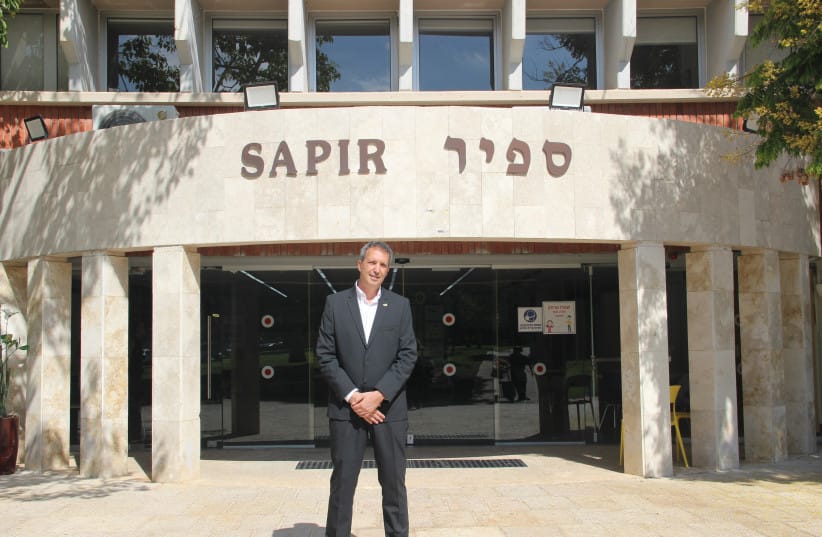
Nir Kedar is seen at the entrance of Sapir College, located 3.5 km from Gaza. (photo credit: Sigal Golan)

After a year of displacement, the Cinema South Film Festival will return home to Sderot and the western Negev from November 6 to 13 for its 24th edition – its first in full format since October 7, 2023.

Founded by Sapir College’s School of Audio and Visual Arts, the festival, which takes place at the Sderot Cinematheque and other venues, celebrates the resilience and creative spirit of communities that endured unspeakable trauma, while using cinema to explore life, loss, and renewal in Israel’s southern region.

Festival director Tamir Hod calls this year’s edition “a choice to grow or disappear.” Despite global cultural boycotts and local hardship, the festival is expanding to eight days of screenings, workshops, and live performances.

Featured Films

The festival is opening with the Israeli premiere of Etty, the series created by Hagai Levi that dramatizes the diaries of Etty Hillesum, a writer who was killed in the Holocaust, but many of the featured films were created in the Negev itself – by people who have lived the headlines and turned them into art.

Two original documentary programs, Six Views from the South and Heading South: Kfar Aza in Ruhama, focus directly on the aftermath of October 7. Created by Sapir College students and alumni, they portray families uprooted from Kibbutz Kfar Aza as they begin anew in nearby Ruhama. Through intimate encounters and everyday moments, these short films capture both grief and the quiet, stubborn hope that defines the region’s recovery.

Six Views from the South brings together six southern filmmakers whose stories form a mosaic of personal loss and endurance. Their work asks a simple but painful question: After the destruction of one’s home, what does “home” mean now?

A related documentary, Where Were You During the Disengagement? revisits the 2005 Gaza pullout, tracing ideological divisions that echo in today’s conflicts. Directors Itzik Lerner and Itay Landsberg-Nevo weave personal testimony and historical reflection to explore how the roots of October 7 reach back two decades.

Another highlight, A Man and a Violin, revisits the story of Sfatayim, the legendary Moroccan-Israeli band from Sderot, whose fusion of Arabic and Hebrew lyrics transformed the local wedding scene into a cultural movement. It’s both a portrait of resilience and a love letter to the Negev’s musical soul.

Game Changer,” a documentary series episode by filmmaker Nevat Mazor, who is on the autism spectrum, explores how gaming and creativity can bridge isolation – a theme that resonates strongly in an era of healing and reconnection.

Other selections, including The Smugglers, The Boat of Iman, and Raida Adon to Herself, portray life on Israel’s physical and emotional borders: Bedouin villages, refugee journeys, and artistic self-discovery.

New competition features films across Israel and globally
A new competition will spotlight student films from across Israel and abroad, marking the first time the festival opens its student section beyond Sapir College. One of its notable entries, Sila, by Bissan Tibi, tells a coming-of-age story set in a Bedouin community, reflecting both continuity and transformation within the region’s Arab society.

The festival’s curators see the event as a living act of recovery – part memorial, part celebration.

“Cinema allows us to process the catastrophe of October 7 in many ways,” says Sha’ar Hanegev Regional Council head Uri Epstein. “Art has always been a refuge for the soul. Now more than ever, we need creation.”

With premieres, retrospectives, and open-air concerts returning to the Sderot Cinematheque plaza, the Cinema South Film Festival reaffirms the Negev’s place in Israel’s cultural landscape.

The rich and promising body of work left by the late Yahav Winner, a beloved and talented staff member at Sapir College School of Audio & Visual Arts, was tragically cut short when he was murdered while protecting his wife and infant daughter on Kibbutz Kfar Aza.

The Yahav Winner International Debut Film Competition pays tribute to filmmakers who follow in his creative direction. The 12 debut films from Israel and around the world selected for this year’s competition capture something of Winner’s spirit, reflecting the magic and power inherent in a first cinematic effort.

Read the original here.


Times of Israel banner


November 9, 2025

1.2 Billion NIS to Beersheba for New Light Rail, and Defense R&D Hub

The Negev is in a momentous time. We have a great opportunity to change Israeli society and strengthen the largest region in Israel.

Light Rail Be'er Sheva

The cabinet on Sunday approved a NIS 1.2 billion ($368 million) development plan for the southern city of Beersheba, the Prime Minister’s Office announced.

The plan will establish a light rail and new arms development center in the southern city and expand the Israel Defense Forces’ presence in the surrounding Negev Desert, among other things.

It follows a transfusion last week of NIS 1 billion ($307 million) in public and private funds to help Beersheba’s Soroka hospital, the Negev’s main medical center, recover from an Iranian missile strike in June and construct a new, armored hospitalization building.

The new plan “includes reinforcement in many areas that are important to the residents of Beersheba,” including “a light rail that will reach the hospital we approved separately,” Prime Minister Benjamin Netanyahu said at the start of Sunday’s weekly cabinet meeting.

“We’re helping with cyber, R&D, livelihood, and it’s of course a reinforcement of the entire Negev… through a mix of government infrastructure and encouragement of the private sector,” said Netanyahu.

The PMO statement said the funds for Beersheba will focus on four main areas: “economic growth, development of transportation infrastructure, improving quality of life and personal security, and education and human capital.”

To support economic growth, the PMO said, some NIS 200 million ($61.3 million) will be invested in a civilian-military R&D center in cooperation with the Defense Ministry’s Weapons Development and Technology Infrastructure Administration (MAFAT), as well as other projects to expand the “ecosystem connecting academia, industry, and the military.”

Transportation in Beersheba will be bolstered by the planning and construction of a new light rail system that will connect the city with suburbs and IDF bases in the Negev, the PMO said, without specifying the system’s cost.

In the area of personal security and welfare, some NIS 500 million ($153.2 million) will go toward a new police station, expanding the IDF Southern Command, and the “development of advanced technological systems for dealing with regional security challenges,” the PMO said.

In addition, the number of psychologists and medical professionals in Beersheba will be increased, and the Wingate Sports Institute, which is located near Netanya in central Israel, will open a branch in Beersheba, according to the PMO.

Meanwhile, it said, some NIS 120 million will go toward formal and informal education, with a focus on STEM fields. Beersheba Mayor Ruvik Danilovich said in a statement that the government plan for his city was an “important and significant step.” “The Negev is in a momentous time,” he said. “We have a great opportunity to change Israeli society and strengthen the largest region in Israel.”

While Beersheba is often referred to as the capital of the Negev, which comprises about 55 percent of Israel’s land area, the city of some 220,000 residents has seen its national profile fall in recent years. Once Israel’s fourth-largest city, it now ranks ninth in population size, falling in recent years behind Rishon Lezion, Petah Tikva, Netanya, Ashdod, and Bnei Brak, all located closer to Tel Aviv.

Beersheba is among the poorest large cities in Israel, and consistently ranks in the bottom quarter of the country’s annual quality of life rankings. A development town that quickly absorbed refugees from North Africa, the Middle East, and Eastern Europe in the 1950s and 1960s, it now has one of the highest crime rates in Israel.

Some in Beersheba say that the national government has placed the city’s development lower on its list of national priorities in recent years, especially in light of increased investment in the western Negev and the north of the country due to damage caused in fighting following the Hamas invasion on October 7, 2023.

Read the original here.


Nvidia Expands in the Negev

The company will move its southern Israel development center to a site spanning 3,000 square meters, with full operations expected by mid-2026.

A visualization of the new NVIDIA hub in Israel (Moshe Zur Architects)


Nvidia continues broadening its Israeli footprint. The company announced Sunday it will move its Beersheba research and development center to a new location three times the size of the existing facility. The new site at Gav-Yam’s high-tech park in the city, covering roughly 3,000 square meters (32,292 square feet), is projected to reach full operational capacity by the end of the first half of 2026.

This marks Nvidia’s southernmost location in Israel, complementing the established development centers in Tel Aviv, Ra’anana, Yokneam, Mevo Carmel, and Tel Hai. Alongside the expansion, Nvidia intends to hire hundreds of additional staff in the southern area, including chip developers, hardware and software engineers, architects, students, and advanced degree holders.

The existing teams at the facility and incoming personnel will participate in developing cutting-edge hardware and software for AI networking, including NVIDIA Spectrum-XEthernet, Quantum-X InfiniBand, NVLink, ConnectX, and BlueField DPUs products, along with central processing units for data centers and additional technologies.

Nvidia employs over 5,000 people in Israel. According to the company, since purchasing Mellanox in 2020, Nvidia’s Israeli workforce has more than doubled, with the company maintaining expansion through hundreds of available positions nationwide.

“Expanding Nvidia’s development center in Beersheba demonstrates our dedication to accessing the finest engineers, regardless of their location,” said Amit Krig, senior vice president at Nvidia and director of Nvidia’s development center in Israel. “The new facility will function as a professional home for hundreds of additional developers from Beersheba and surrounding communities, who will participate in creating groundbreaking hardware and software technologies and drive global innovation in artificial intelligence.”

“Opening Nvidia’s new facility and tripling its activities in the city constitutes significant and vital news for Beersheba and the Negev,” said Ruvik Danilovich, mayor of Beersheba. “This choice reflects trust in the Beersheba ecosystem, and will generate hundreds of new employment opportunities that will bolster the city’s human capital and cement Beersheba’s position as a premier innovation hub.”

Read the original here.


Kibbutz fund distributes ‘homecoming kits’ amid return to October 7 communities

Two years after Hamas’s massacre displaced 62,000 southern Israel residents, those returning receive symbolic kits to help restore a sense of home, security, and community.

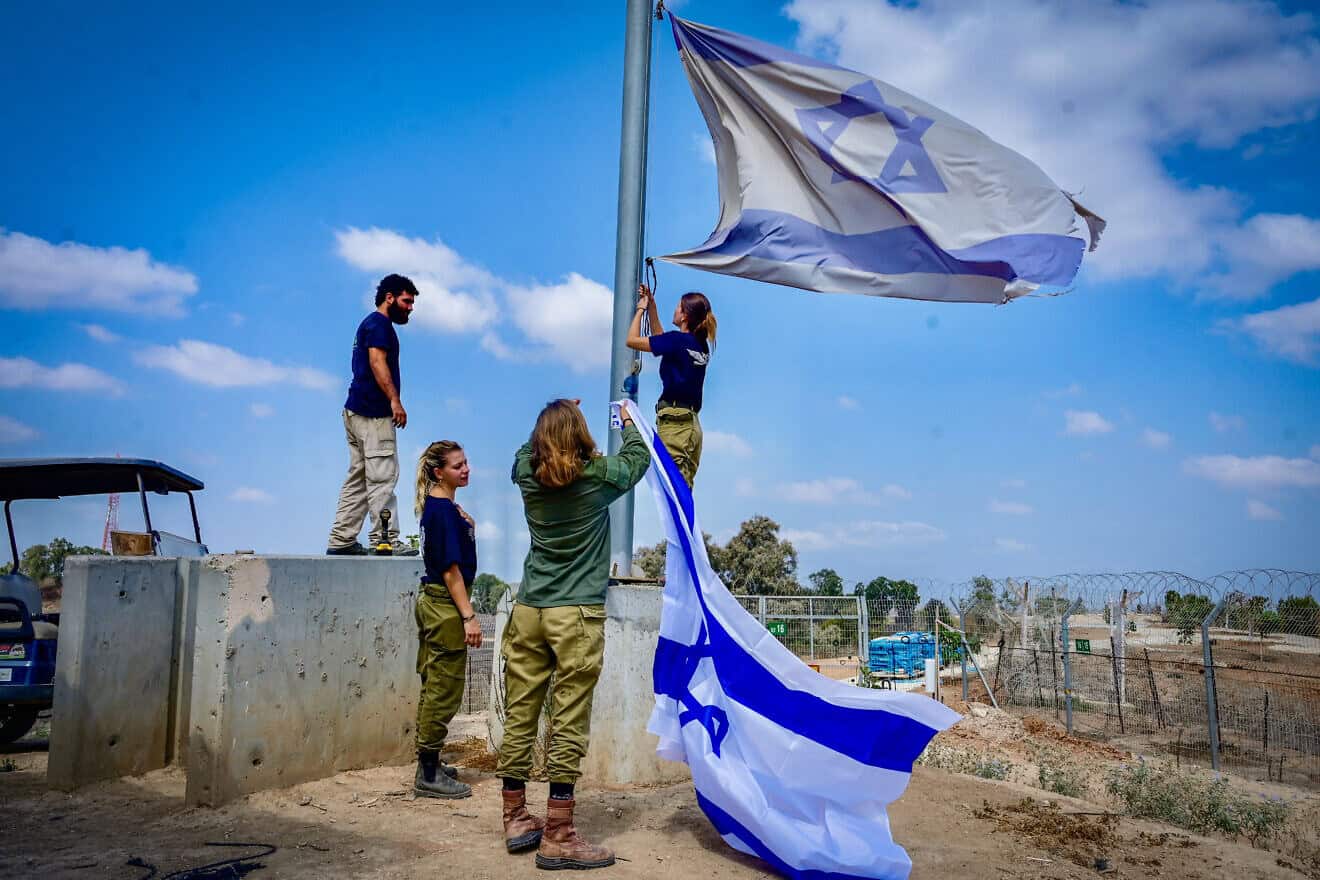
Israeli soldiers raise flag in Western Negev communities impacted by October 7.

Soldiers hang an Israeli flag in Kibbutz Nir Am, near the Israeli border with the Gaza Strip, on Aug. 12, 2024. Photo by Avshalom Sassoni/Flash90.

As residents of southern Israel prepare to return to Western Negev kibbutzim devastated by Hamas on Oct. 7, 2023, the Kibbutz Movement Rehabilitation Fund, supported by Bituach Haklai (“Agricultural Insurance”), is distributing what they are calling homecoming kits.

Nearly two years ago, Hamas and Palestinian terrorists infiltrated Israel by air, land and sea, killing more than 1,200 and taking 251 hostages. In the aftermath, more than 62,000 civilians were displaced from towns near the Gaza Strip. Today, many of them have begun returning home.

For families resettling once-flourishing communities, the challenge is not only rebuilding destroyed homes and infrastructure but also restoring a sense of safety, security, and belonging.

“Our primary mission is the rehabilitation of Israel’s kibbutzim and kibbutz communities in the north and south. We are engaged not only in physical construction but also in reviving the spirit,” said NeriShotan, CEO of the Kibbutz Movement Rehabilitation Fund. “Just as we support initiatives in infrastructure, education, employment, and other projects, we see supreme importance in investing in the emotional rehabilitation of these communities, which are the beating heart of the kibbutzim. We are here for them, long term, to ensure every family returns not only to a house but to a home—one that offers belonging, security, and hope,” he added. The kits include seeds for planting, symbolizing hope and renewal; calming herbal tea; a purification kit; and cards encouraging families to hold a homecoming ceremony.

“The kit was born out of genuine listening to representatives of the kibbutzim in the Gaza Envelope,” said Ayelet Haris, head of the Kibbutz Movement’s Society and Community Division. “In our meetings, people spoke about the longing for home, the struggle to reconnect with the outside world, and the desire for community—a neighbor you can once again ask for a cup of milk.” “The kit is our way of telling families, ‘We are with you,’ and providing a layer of support during the moving and difficult moment of returning home,” she added.

Our dedication to Negev communities and families defines us, and the need for support is clear and urgent. Our partners’ support has led to incredible accomplishments.

Current projects in the region include:

The Ramat HaNegev Quality of Life Fund. The goal of this fund is to ensure that communities in the Negev have access to the financial resources they need to enhance economic growth and quality of life initiatives, and will assist new and existing communities with the creation and maintenance of projects for education, recreation, and social and cultural enhancement.

Wellness Projects in Merhavim. Many residents of the Merhavim Regional Council suffer directly from the events of October 7th. To address these challenges, the council has worked hard to mobilize resources to establish a Resilience Center. In addition to the services provided at the Resilience Center, the council has identified additional needs for the project, such as a Health Center, a Clubhouse for Senior Residents, and providing equipment for Youth Centers in the area.

Sha’ar Hanegev Programs for Youth. The Negev Foundation seeks partners to support youth programs in the Sha’ar HaNegev region as residents work to rebuild their lives and communities. Approximately 60% of Western Negev residents are experiencing moderate to high symptoms of stress, and nearly 50% are showing signs of post-traumatic stress. Ranging from art and science to sports, the program aims to support the youth of the region who experienced trauma from the events of October 7.


Reprinted from jns.org

Breakthrough in Israel’s plant conservation efforts

Spear-leaved dogbane blooming in the Jerusalem Botanical Gardens originates from specimens collected decades ago in the Negev Desert.

Spear-leaf dogbane

Spear-leaved dogbane. Photo by Noam Bar-Shai.

One of Israel’s rarest plants—the spear-leaved dogbane—is currently blooming in the Jerusalem Botanical Gardens after its extinction from the Negev Desert. The species, which now survives only in isolated areas along the Carmel coast and in theAcre Valley, was once far more widespread, including in En Avdat National Park in the Negev.

The plants currently blooming in the Botanical Gardens originate from specimens collected decades ago at En Avdat by Atai Yoffe, director of the Botanical Garden at Kibbutz Netiv HaLamed-Heh. As part of the conservation initiative, researchers have been propagating the plants under controlled conditions in the Jerusalem Botanical Gardens, with the explicit goal of reintroducing the spear-leaved dogbane to En Avdat National Park in cooperation with the Israel Nature and Parks Authority.

Spear-leaf dogbane

Spear-leaved dogbane. Photo by Ori Fragman-Sapir.

According to Noam Bar-Shai, curator of the Jerusalem Botanical Gardens in Givat Ram, conserving these plants is particularly significant. This species typically thrives in cooler, more temperate regions than Israel, whereas the now-extinct Negev population likely developed unique genetic adaptationsthat enabled it to survive the harsh desert climate.

Until it is returned to the Negev, visitors can admire the plant’s beauty at the “refuge” pond at the Botanical Gardens’ northern edge, where clusters of small, bell-shaped flowers, delicately patterned with stripes on their pink petals, can be seen alongside other rare species.

“Each success reinforces our efforts to preserve Israel’s unique plant diversity,” says Nurit Hibsher, director of the Central Region Forestry Department at Keren Kayemeth LeIsrael–Jewish National Fund (KKL-JNF). “The spear-leaved dogbane presents a dual challenge: conserving a species at severe risk of extinction while attempting to reintroduce a vanished population, and preserving its distinct genetic traits developed under desert conditions. Our progress with this species represents another step forward in saving many more.”

The experiences and protocols developed through the initiative will be published in an upcoming digital book titled Endangered Plants in Israel: A Guide to Propagation and Cultivation. It provides practical guidelines for cultivating and propagating some 500 rare plant species, designed to make essential knowledge available to conservationists, gardeners, researchers, and nature enthusiasts.

Original post is here


Times of Israel banner

Reprinted from the Times of Israel
September 1, 2025
Byline: Sue Surkes

New Families are Heading to Gaza Border Communities

‘The answer to Hamas is to hold on harder to the land,’ says Uriel Raisch, who moved with his family to secular-religious Kibbutz Kerem Shalom. ‘We are one people’

New families are heading to Gaza Border communities

The Raisch family on new home ground in Kibbutz Kerem Shalom, close to the Gaza and Egyptian borders.

Two weeks ago, Uriel and Rachel Raisch left their home in the southern Negev town of Mitzpe Ramon and moved, with their three young children, to Kibbutz Kerem Shalom. The kibbutz is adjacent to the Gaza border and just a few hundred meters from the Egyptian border. It is next to one of the main crossings into the Gaza Strip.

“We see a lot of movement by the army and hear lots of explosions,” Rachel told The Times of Israel in an interview.“After 100 days of reserve duty in Gaza, Uriel doesn’t notice the explosions. The children know the IDF is making them.” She went on, “We had heard that the kibbutz was very beautiful and green. and still feel as if we’re on vacation. People from the kibbutz always said life here is 99 percent heaven and 1% hell. After what the Israeli army has done, it’s closer to 99.5% heaven.”

The Raisches — Uriel, 28, who is studying industry and management in Beersheba, social worker Rachel, 27, Leshem,5, Shir, 3, and Ofek, 1 — are one of five families, both religious and secular, to have joined the kibbutz in recent weeks.

Uriel, one of 11 children, was born in the Gush Katif settlement bloc in Gaza, which was evacuated in 2005 as part of Israel’s unilateral disengagement plan. Rachel grew up on Moshav Kfar Maimon, near the southern town of Netivot.

“We’re from the Negev,” Uriel explained, when asked why the family had relocated to Kerem Shalom, “and we were attracted to the idea of a community for religious and secular people.”

“We can’t forget the period we’re in,” he continued. “The answer to Hamas and terrorism is to strengthen settlements’ hold on harder to the land. We are one people, we are all brothers and sisters. We saw that the enemy doesn’t distinguish between us. Here, on the kibbutz, they don’t ask what we believe or what we are. We lead a community life together. We believe in the army and that there will be complete security here.”

Around 85% of the original 200 residents of Kibbutz Kerem Shalom have returned home. Just two families have decided not to do so.

On October 7, 2023, pitched battles took place in the kibbutz, leading to the murder of two fathers and civilian security team members — Amichai Witzen, 32, and Yedidia Raziel (Rosenberg), 31. They died trying to kill the terrorists attacking the home of a young social worker, Amichai Shindler, 33.

Elsewhere along the Gaza border, figures provided Monday by community spokespeople were as follows:

Kibbutz Nirim: 80% of the residents have returned home, and around 15 new families are expected to join in the near future. On October 7, 2023, five civilians were murdered inside the kibbutz, while five others were abducted toGaza. Of the latter, three were released in November 2023, while the other two were murdered in captivity and their bodies later recovered by the military.

Moshav Netiv Ha’asara: Just over 80% of the 1,050 residents (315 households) who lived there before October 7, 2023, have returned. There are 54 families and households still residing outside of the moshav, and it is not known when they will return. Around a dozen new families and couples are renting homes. Seventeen residents were murdered by Hamas gunmen, including three members of the local security team.

Kibbutz Sufa: Over 90% of residents are back, and five new families are being integrated into the kibbutz. During the Hamas attack, three people were murdered — two members of the kibbutz’s standby security squad and one civilian resident.

In Nahal Oz, located just 800 meters (2,625 feet) from the Gaza border, only 45% of members and residents have returned. Earlier this month, the High Court of Justice rejected a petition filed by the kibbutz against the government’s decision in June to end state funding for the temporary housing they had been living in since the October 7, 2023, Hamas assault.

Ilan Morag, chairman of Nahal Oz, said that around 50 households had returned, with 175 people, includingapproximately 60 children. Those who had not yet returned home included seniors in an assisted living facility in BatYam, central Israel, as well as families with children, particularly small children, he explained. Around 25 families were still living in Kibbutz Mishmar HaEmek, to which they were evacuated after October 7, with others scattered elsewhere.

On October 7, 2023, 13 residents and four security personnel were killed in Nahal Oz, and eight civilians were taken hostage. Kibbutz Kissufim residents are not expected to return until November, once renovations are complete. There, nine Israeli civilians and six foreign workers were murdered by terrorists in the kibbutz on October 7, and another Israeli was abducted to Gaza, murdered, and returned to Israel in a deal with Hamas. Israeli forces mistakenly killed one more Israeli civilian from Kissufim during the fighting. Twenty-seven IDF soldiers and one member of Kissufim’s local security team were killed in the fighting in the kibbutz and at a nearby army post.

Rebuilding in Nir Oz

A ceremony marks rebuilding in Kibbutz Nir Oz, August 7, 2025, almost two years after the October 7 massacre.

Residents of Holit, Kfar Aza, and Be’eri are expected to go home sometime next year, while renovations at Nir Oz are only just starting. Out of some 200 people who had made Holit their home, 15 were murdered on October 7, 2023. Two Bedouin Israelis who were working in the cowshed were kidnapped and later slain. In Kfar Aza, 62 residents and 18 security personnel were killed on October 7, and 19 civilians were taken hostage.
Two hostages from Kfar Aza were later mistakenly killed by Israeli troops as they tried to escape their captors inGaza; 15 have been returned in hostage deals with the terror group, and two remain captive in the Strip — twins Gali and Ziv Berman. In Be’eri, 101 civilians (one in 10 residents) and 31 security personnel were killed, and a further 30residents and two more civilians were taken hostage.

Nir Oz was the worst affected of all. The kibbutz was largely destroyed on October 7, 2023, when Hamas terrorists entered all but six of over 200 homes in the small community and either murdered or kidnapped one of every four residents — 117 people out of some 400. Of those abducted, nine are still being held in Gaza, of whom five are believed to be still alive. A ceremony marks rebuilding in Kibbutz Nir Oz, August 7, 2025, almost two years after the October 7 massacre.

Immediately after the Hamas invasion, which saw some 1,200 people in southern Israel slaughtered and 251 abducted to the Gaza Strip, the state evacuated 46 rural communities and the city of Sderot — all of which fall within seven kilometers (4.3 miles) of the Gaza border.

By the end of May 2025, the Tekuma Directorate said that 92% of the population had returned home. These remain the most up-to-date figures.

In the Eshkol Regional Authority, whose communities were hit hardest on October 7, 2023, 3,134 pupils returned to school on Monday, compared to 2,519 last year. However, the figures have not returned to the level they were before the war. In September 2021, for example, the most recent year for which the Central Bureau of Statistics published figures, 3,583 children attended class.

Original post is here


India Farmers Tour the Negev

A delegation of Indian businessmen and farmers conducted a professional tour in the Negev to enhance agriculture and improve crop yields.

A delegation of businessmen and farmers from India held a professional tour in the Negev in order to learn from the advanced Israeli agriculture. The delegation members are seeking partnerships with Israeli farmers and companies in order to improve the agriculture and the level of crops on their farms.

The delegation members came from three countries: Gujarat, Karnataka and Maharashtara. It was headed by Mr. Michael Nagare, representative of AgriQuality – a company that specializes in agricultural business consulting in Israel and abroad. 

Among others, the delegation members have visited orchards, vegetable farms, wastewater treatment facility in Kibbutz Sde Boker, R&D plant in Ramat Negev, Katif Laboratories in Sdot Negev regional council, and an advanced nursery in the Sharsheret settlement.

The Indian delegation members were surprised when they heard about the labor cost of agricultural workers in Israel, and estimated that the cost of their wages is about 5% of the wages in Israel. On the other hand, they could not believe the high yield per hectare data as presented to them by the Israeli growers, which characterizes the Israeli agriculture.

Another issue that drew the attention of the Indian delegation members was the Israeli water economy and various solutions used in Israel to increase the supply of irrigation water to farmers. Some of the participants are coming from areas with saline soil and water and facing problems similar to those of farmers in the Negev. Participants tasted different varieties of tomatoes and learned that the sugar percentage in tomatoes increases when they are irrigated with brackish water.

Original post is here


Desert-Grown Pineapples

A Breakthrough for Arid-Climate Farming.

Growing pineapples in the Negev desert

Growing ‘Queen’ pineapples in the desert using soilless culture, drip irrigation, and shading tunnels to mimic tropical conditions.

At the Ramat HaNegev Research Center, researchers are proving that tropical fruit cultivation isn’t limited to the tropics.

Led by Ofer Guy, the team developed an advanced system for growing ‘Queen’ pineapples in the desert using soilless culture, drip irrigation, and shading tunnels to mimic tropical conditions.

The results are promising, with significant commercial potential. Yields soared to 17 metric tons per acre, typical in soil-based systems. Nearly 90% of plants produced market-grade fruit, and the harvest time dropped from 17–18 months to just 13–14 months.

By eliminating soil-borne diseases and stabilizing growing conditions, the study opens new commercial possibilities for producing tropical fruit in arid climates. This could have a tremendous impact on thousands of farmers worldwide.

We’re proud to see Negev-based research driving practical solutions for global food security.

Original post is here


Reprinted from YNetnews.com

Posted By  Ilana Curiel

Cherries from the Desert

After five years of attempts to grow cherries in the Negev, the trees near Mitzpe Ramon are bearing fruit.

Cherries are being grown in the Negev desert

Cherries are being grown in the Negev desert. (photo courtesy of Yankel’e Moskowitz)

“We see excellent potential to expand the industry and cherry plantings in the region,” Yankel’e Moskowitz, director of research and development for Ramat HaNegev R&D – Experimental Center for Desert Agriculture, where cherries are grown in the southern Negev desert near Mitzpe Ramon.

The cherries in the Negev currently are not being marketed. The harvest has been smaller than last year due to the bad weather, but in Ramat HaNegev they hope that next year things will work out and the harvest will be better.

Eran Doron, mayor of the Ramat HaNegev municipality, said in March: “We manage to grow in the desert soil, from forest fruits to exotic fruits. The cherry blossoms in the Negev are literally the fulfillment of Ben-Gurion’s vision of the desert blooming.”

Meanwhile, fruit farms in the Golan Heights and Gush Etzion area are expected to reach yields of up to about 5,000 tons. Yaron Belhasan, CEO of the Fruit Growers Association in Israel, said that the global climate crisis and the extreme weather changes are also affecting the agricultural sector this year.

“The last winter season was characterized by a lack of the necessary cold periods for a high yield in certain fruit trees, including nectarines, apples, cherries and peaches.” He further added: “I call on the government to arrange an orderly national plan and an adequate budget to deal with the climate crisis – with the aim of preserving the fruit of the State of Israel.”

Original article is here