


Desert flavors are revived after Oct. 7 at a southern Israel winery, brewery and kitchen
The devastating Hamas attack changed the region, but the local culinary scene is adapting and persevering amid the uncertainty and ongoing conflict
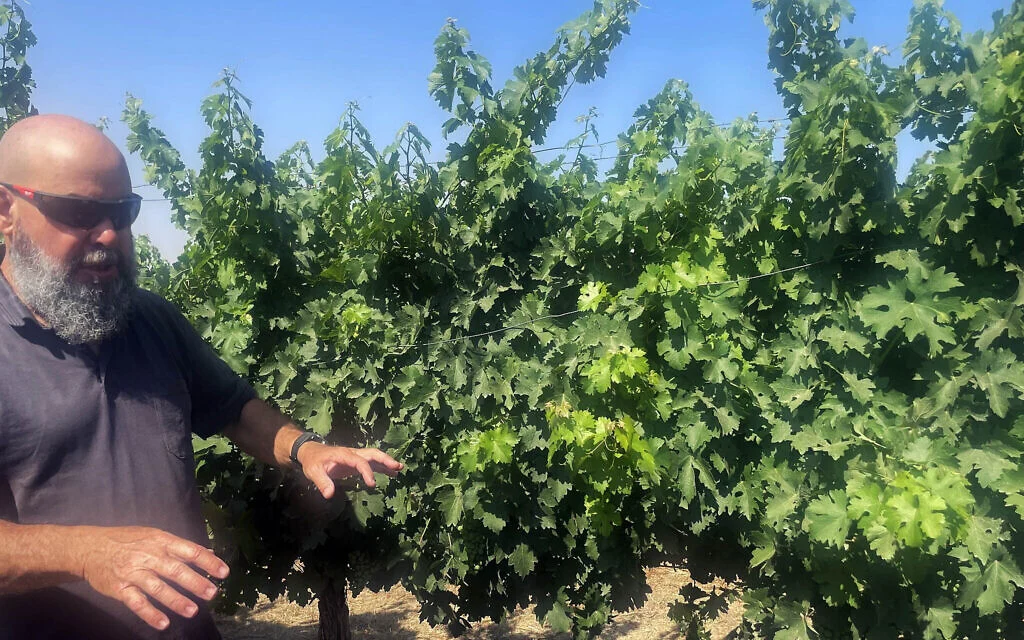
Winemaker Asaf Gilai with his Cabernet grapes in Moshav Nir David in June 2025. (Jessica Steinberg/Times of Israel)
The grape harvest is nigh, and in one vineyard close to Gaza, visitors are again coming to taste wine and cheese, even as the region struggles to find its footing after nearly two years of war.
Though it’s just 10 kilometers (six miles ) from the Gaza border, Moshav Nir Akiva, home to the Galai Winery, was not breached during Hamas’s terror onslaught on October 7, 2023.
As a Negev region vintner, Asaf Galai had planned to meet with other local winemakers the following week — something they often did to taste their wines together.
He tried reaching those friends throughout the day on October 7, and later found out that winemaker Gideon Pauker from Kibbutz Nir Oz had been killed, while other fellow wine-loving friends from the area were taken hostage.
For the next several months, Galai continued tending his Cabernet grapes, always aiming to gain as much concentrated juice as possible from each fruit grown in the desert terroir.
Now, nearly two years later, Galai is thrilled to have visitors slowly returning to his winery and he’s planning for the upcoming harvest, around the end of September.
“I never do it the same way every time. I harvest when the grape is ready,” said Galai. “I see what’s happening in nature and do what works for me.”
Galai planted his first vineyard in 2000 and his second in 2014, outside his Nir Akiva home. Since its first harvest in 2002, the winery has produced several thousand bottles of wine each year.
He began with red wines, most of which are blends of a variety of the vineyard’s grapes. In 2015, he produced white wine from black grapes and then added a rosé.
The winery’s Casa Negev wine, a blend of merlot and cabernet sauvignon, is an award-winning wine described as having notes of black fruit, oak, chocolate, vanilla, pepper and licorice. Its blanc de noir, a white wine made from cabernet sauvignon grapes, is also a bestseller.
Galai has learned to be precise and consistent in his wines. “I have to be super-exact, because I keep sending the same wine to competitions,” he said.
He and his wife, Sigalit, kept working on their wines after the trauma of October 7.
“We had no choice,” said Galai. “We do everything around here. We’re the farmers and vintners, bottlers and marketers.”
Galai is part of the Negev Wine Consortium, whose 50 member wineries and vineyards receive business coaching and training. These local vintners have been deeply affected by the war, and traumatized by the deaths of friends and neighbors. There were few visitors for months on end as even the most dedicated of Galai’s customers stopped making weekend wine-tasting trips.
One of the main drivers of business in the region, the annual Darom Adom festival in February, when Israelis flock to see the blooming fields of anemones in the south and frequent local businesses, has been all but canceled for the past two years.
Yet the war hasn’t been felt as keenly in this small agricultural village located near Netivot.
“We’ve heard the booms from war in Gaza and the helicopters of released hostages heading back to Israel, but we’re an enclave here, we’re not affected,” said Galai.
Galai and his wife moved to Nir Akiva from Haifa some 25 years ago, looking for a way of life far from city living and office work.
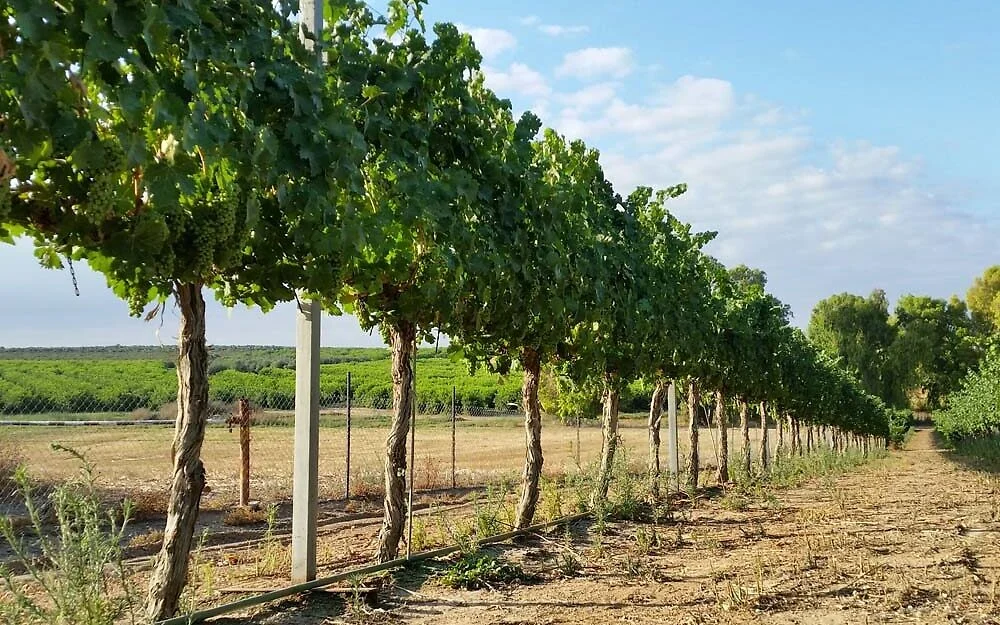
A view of the vineyard at Galai Winery in the Negev.
“There was nothing here, just thorns and an old, ruined house,” said Galai, who took a winemaking course at the Soreq Winery before planting his vineyards. “It was like coming to outermost Africa.”
Over the last two and a half decades near the Gaza border, they’ve mostly avoided the steady stream of rockets from the Strip, thanks to their location just far enough from the immediately adjacent area.
Now, nearly two years after October 7, visitors have finally begun returning to Galai.
“They’re our groupies,” said Galai.
The setup at the winery is casual, allowing visitors to choose their wines, pick cheeses made by Kibbutz Be’eri and Barkanit from refrigerators, and enjoy them with breads, crackers, jams and fresh vegetables. They can purchase and make themselves a picnic basket, and any leftovers can be packed up and taken home.
Visitors are welcome to show up on weekends, and groups can make reservations during the week. An NIS 100 visit includes wine and cheese, and an NIS 150 per person ticket features a five-wine tasting.
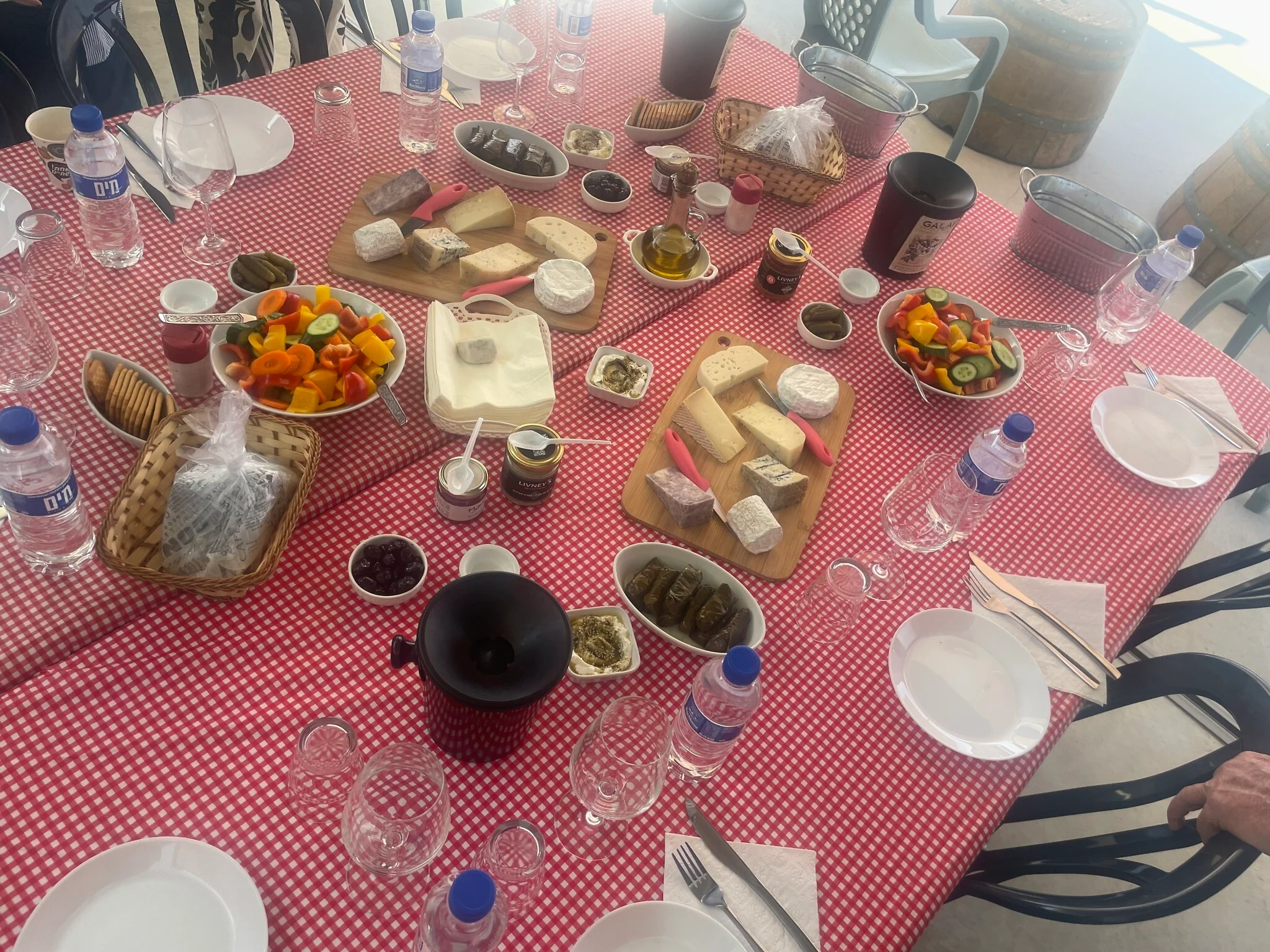
A wine and cheese spread at Galai Winery in Moshav Nir David, near the Gaza border, in June 2025 (Jessica Steinberg/Times of Israel)
Wine, beer and Thai food, too
There are other options in the area for beer and wine tasting, as well as an authentic Thai restaurant.
At nearby Kibbutz Ein Hashlosha, where Hamas terrorists killed four residents and looted and burned many houses on October 7, four young members, Yogev Nathan, Nitai Leffler, Meital Leffler and Ofer Pekerman, have continued brewing Sabresa beer throughout the war.
Sabresa is named for the sabra prickly fruit fused with the Spanish term cerveza, or beer, for all the South Americans who helped establish the kibbutz.
Nitai Leffler, a member of the kibbutz security team, sometimes welcomes guests with a gun strapped to his back. Still, he is more than happy to open bottles and talk about the brewery’s beers, which include an IPA, lager, Belgian-style and wheat beer.
It’s best to call ahead to check that the very low-key brewery is open for visitors, and it’s worth a stop. It also delivers throughout the country.
While in the south, visitors can stop for lunch at the well-known Thailandi, a non-kosher restaurant located in Moshav Ein Habsor.
The authentic Thai eatery began as resident Eitan Nakar’s passion project.
He invited Thai workers from the community to grow their own produce, from bok choy, kefir lime and papaya to pineapples and lemongrass, in order to cook their food from home.
It became customary on the moshav for members to eat Thai soup together on Fridays, and he first opened a small restaurant offering some of the authentic dishes.
“It’s the kind of food that Thai people eat themselves,” said Nakar.
On October 7, Nakar was defending the community as a member of the security team. Though he sent his own family to Eilat, he never left the moshav and recalls the days after October 7 as a terrifying period.
Months later, his workers returned from Thailand and reopened the restaurant, now open six days a week, serving papaya salad, tom yum soup, khao pad, green curry, and, of course, pad Thai, among other dishes, and cold bottles of Singha beer.
The restaurant is in a clearing surrounded by greenhouses, with simple oilcloth-covered tables and a smattering of tables in the outdoor courtyard. The food is simple and delicious, and diners can often buy inexpensive pineapples sourced from the nearby greenhouses.
Read the original here.