

One Drop of Water Changed Everything
Sometimes, the biggest solutions really do start with a single drop.
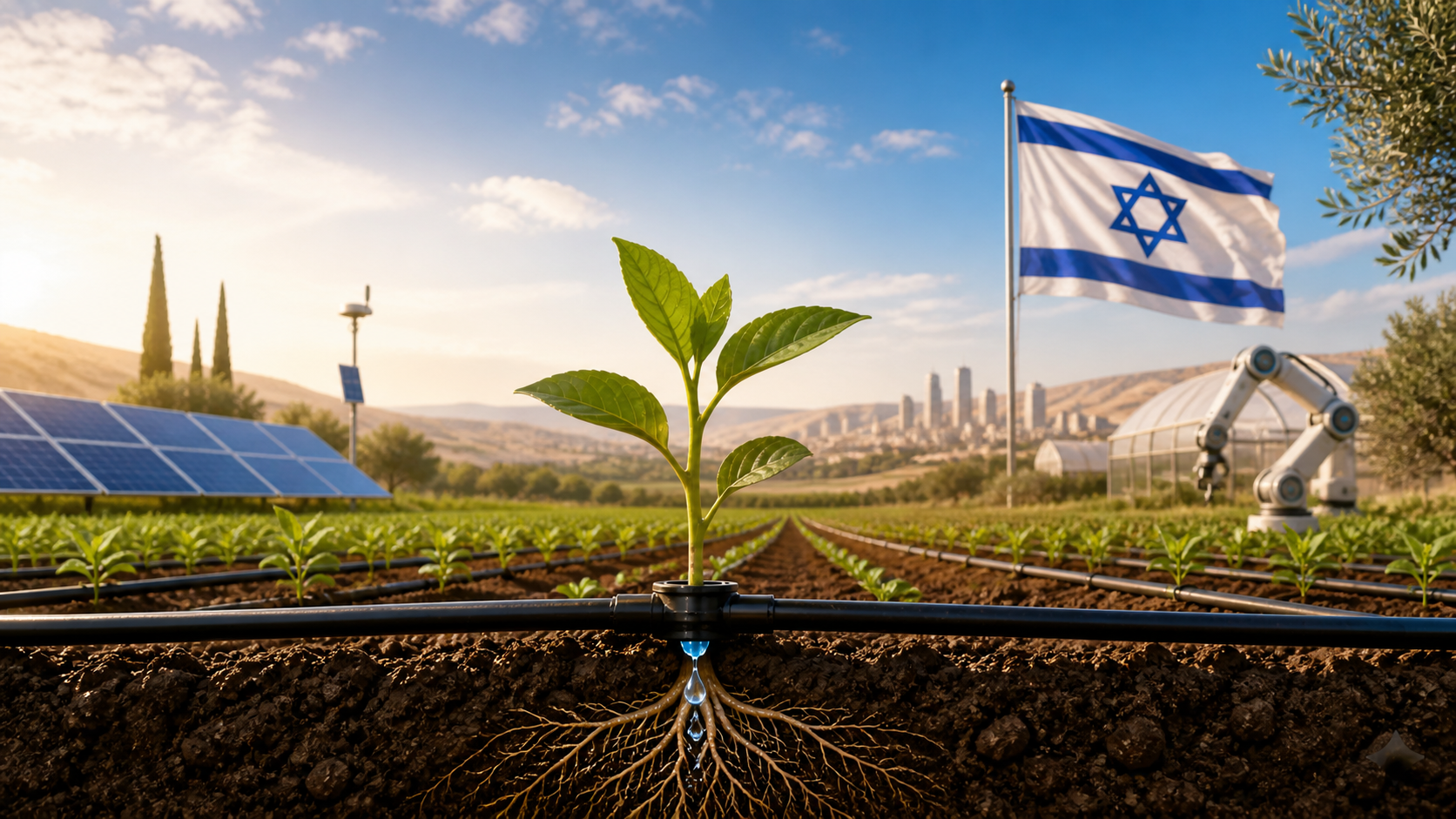
Simcha Blass’ discoveries have transformed arid regions around the world, feeding millions where drought and famine have been historic.
Agriculture was forever changed in the late 1950s when three monumental issues collided. First, the scarcity of rubber during World War II stimulated the rapid development of plastics.
Second, Holocaust survivors streamed out of Europe and Russia to found a homeland in Israel.
Third, the desert of Palestine had to be made fertile again to support a rapidly growing population of refugees. It was in the midst of this whirlwind that Ben Gurion challenged his people to “make the desert bloom.”
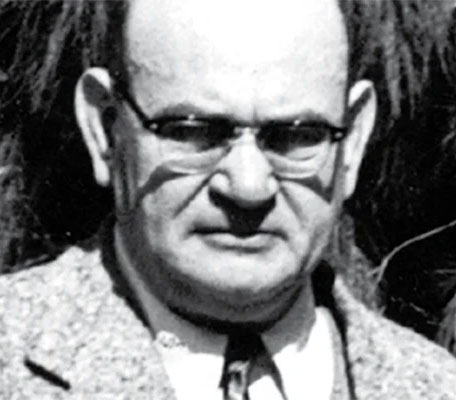
Simcha Blass
A Polish-born Jewish engineer and immigrant, Simcha Blass, working at the epicenter of Israeli hydrology, sought to help his people grow crops in the desert where water was in extremely short supply. It was he who purchased the pipes used in London to fight fires during the Blitz and shipped them to Israel to provide water to formerly dry lands. This pipeline enabled the establishment of eleven new Jewish settlements in the Negev on that historic Yom Kippur night in 1946.
Blass was well aware of the development of polypropylene and polyethylene between 1930 and 1940. American scientists had rapidly put these plastics to use in the war effort, and Blass studied their new applications. Armed with the latest science, Blass put his mind to solving the agricultural irrigation problem in Israel.
His story of the birth of a new form of irrigation reads much like a Biblical parable with many different versions, but in all, the result was the same.
While Blass was the primary hydraulic engineer in Palestine, he spent much time in the desert. One day, he sat beneath a large fig tree to eat lunch. A pipe coupler nearby was perpetually dripping, and was the only sign of moisture to this tree. The engineer could not understand how such a large tree could survive with so little moisture, so he dug a hole to determine exactly how the drops of moisture could feed such a large plant. His discovery was a deep, onion-shaped wet zone underground that remained perennially moist because there was no surface evaporation. The fig had tailored its root system to feed off this single column of moisture in the ground, growing just as productively as other fig trees under flood irrigation.
This epiphany drove Simcha to recreate such a scenario with a new kind of water-conservative irrigation.
The solution had to be affordable and easily manufactured to meet the growing demand of the Negev kibbutzim. Using new plastics, he worked to solve problems and exploit the hydrology of flow rates, friction loss, and pressure changes. By 1960, Blass had a prototype emitter about the size of a thimble that compensated for pressure delivering water at a static rate.
The story goes that there was much skepticism because agriculturists who were trained on the large spreading root zone mentality simply did not trust such a solution. They could not think outside the box.
Blass approached each kibbutz with his prototype but most were naturally unwilling to invest in such a curious new irrigation product.
Finally, Kibbutz Hatzerim, was willing to give it a try. The new emitters were such a success that Blass patented his new products. In 1965, he established Netafim (Hebrew for “drops of water”) Irrigation Company, giving the kibbutz 80 percent ownership and himself just 20 percent to better support the emerging nation.
Today, Netafim is a worldwide presence wherever there is a need to solve problems of aridity and desertification.
Every drip irrigation system in our desert can be traced back to Simcha Blass and his pioneering work in Israel. Necessity became the foundation for many innovations in this unusual style of water delivery. His discoveries have transformed arid regions around the world, feeding millions where drought and famine have been historic.
Read the original post here.
The Negev Foundation is committed to supporting the residents of the Negev. Please help these communities thrive.