

Negev Desert Wins Recognition as a Unique International Wine Region
The Negev is home to over 60 winemakers and received a terroir appellation this year after showing that Negev wines have an identifiable profile.
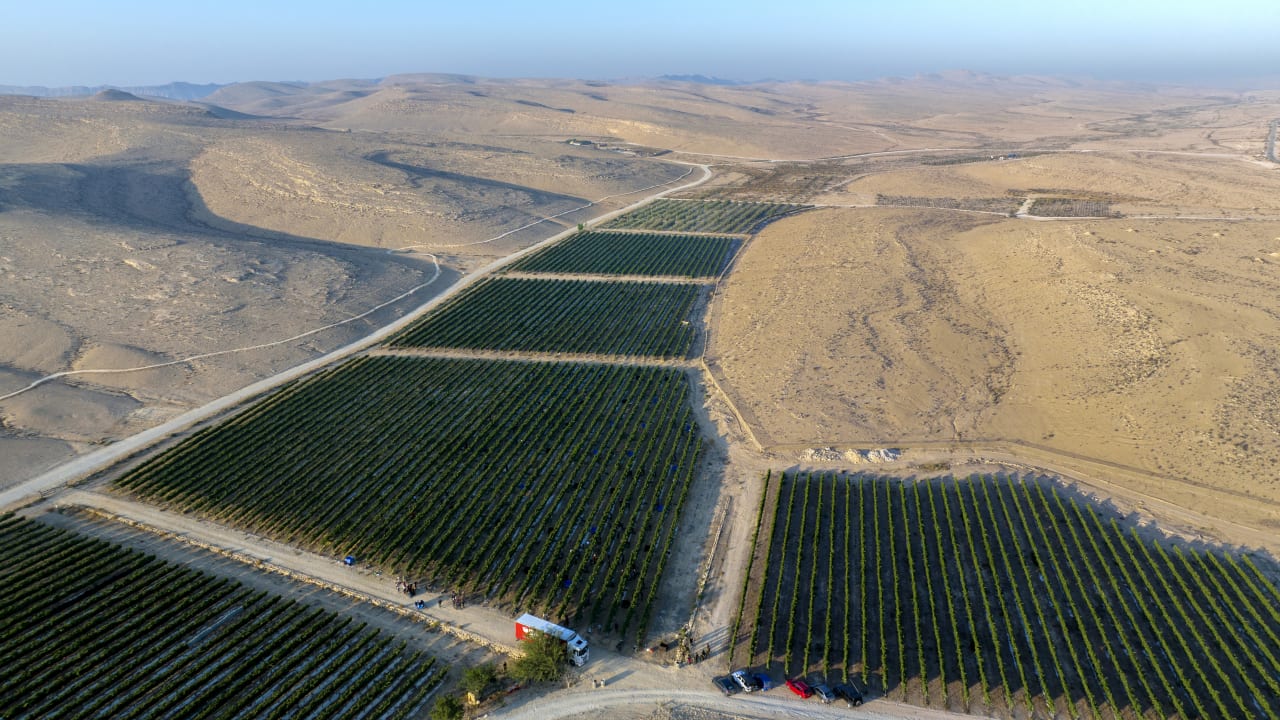
An aerial view of the Nana Estate Winery vineyards at the start of harvest season on August 3, 2022 near Mitzpe Ramon in Israel’s Negev Desert. (photo credit: David Silverman/Getty Images)
June 2026 – The lack of water in the Negev Desert helped vintners create a fruity grape that’s unique and easy to drink.
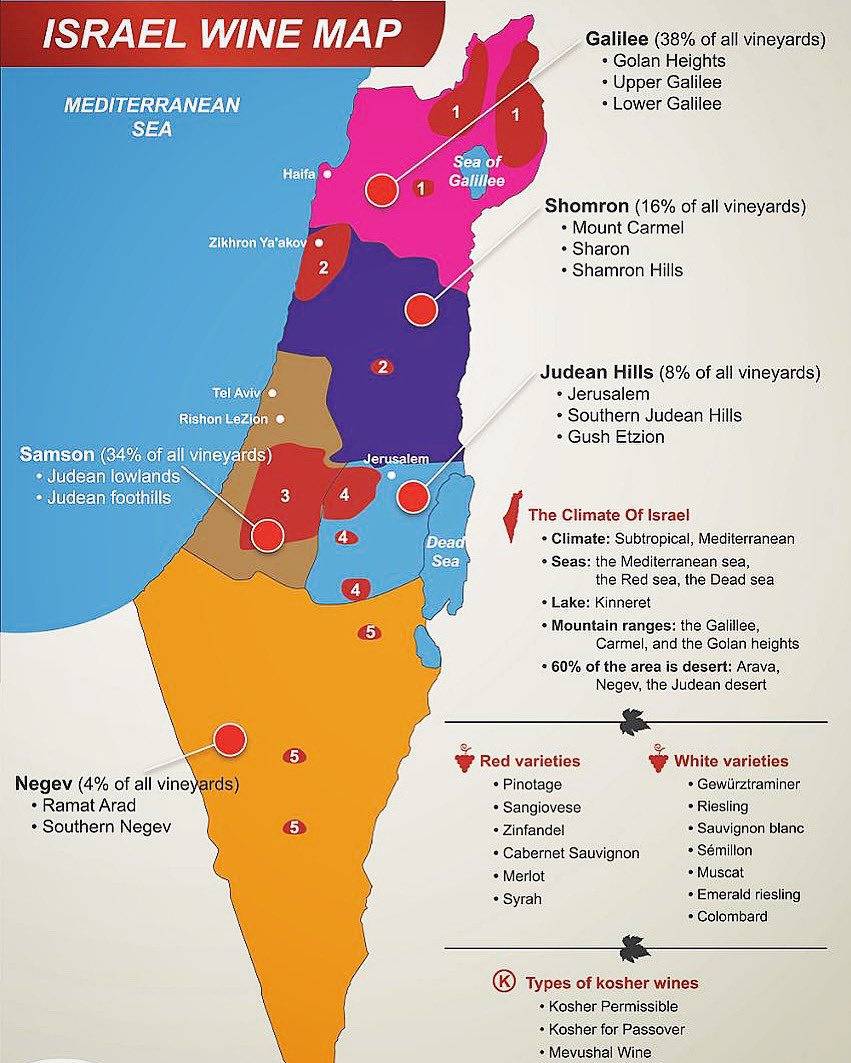
Now the dry, sandy landscape stretching from Kiryat Gat to Eilat is being officially recognized as the Negev appellation, an international wine region, placing Israel’s south and its distinctive desert terroir on the global wine map.
The recognition follows a four-year process in which a consortium of Israeli wine experts demonstrated that wines produced in the Negev have their own identifiable profile.
“If you want to create a wine region, you need to prove that you have something unique and specific to offer,” said Guy Haran, a wine tourism expert who has been part of the process since its inception.
That process includes demonstrating that the region in question has vineyards, wineries, an ancient and modern culture of wine and community, and a specific terroir and soil that’s unique to the region and climate. Haran and his fellow wine experts consulted with historians, geographers, and anthropologists, aiming to show where the Negev terroir begins and ends, eventually compiling a 150-page paper on the region.
“We did official tastings,” said Haran, “including a blind tasting to prove that Negev wines have a specific flavor.
The documentation was handed over to Israel’s Justice Ministry, which manages Israel’s participation in the Lisbon Agreement, an international treaty that enables producers of agricultural goods, including food, wine, spirits, and handicrafts, to create and protect their appellations of origin.
Once the Justice Ministry approved the documentation in April, the Negev appellation became official and globally recognized, said Haran.
The geographic appellation serves as a legal assurance to consumers that the wine originates from a specific climate and soil environment and is produced according to global standards.
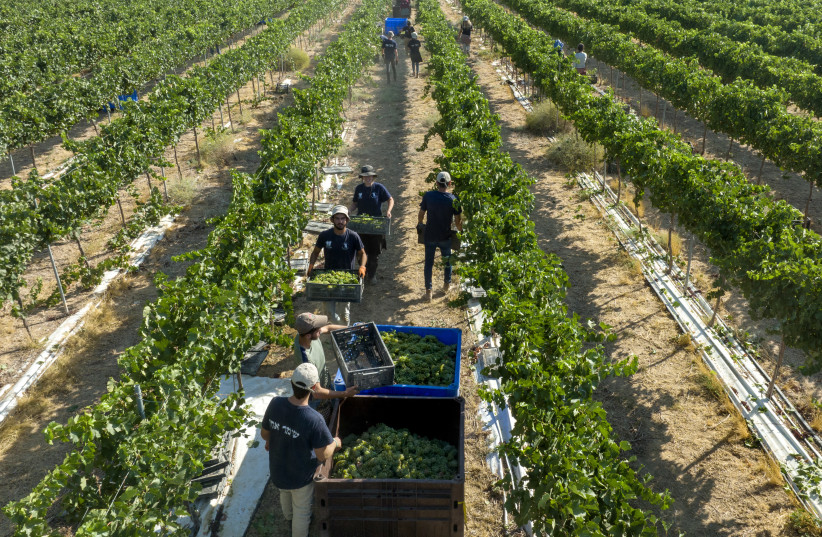
Israeli workers harvesting Chenin Blanc grapes at the start of harvest season on the Nana Estate Winery vineyards near Mitzpe Ramon in Israel’s Negev Desert. (credit: David Silverman/Getty Images)
Israel was first included in the Lisbon Agreement in the 1950s, when the country wanted to preserve and secure the Jaffa brand of oranges.
The Negev now joins the ranks of globally recognized wine regions such as Champagne, Chianti, Bordeaux, and Napa Valley.
In August 2020, a declaration was made for the Judea appellation, Israel’s first official wine region. The Negev wine brand is Israel’s third appellation. “We started with 12 vintners and winemakers in the Negev; now we have 60, producing more than one million bottles annually,” said Haran.
The initiative was led by the Merage Foundation Israel, which has long spearheaded efforts to position the Negev as an internationally recognized wine tourism destination.
The Negev wine region recognition is a milestone, said Nicole Hod Stroh, executive director of the Merage Foundation Israel.
“I see wine tourism as a modern and meaningful expression of contemporary Zionism,” said Hod Stroh. “This recognition strengthens the region’s economic and tourism potential while positioning the Negev internationally as an innovative, high-quality wine region.”
Haran, who travels frequently, leading wine tours around the globe, said he regularly receives support from international wine colleagues for the Negev appellation, even as Israel continues to be the subject of pro-Palestinian hate and boycotts. “When people see pictures of vineyards in the Negev desert, it’s jaw-dropping for them,” said Haran. “Wine connects people; it’s not an arena for fighting.”
Now, after three years of war, he sees the Negev appellation as a designation of national importance. “It’s time for us to celebrate what’s beautiful about Israel,” said Haran. “For me, this is real Zionism. I look at Italian regions that have become wealthy through wine tourism. Hopefully, we’ll be able to do the same for the Negev.”
Read the original article here.