

Dragon Fruit in Israel

Israelagri_logo_new
 

Dragon Fruit in Israel


A Field Perspective on an Unlikely Crop

Dragon Fruit

June 2026 – For many, dragon fruit (pitaya) is still perceived as an exotic fruit—something associated with Southeast Asia or Central America, tasted once while traveling rather than purchased regularly at home. Yet, for more than two decades, dragon fruit has been grown commercially in Israel, quietly developing into a small but intriguing agricultural sector that sits at the intersection of climate adaptation, evolving agro-techniques, and niche-market entrepreneurship.

Although dragon fruit originates in Central America, Israel offers surprisingly suitable conditions for seasonal production. Summers are hot, but excess heat and solar radiation can be effectively mitigated with shade nets. Water availability, often cited as a limiting factor in agriculture, is less restrictive due to widespread desalination, making irrigation costs more manageable than in regions with similar climatic conditions, such as California. Saline soils and frost-prone regions do pose challenges, but in practice, dragon fruit can be grown across most parts of the country.
At this time, almost all dragon fruit grown in Israel is destined for the local market.
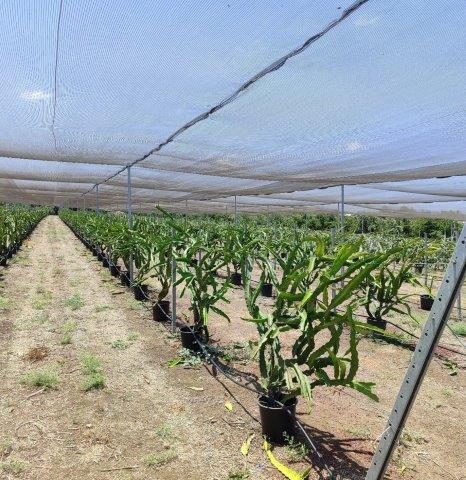
Dragon fruit trellising

In Israel, most growers use a system similar to grapevine trellising, with horizontal cables supporting plant growth.

Israel’s relative success with this crop is not accidental. A crucial factor has been the early work of researchers and breeders who recognized the potential of dragon fruit. The establishment of dragon fruit cultivation in Israel is largely attributed to the pioneering work of Professor Yossi Mizrahi ([email protected]), who played a central role in introducing genetic material and adapting varieties to local conditions. His work combined scientific rigor with entrepreneurial thinking and laid the foundation for the industry as it exists today.

Despite its vigorous growth and high yield potential, dragon fruit is far from a “quick win” crop. A common assumption is that growers earn exceptionally high profits due to the fruit’s high retail price. In reality, the economics are far more complex. Establishing a plantation under shade nets requires a high upfront investment. Ongoing maintenance of both plants and infrastructure is intensive and continuous, making profit margins far more fragile than they appear to consumers.

Perhaps the most distinctive agronomic feature of dragon fruit cultivation is pollination. Successful fertilization requires cross-pollination between compatible varieties, making orchard design, varietal composition, and flowering synchronization critical management considerations.
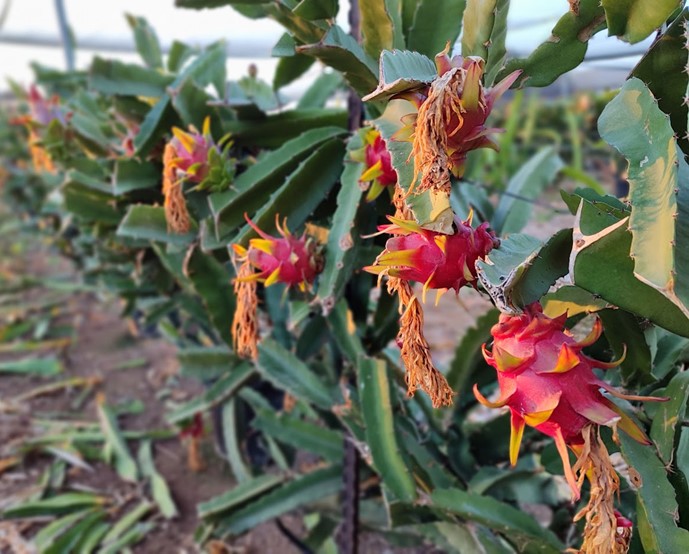
ripe dragon fruit

Once a fruit turns red, the time window for picking is very narrow, particularly during the hot Israeli summer.

And pollination presents a unique operational challenge. Flowering occurs at night, and each flower remains receptive for only a short time window, typically closing by late morning. During the flowering season, growers wake up before sunrise each day to collect pollen from different varieties, before natural pollinators become active. Pollen is harvested from the anthers, filtered, and stored in small containers to allow precise control over the genetic source used for pollination.

Pollination is performed entirely by hand, one of the most distinctive aspects of this crop. Using a small brush, pollen is applied directly to the stigma of each flower. This process is repeated flower by flower, often thousands or tens of thousands of times during a single morning. Timing is critical: pollination must be completed early, before flowers close and before environmental conditions reduce pollen viability.

Harvest places additional constraints on production. Once a fruit turns red, the time window for picking is very narrow, particularly during the hot Israeli summer. Pollination typically begins around mid-June, followed by an intensive period of harvesting and packing from mid- to late July through March.

Almost all dragon fruit grown in Israel is destined for the local market. Shelf life is relatively short, and export trials have so far proven commercially unviable.

In summary, dragon fruit in Israel represents a specialized agricultural system rather than a mainstream crop. Its development depends on coordinated agronomy, labor management, and market planning, making it suitable primarily for tough growers willing to invest in long-term production and niche-market strategies.

Read the original article here.

The Negev Foundation is committed to supporting the residents of the Negev. Please help these communities rebuild and thrive.

Negev Wins Recognition as a Unique International Wine Region

Times of Israel banner


Negev Desert Wins Recognition as a Unique International Wine Region


The Negev is home to over 60 winemakers and received a terroir appellation this year after showing that Negev wines have an identifiable profile.

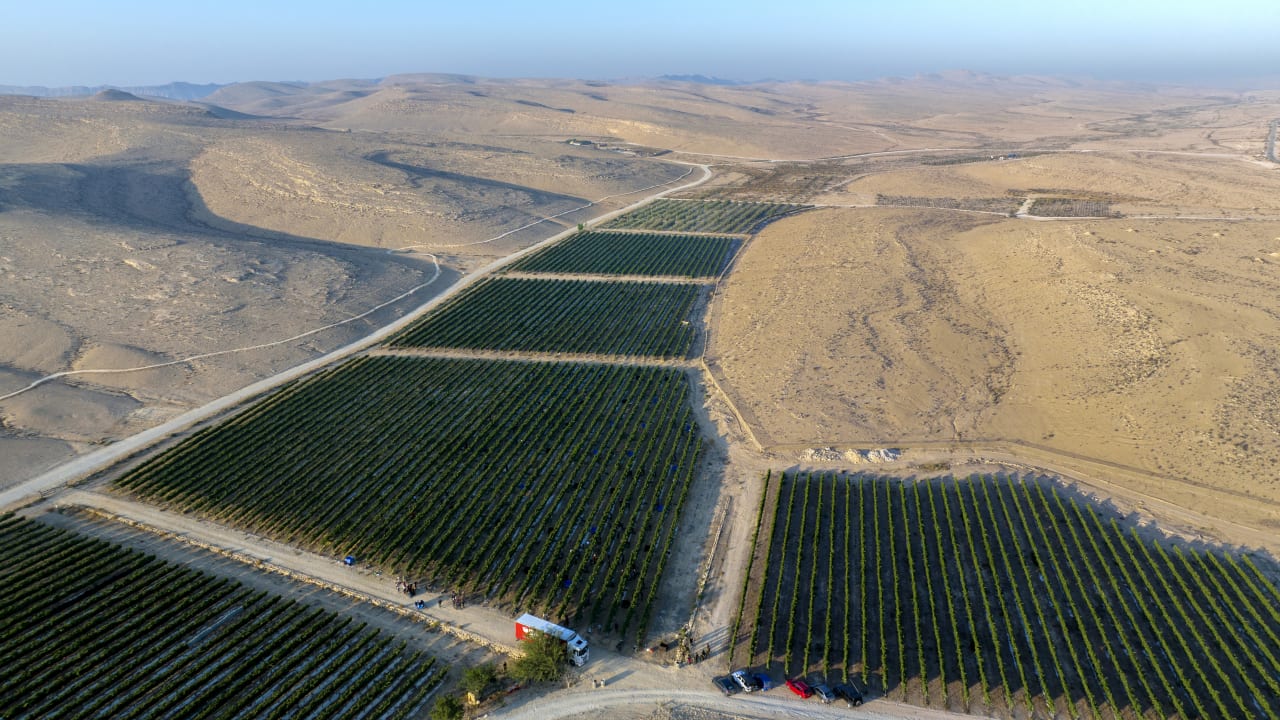
Nana Estate Winery in the Negev, Israel.

An aerial view of the Nana Estate Winery vineyards at the start of harvest season on August 3, 2022 near Mitzpe Ramon in Israel’s Negev Desert. (photo credit: David Silverman/Getty Images)

June 2026 – The lack of water in the Negev Desert helped vintners create a fruity grape that’s unique and easy to drink.

Now the dry, sandy landscape stretching from Kiryat Gat to Eilat is being officially recognized as the Negev appellation, an international wine region, placing Israel’s south and its distinctive desert terroir on the global wine map.

The recognition follows a four-year process in which a consortium of Israeli wine experts demonstrated that wines produced in the Negev have their own identifiable profile.

“If you want to create a wine region, you need to prove that you have something unique and specific to offer,” said Guy Haran, a wine tourism expert who has been part of the process since its inception.

That process includes demonstrating that the region in question has vineyards, wineries, an ancient and modern culture of wine and community, and a specific terroir and soil that’s unique to the region and climate. Haran and his fellow wine experts consulted with historians, geographers, and anthropologists, aiming to show where the Negev terroir begins and ends, eventually compiling a 150-page paper on the region.

“We did official tastings,” said Haran, “including a blind tasting to prove that Negev wines have a specific flavor.

The documentation was handed over to Israel’s Justice Ministry, which manages Israel’s participation in the Lisbon Agreement, an international treaty that enables producers of agricultural goods, including food, wine, spirits, and handicrafts, to create and protect their appellations of origin.

Once the Justice Ministry approved the documentation in April, the Negev appellation became official and globally recognized, said Haran.

The Negev now joins the ranks of globally recognized wine regions such as Champagne, Chianti, Bordeaux, and Napa Valley.

The geographic appellation serves as a legal assurance to consumers that the wine originates from a specific climate and soil environment and is produced according to global standards.

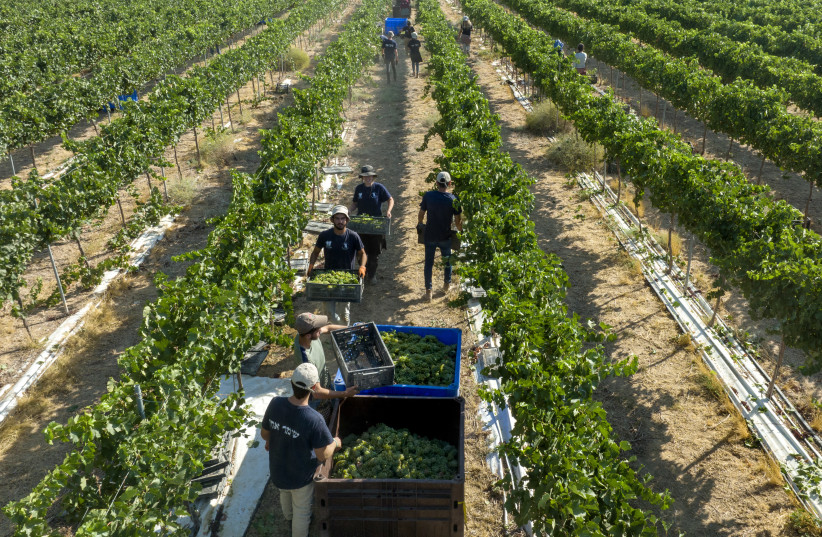
Harvesting white wine grapes in the Negev.

Israeli workers harvesting Chenin Blanc grapes at the start of harvest season on the Nana Estate Winery vineyards near Mitzpe Ramon in Israel’s Negev Desert. (credit: David Silverman/Getty Images)

Israel was first included in the Lisbon Agreement in the 1950s, when the country wanted to preserve and secure the Jaffa brand of oranges.

The Negev now joins the ranks of globally recognized wine regions such as Champagne, Chianti, Bordeaux, and Napa Valley.

In August 2020, a declaration was made for the Judea appellation, Israel’s first official wine region. The Negev wine brand is Israel’s third appellation. “We started with 12 vintners and winemakers in the Negev; now we have 60, producing more than one million bottles annually,” said Haran.

The initiative was led by the Merage Foundation Israel, which has long spearheaded efforts to position the Negev as an internationally recognized wine tourism destination.

The Negev wine region recognition is a milestone, said Nicole Hod Stroh, executive director of the Merage Foundation Israel.

“I see wine tourism as a modern and meaningful expression of contemporary Zionism,” said Hod Stroh. “This recognition strengthens the region’s economic and tourism potential while positioning the Negev internationally as an innovative, high-quality wine region.”

Haran, who travels frequently, leading wine tours around the globe, said he regularly receives support from international wine colleagues for the Negev appellation, even as Israel continues to be the subject of pro-Palestinian hate and boycotts. “When people see pictures of vineyards in the Negev desert, it’s jaw-dropping for them,” said Haran. “Wine connects people; it’s not an arena for fighting.”

Now, after three years of war, he sees the Negev appellation as a designation of national importance. “It’s time for us to celebrate what’s beautiful about Israel,” said Haran. “For me, this is real Zionism. I look at Italian regions that have become wealthy through wine tourism. Hopefully, we’ll be able to do the same for the Negev.”

Read the original article here.

The Negev Foundation is committed to supporting the residents of the Western Negev. Please help these communities rebuild and thrive.