

Ben & Jerry Israel debuts new ice cream celebrating local flavors

Times of Israel banner
 

Ben & Jerry Israel Debuts Ice Cream Celebrating Local Flavors

The company shows off a new creation, ‘Milk and Honey,’ made with ingredients from communities affected by October 7.
Ben & Jerry's Israel

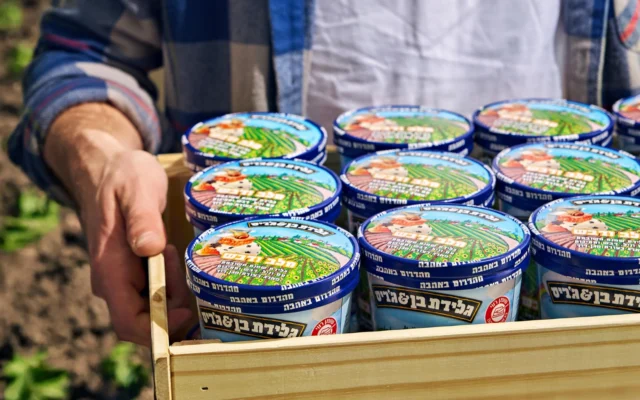
‘Milk and Honey,’ the new ice cream flavor by Ben & Jerry’s Israel (Ben & Jerry’s Israel/Social media)

Ben & Jerry’s Israel operation has come up with a flavor that does not leave much to interpretation. Called “Milk and Honey,” a nod to the biblical description of the Land of Israel, its namesake ingredients are supplied by Israeli cows and bees and its chocolate fudge pieces come shaped like Stars of David.

The company, which split from its American counterpart in 2021, is billing the new pint as its “most Israeli flavor ever” and, on its website, as a “symbol of hope, rehabilitation, and positive action” after the Hamas-led Oct. 7 attack.

Its ingredients and production come from southern Israeli communities most affected by the massacre and the war that followed. The company, based in the southern city of Kiryat Malachi, said it “felt a responsibility to take an active part in the region’s recovery process.”

The milk and cream come from the dairy in Kibbutz Alumim, one of the Gaza-border communities infiltrated by Hamas terrorists on Oct. 7, 2023. The honey comes from the beehives of Kibbutz Yad Mordechai. The chocolate Stars of David are made by hand at the Korint factory in Beersheba, part of the Shkulo Tov social enterprise, which helps integrate people with disabilities into the workforce.

Even the wrapper is local: the pint is adorned with “Fields of Light,” a painting by Rivi Doron-Gerloy, a southern Israeli artist who was killed in a Miami car accident last year.

The flavor was developed in partnership with the Ayalim Association, a nonprofit that works to strengthen Israel’s periphery. The company said royalties from sales of the new flavor will go to Ayalim’s rehabilitation and educational initiatives in the south.

The Israeli and American Ben & Jerry’s operations are completely separate. Unilever, Ben & Jerry’s parent company, sold the Israeli business in 2022 to Avi Zinger, the longtime Israeli licensee and owner of American Quality Products.

So does the new flavor deliver a taste of the Holy Land?

One food influencer, who called the new flavor a “statement,” said it “tastes like vanilla with chocolate chips” — a conclusion echoed by others in Israeli food-aficionado groups, who lamented that the honey was barely noticeable.

One commented, referring to dairy-free desserts made to comply with kosher laws prohibiting the mixing of milk and meat: “Not the tastiest thing I’ve ever eaten, but not as bad as a parve dessert either.”

Read the full article here.
The Negev Foundation is committed to supporting the residents of the Negev. Please help these communities rebuild and thrive.

AI Hub Planned for Negev Desert

U.S.-Israel AI Hub Planned in Negev Amid Global Tech Race

“Project Spire” would create a secure AI research and manufacturing corridor in southern Israel.

Negev Hebron Hills

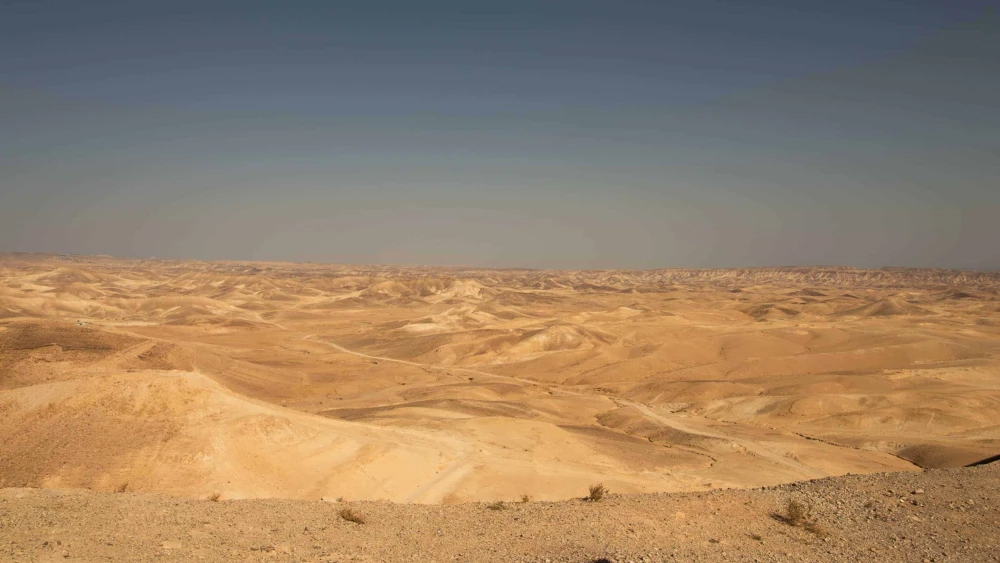
View overlooking the Negev Desert from Mitzpe Midrag, the former Um Daraj police station in the Hebron Hills, Nov. 27, 2025. Photo by David Isaac.

A proposed U.S.-Israel initiative known as “Project Spire” could establish one of the world’s most secure artificial intelligence campuses in Israel’s Negev Desert, according to a new Hudson Institute report. The project is designed to strengthen Western leadership in AI while reducing dependence on Chinese-controlled technology infrastructure and supply chains.

The proposed campus would span three locations in the western Negev and combine AI research, semiconductor manufacturing, data centers, and energy infrastructure into a tightly secured ecosystem. Hudson Institute analysts Michael Doran and Zineb Riboua described the vision as blending “the security of an American military installation and the creative output of a Silicon Valley hub.”

The project comes as global powers increasingly view AI dominance as a defining geopolitical issue. Modern AI systems rely on complex supply chains that include semiconductor production, rare-earth minerals, massive computing infrastructure, and advanced energy systems. Supporters of Project Spire argue that concentrating these elements in a secure allied environment could help protect sensitive technologies from espionage and disruption.

Brig.-Gen. (Res.) Erez Askal

Brig.-Gen. (Res.) Erez Askal, director of the National AI Directorate in the Israeli Prime Minister’s Office, 2025. Credit: PMO.

AI Partnerships

Project Spire is part of the broader “Pax Silica” initiative, a U.S.-led strategy focused on creating trusted AI and semiconductor partnerships among allied nations. The diplomatic foundation for the partnership was formally launched on Jan. 16, 2026, in Jerusalem, where U.S. and Israeli officials signed agreements expanding cooperation in artificial intelligence, semiconductors, space technology, and energy production.

Brig. Gen. (res.) Erez Askal, director of Israel’s National AI Directorate, said Israel has been “working vigorously” to deepen partnerships with leading AI nations, “foremost among them our great friend, the United States.”

The Negev Advantage

The Negev location offers several strategic advantages. Israel already operates highly secure facilities in the desert, including the Shimon Peres Negev Nuclear Research Center near Dimona, while the Defense Ministry continues expanding military and intelligence infrastructure through its “Move to the South” initiative.

The region also provides large open areas suitable for hardened security perimeters that would be difficult to establish in dense urban centers. Planned infrastructure reportedly includes advanced AI data centers, independent energy grids, localized semiconductor fabrication facilities, and specialized research laboratories.

Despite the harsh desert climate, planners believe the Negev can support such a massive project through renewable energy and water-recovery technologies. The nearby Ashalim Solar Thermal Power Station already generates 121 megawatts of electricity, while advanced wastewater recycling systems could help offset the enormous water demands associated with AI data centers.

Israel as a Global Tech Hub

Israel’s existing technology ecosystem is another major factor behind the proposal. More than 400 multinational corporations operate research and development centers in Israel, including Intel and Microsoft. NVIDIA, currently one of the world’s leading AI hardware companies, employs more than 5,000 people in Israel and recently announced plans for a multibillion-dollar campus expected to house 10,000 workers.

The Israeli government is also expanding domestic AI capabilities. Earlier this month, Israel approved a plan to secure 5,000 advanced AI processors annually through 2032 and launched a national AI supercomputer project operated by cloud provider Nebius.

Supporters say Project Spire could transform southern Israel economically by bringing major infrastructure investment, high-paying jobs, and new opportunities for startups and research institutions. They also argue the initiative would further deepen the U.S.-Israel strategic alliance and strengthen Israel’s position in the global AI race.

However, critics have raised concerns about sovereignty and technological independence. According to the report, the proposed framework would place ownership of core AI intellectual property and advanced chip designs under American control. Long-term land leases for U.S. use and strict American security protocols have also sparked concerns about creating a heavily restricted American-controlled technology enclave inside Israel.
Others warn the initiative could draw Israeli AI and cybersecurity talent away from local startups and defense agencies. Doron Levin, CEO of Israeli AI cybersecurity company Harpsicord, called the proposal “a double-edged sword,” noting that while Israel must remain competitive in AI for national security reasons, “there is no such thing as a free lunch.”

The U.S. State Department has not officially confirmed details regarding Project Spire.

Read the original article here.

The Negev Foundation is committed to supporting the residents and communities of the Negev. 


YOUR SUPPORT MATTERS