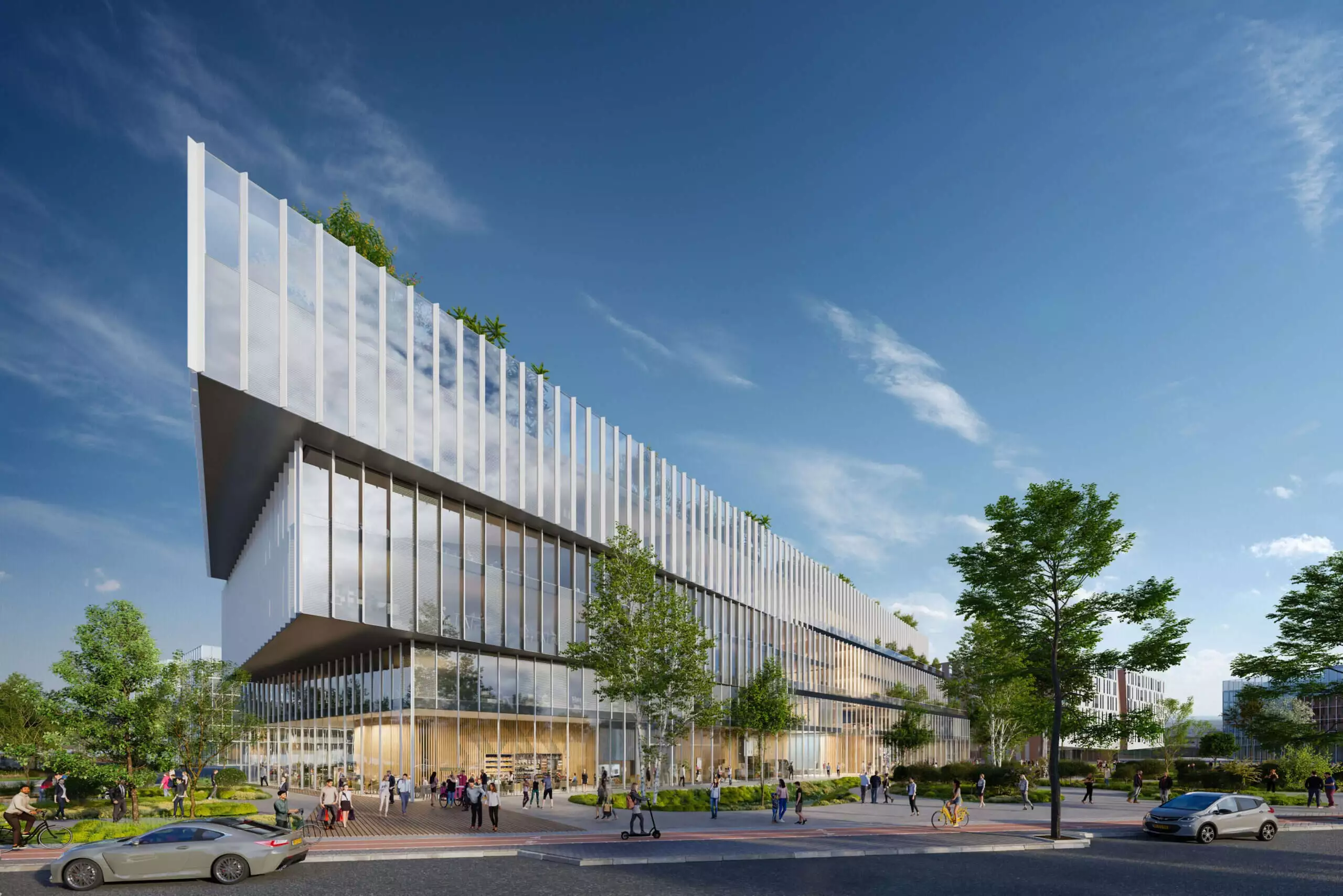

ICL Headquarters in Be’er Sheva

Strengthening the south: A new headquarters for ICL in the heart of Be’er Sheva

ICL, considered the largest private employer in the Negev, is inaugurating a new building in Be’er Sheva for hundreds of the company’s headquarters employees.
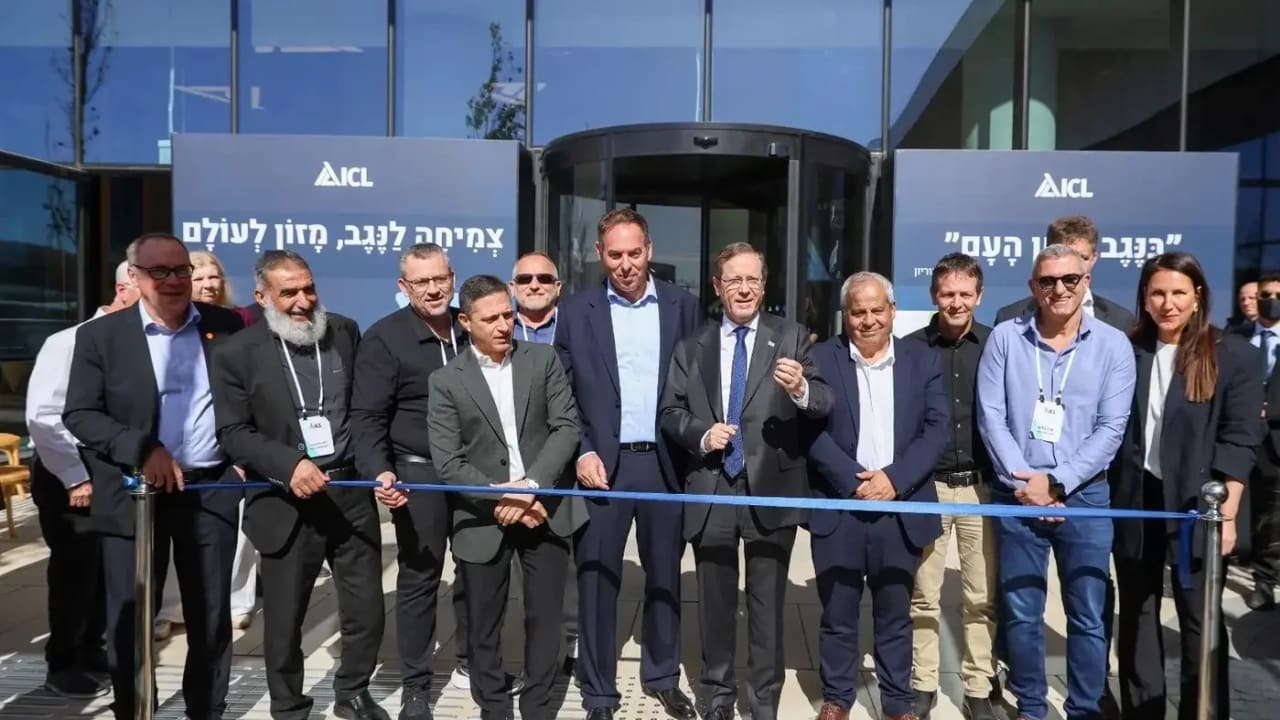
ICL ceremony new headquarters in Be'er Sheva

ICL inaugurates new headquarters in Be’er Sheva, attended by the President of the State, Isaac Herzog, the Mayor of Be’er Sheva, Rubik Danilovich, the Mayor of Dimona, Benny Biton, leaders of the Negev region, company management, and other officials from the Negev. (photo credit: B. Rabinovitch Productions Ltd.)

The minerals and specialty solutions company ICL, considered the largest employer in the Negev, has inaugurated the company’s new headquarters in Be’er Sheva, at a ceremony attended by President of the State, Isaac Herzog; the Mayor of Be’er Sheva, Rubik Danilovich; the Mayor of Dimona, Benny Biton; leaders of the Negev region, company management and other senior officials from the southern region.

The building, which was designed according to green building standards, covers an area of approximately 5 dunams and approximately 15,000 square meters of built space, and includes 12 office floors, commercial areas, a dining complex, and an advanced services application. Approximately 1,000 company employees who were previously dispersed across various buildings throughout the city will now be housed in the new structure.

According to President Isaac Herzog, “ICL is a very important employer. Many hundreds of families in the city find their livelihood in ICL. And thousands upon thousands of Negev residents have chosen to build their homes and lives here, thanks to the presence of such a significant company. ICL’s achievements do not end with a blessed impact on the Negev.

ICL’s strategic asset does not lie only in natural resources, but in the excellent human capital that grows here. In an era of global instability, the State of Israel must understand that national independence and economic security are built here in the south.

– Rubik Danilovich, Mayor of Be’er Sheva

Alongside being a growth engine for the entire Israeli economy, ICL is also a source of Israeli pride, as the innovation, entrepreneurship and excellence found within it receive a place of honor and leadership throughout the world. The establishment of the company’s new offices here in Be’er Sheva is an important declaration of intent for the Negev and its residents, further sharpening the commitment to the economic future of the entire Negev: For it is here that thepeople of Israel will truly be tested.”

ICL employs approximately 4,500 direct employees, most of them residents of the Negev, from the cities of Be’er Sheva, Dimona, Arad, and Yeruham; while the impact reaches approximately 19,000 families in the southern region. According to a special report by the consulting firm BDO, ICL’s contribution to Israel’s economy is estimated atapproximately NIS 17.6 billion per year, constituting approximately 10% of the GDP in the south.

The company’s impact is particularly prominent in the field of industry, and it is responsible for approximately 27% of the industrial GDP in the Be’er Sheva subdistrict and more than 50% of the region’s industrial exports. The total state revenues from ICL’s activity in 2024 amounted to NIS 1.3 billion.

ICL’s contribution extends beyond the country’s borders, and through its products, helps safeguard the food security of approximately 400 people every day, approximately 5% of the world’s population. ICL CEO, Elad Aharonson, “The establishment of the new headquarters in Be’er Sheva is much more than a business decision; it is a declaration of our deep commitment to the Negev and our full confidence in the people who are the driving force of the company. A stable and strong industry is the infrastructure that enables tens of thousands of families in the south employment, economic security, and a thriving community. From here, in the capital of the Negev, we will continue to operate out of mission and responsibility, to ensure that industrial activity continues to lead the region’s growth and the national resilience of the State of Israel.”

Mayor of Be’er Sheva, Rubik Danilovich, “The inauguration of the ICL House in the heart of Be’er Sheva is the realization of a Zionist and economic vision in the capital of the Negev. The company’s true strategic asset does not lie only in natural resources, but in the excellent human capital that grows here. In an era of global instability, the State of Israel must understand that national independence and economic security are built here, in the south. We must ensure that ICL continues to grow and doubles the employment in the region. If we do not nurture our industry ‘at full capacity’, we will miss the opportunity to establish the future of the Negev. Be’er Sheva is proud to be the home of the company, and from here we will continue to lead together the technological message and the national resilience of the State of Israel.”

Mayor of Dimona, Benny Biton, “ICL is a central employment anchor forthousands of families in Dimona and throughout the eastern Negev. The historical and deep connection between the company and the residents of Dimona continues in a new and significant chapter. Strengthening the headquarters in Be’er Sheva does not come at the expense of the periphery – on the contrary. It strengthens the entire Negev region and creates a strong regional continuum in which industry, human capital and local authorities operate together for a more prosperous future.”

The company began its path from the vision of a Jewish-Russian scientist, Moshe Novomeysky, who discovered the unique advantages of the Dead Sea approximately one hundred years ago, and the preservation of his legacy was carried out several years ago when a visitors center was established in his name, reviewing the historical story of the region and of his work. Since then, and to this day, the company has expanded globally, operating in more than 120 countries and generating approximately $7 billion in annual sales revenue.

The building inauguration event included a mezuzah affixing ceremony and the unveiling of an exhibition featuring historical photographs from one hundred years of the company’s activity. The company, which supports communities in the south in a variety of ways and includes a broad volunteer network that invests tens of thousands of hours each year, brought an emotional representation to the event. A youth band of Ethiopian immigrants from the Charuv Absorption Center in Be’er Sheva performed as part of the ceremony. The center and the company have maintained a longstanding relationship, and company employees volunteer with them throughout the year.

Read the full story here.

The Negev Foundation is committed to supporting the residents of the Negev. Please help these communities thrive.
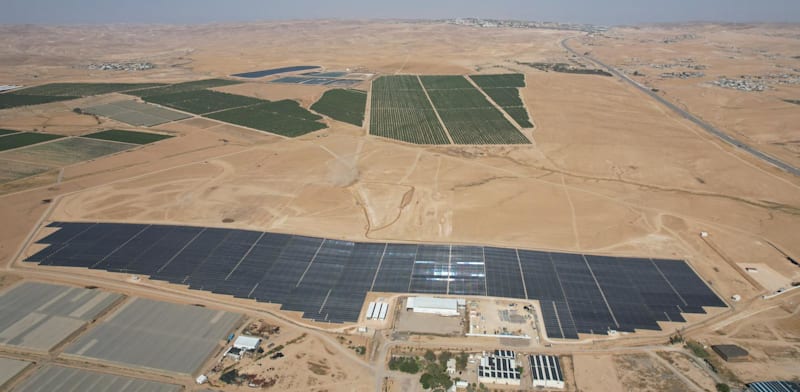

Solar Energy Gains Momentum with Huge Project in the Negev


Solar Energy Boom Gains Momentum in the Negev

Financing has been closed for the biggest solar energy project in Israel.

Bekat Arad Negev project credit: Bilktrick Israel

Bekat Arad Negev project credit: Bilktrick Israel

Major steps were taken yesterday as a huge solar energy project moved forward towards the production stage. In Israel, Rapac Energy and Mivtach Shamir unit Shamir Energy closed financing with Israel Discount Bank for the construction of Israel’s largest solar energy project, which will include a full gigawatt-hour of storage capacity.

Rapac Energy and Shamir Energy signed a financing agreement with the bank for NIS 800 million to build the large solar energy production facility in the Negev, on 1,400 dunams of land (350 acres) owned by a “large industrial company in the Negev” south of Beersheba. The facility will have a production capacity of 174 megawatts and will have a storage capacity of 974 megawatt-hours. The project will be 75% owned by Rapac and 25% owned by Shamir Energy.

Discount SVP business division head Hilla Eran Zick said, “Financing for this project, together with our leading partners, reflects our uncompromising commitment to creating a long-term positive impact on the environment and the development of the Negev.”

Rapac Energy CEO Itai Hagai added, “We are pleased to complete the financial close and launch the construction of the largest photovoltaic project in Israel, operating in the market regulation model in the transmission network. The project is based on an innovative dual-use solution that allows optimal utilization of the land resource and significantly shortens the schedule for connecting a facility of this scale to the grid.

Shamir Energy CEO Lior Farber said, “This is one of the largest and most advanced infrastructure projects ever seen in Israel, combining solar production with storage on a significant scale.”

Read the full story here.

The Negev Foundation is committed to supporting the residents of the Western Negev. Please help these communities rebuild and thrive.

New Light Rail for Be’er Sheva


Times of Israel banner


November 9, 2025

1.2 Billion NIS to Beersheba for New Light Rail, and Defense R&D Hub

The Negev is in a momentous time. We have a great opportunity to change Israeli society and strengthen the largest region in Israel.

Light Rail Be'er Sheva

The cabinet on Sunday approved a NIS 1.2 billion ($368 million) development plan for the southern city of Beersheba, the Prime Minister’s Office announced.

The plan will establish a light rail and new arms development center in the southern city and expand the Israel Defense Forces’ presence in the surrounding Negev Desert, among other things.

It follows a transfusion last week of NIS 1 billion ($307 million) in public and private funds to help Beersheba’s Soroka hospital, the Negev’s main medical center, recover from an Iranian missile strike in June and construct a new, armored hospitalization building.

The new plan “includes reinforcement in many areas that are important to the residents of Beersheba,” including “a light rail that will reach the hospital we approved separately,” Prime Minister Benjamin Netanyahu said at the start of Sunday’s weekly cabinet meeting.

“We’re helping with cyber, R&D, livelihood, and it’s of course a reinforcement of the entire Negev… through a mix of government infrastructure and encouragement of the private sector,” said Netanyahu.

The PMO statement said the funds for Beersheba will focus on four main areas: “economic growth, development of transportation infrastructure, improving quality of life and personal security, and education and human capital.”

To support economic growth, the PMO said, some NIS 200 million ($61.3 million) will be invested in a civilian-military R&D center in cooperation with the Defense Ministry’s Weapons Development and Technology Infrastructure Administration (MAFAT), as well as other projects to expand the “ecosystem connecting academia, industry, and the military.”

Transportation in Beersheba will be bolstered by the planning and construction of a new light rail system that will connect the city with suburbs and IDF bases in the Negev, the PMO said, without specifying the system’s cost.

In the area of personal security and welfare, some NIS 500 million ($153.2 million) will go toward a new police station, expanding the IDF Southern Command, and the “development of advanced technological systems for dealing with regional security challenges,” the PMO said.

In addition, the number of psychologists and medical professionals in Beersheba will be increased, and the Wingate Sports Institute, which is located near Netanya in central Israel, will open a branch in Beersheba, according to the PMO.

Meanwhile, it said, some NIS 120 million will go toward formal and informal education, with a focus on STEM fields. Beersheba Mayor Ruvik Danilovich said in a statement that the government plan for his city was an “important and significant step.” “The Negev is in a momentous time,” he said. “We have a great opportunity to change Israeli society and strengthen the largest region in Israel.”

While Beersheba is often referred to as the capital of the Negev, which comprises about 55 percent of Israel’s land area, the city of some 220,000 residents has seen its national profile fall in recent years. Once Israel’s fourth-largest city, it now ranks ninth in population size, falling in recent years behind Rishon Lezion, Petah Tikva, Netanya, Ashdod, and Bnei Brak, all located closer to Tel Aviv.

Beersheba is among the poorest large cities in Israel, and consistently ranks in the bottom quarter of the country’s annual quality of life rankings. A development town that quickly absorbed refugees from North Africa, the Middle East, and Eastern Europe in the 1950s and 1960s, it now has one of the highest crime rates in Israel.

Some in Beersheba say that the national government has placed the city’s development lower on its list of national priorities in recent years, especially in light of increased investment in the western Negev and the north of the country due to damage caused in fighting following the Hamas invasion on October 7, 2023.

Read the original here.

Nvidia expands in the Negev


Nvidia Expands in the Negev

The company will move its southern Israel development center to a site spanning 3,000 square meters, with full operations expected by mid-2026.

A visualization of the new NVIDIA hub in Israel (Moshe Zur Architects)


Nvidia continues broadening its Israeli footprint. The company announced Sunday it will move its Beersheba research and development center to a new location three times the size of the existing facility. The new site at Gav-Yam’s high-tech park in the city, covering roughly 3,000 square meters (32,292 square feet), is projected to reach full operational capacity by the end of the first half of 2026.

This marks Nvidia’s southernmost location in Israel, complementing the established development centers in Tel Aviv, Ra’anana, Yokneam, Mevo Carmel, and Tel Hai. Alongside the expansion, Nvidia intends to hire hundreds of additional staff in the southern area, including chip developers, hardware and software engineers, architects, students, and advanced degree holders.

The existing teams at the facility and incoming personnel will participate in developing cutting-edge hardware and software for AI networking, including NVIDIA Spectrum-XEthernet, Quantum-X InfiniBand, NVLink, ConnectX, and BlueField DPUs products, along with central processing units for data centers and additional technologies.

Nvidia employs over 5,000 people in Israel. According to the company, since purchasing Mellanox in 2020, Nvidia’s Israeli workforce has more than doubled, with the company maintaining expansion through hundreds of available positions nationwide.

“Expanding Nvidia’s development center in Beersheba demonstrates our dedication to accessing the finest engineers, regardless of their location,” said Amit Krig, senior vice president at Nvidia and director of Nvidia’s development center in Israel. “The new facility will function as a professional home for hundreds of additional developers from Beersheba and surrounding communities, who will participate in creating groundbreaking hardware and software technologies and drive global innovation in artificial intelligence.”

“Opening Nvidia’s new facility and tripling its activities in the city constitutes significant and vital news for Beersheba and the Negev,” said Ruvik Danilovich, mayor of Beersheba. “This choice reflects trust in the Beersheba ecosystem, and will generate hundreds of new employment opportunities that will bolster the city’s human capital and cement Beersheba’s position as a premier innovation hub.”

Read the original here.