
Ashalim Organic Farming in the Negev


Turning Desert Challenges into Organic Farming Success in Ashalim

Genesis Seeds offers a compelling example of how research, creativity, and ecological stewardship transforms arid agriculture into sustainable farming.
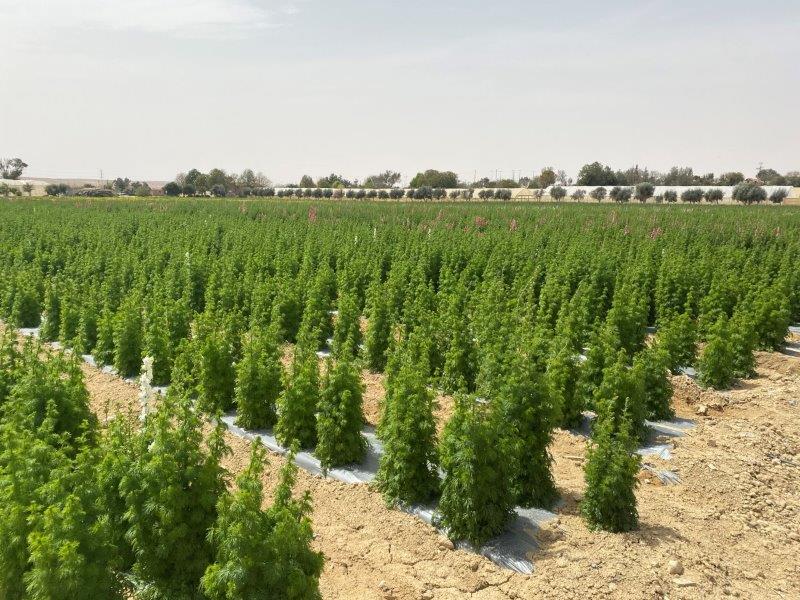
Ashalim organic farming, Negev, Israel

Genesis Seeds R&D Fields in Ashalim, Israel.

ASHALIM, Israel — In the heart of Israel’s Negev Desert, Genesis Seeds is proving that even harsh desert conditions can support thriving organic agriculture through innovation, research, and sustainable farming practices.

Founded in 1996 by Dr. Itzik Nir, Genesis Seeds has become an international leader in organic seed production, particularly for basil. During a recent tour of the company’s research fields in Ashalim, agronomist Ehud Raziel highlighted how the company has transformed the region’s clay-rich, saline soils into productive farmland without relying on synthetic fertilizers or chemical pesticides.
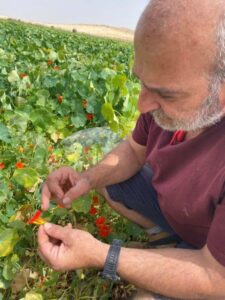
Ashalim organic farming, Negev, Israel

Ehud monitoring plants in the field.

Instead, Genesis Seeds has developed a range of environmentally friendly solutions. These include compost-based liquid fertilizers, crop rotation with biofumigant mustard varieties, biological soil treatments, and carefully managed irrigation systems that improve soil health while reducing salinity. Plastic mulch, compost recycling, and natural weed suppression techniques further reduce water use and environmental impact.
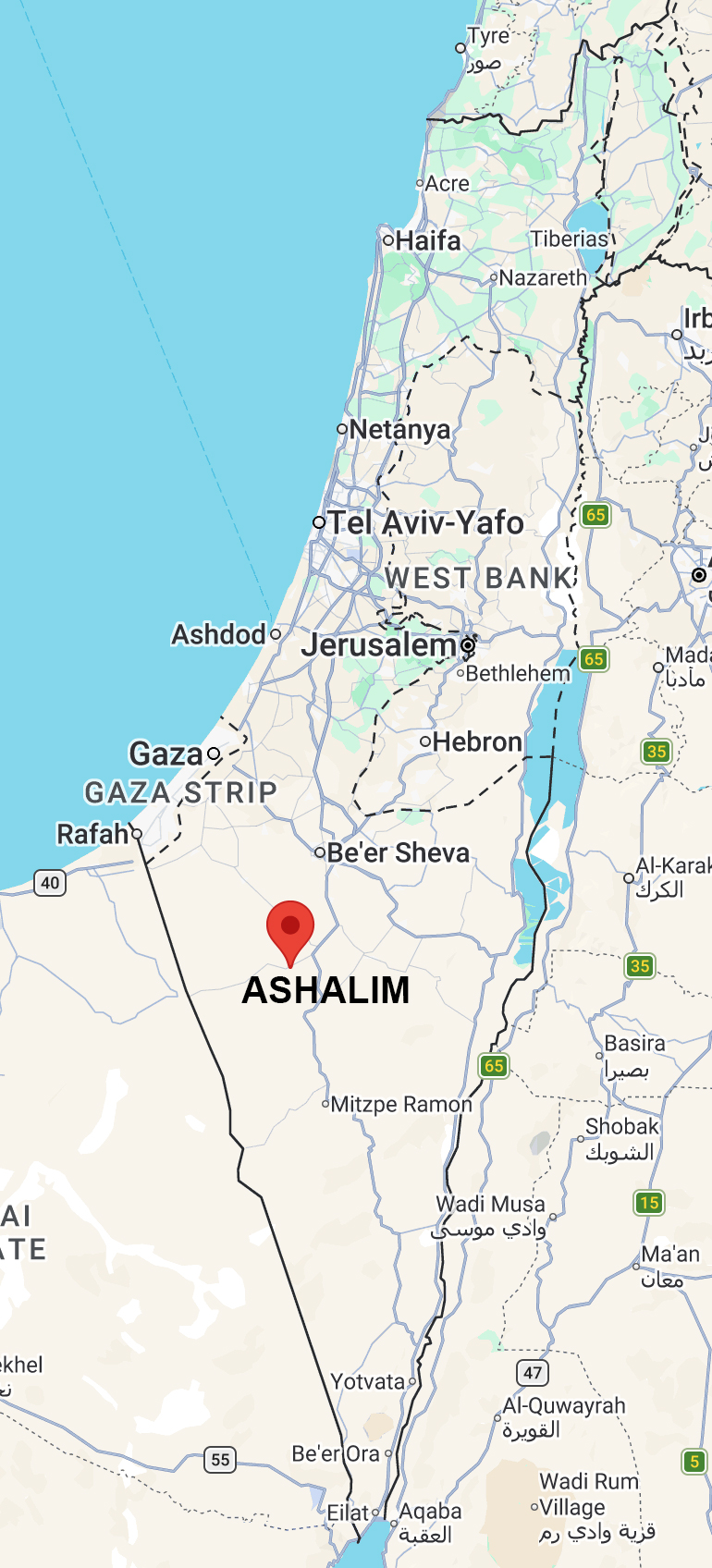
Ashalim on Israel map.Pest management relies on daily field monitoring and plant-based biological extracts rather than conventional pesticides, while sophisticated software helps optimize labor, crop planning, and production decisions.

To improve pollination, the company maintains its own beehives rather than renting colonies, thereby reducing transportation costs while supporting biodiversity and increasing seed yields.

Ashalim’s remote location also provides an unexpected advantage by limiting pest pressure and reducing the risk of cross-contamination between crops.

Raziel believes that successful organic farming requires both scientific knowledge and curiosity. By viewing each challenge as an opportunity to innovate, Genesis Seeds continues to demonstrate how sustainable agriculture can flourish in one of the world’s most demanding environments.

As global demand for environmentally responsible food production continues to grow, Genesis Seeds offers a compelling example of how research, creativity, and ecological stewardship can transform desert agriculture into a model for sustainable farming worldwide.

Read the full study here.
The Negev Foundation is committed to supporting the residents of the Negev. Please help these communities rebuild and thrive.

Pistachio Desert Project


How Israel Is Rewriting the Rules of Arid Agriculture

Liberian students pursue advanced agricultural training at Israel’s renowned Ramat Negev Desert Agro-research and Business Center.

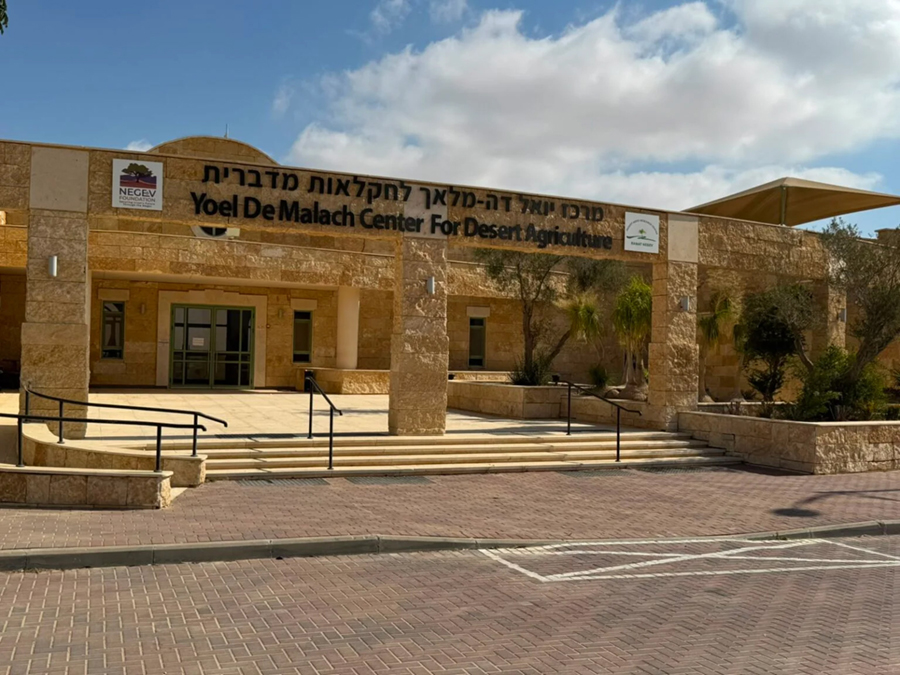
The Yoel deMalach Center for Desert Agriculture

The Yoel deMalach Center for Desert Agriculture, formally known as the Ramat HaNegev DesertTech and AgriTech Research and Innovation Center

Frederick Tee Teegwiah, Jr.

NEGEV DESERT, ISRAEL – In a region where annual rainfall can be measured in millimeters and summer temperatures soar past 40 degrees Celsius, a quiet agricultural revolution is unfolding. Against all odds, Israel’s Negev Desert, which covers roughly 65% of the country’s landmass, has become a living laboratory for sustainable farming, proving that barren landscapes can bloom when innovation meets determination.

Turning Waste into Wealth

At the heart of this transformation is a philosophy that treats scarcity as a mother of invention. The Ramat Negev Desert Agro-Research Center, a premier applied research institute, has spent decades developing practical solutions for agriculture under arid and semi-arid conditions.

Its work spans water management, soil-plant interactions, crop production, and the integration of livestock systems, all designed to function where traditional farming would fail.

The Pistachio Desert Project

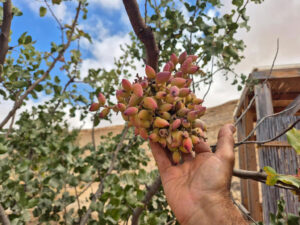
Pistachio trees, Negev, Israel

Pistachio trees, Negev, Israel

One of the center’s most promising breakthroughs is the Pistachio Desert Project. The project’s multi-disciplinary team designed every activity to utilize each other’s waste as a resource, a true circular economy in action. Solar energy and cogeneration power the operation; wastewater is recycled; solid waste becomes compost; and biogas is produced on-site.

The result is not just environmental sustainability, but economic viability. Indigenous medicinal plants, herbs, and spices are processed into high-value cosmetics and other products, offering a path out of poverty for one of Israel’s most vulnerable communities.

“We don’t just teach farming, we teach a mindset,” said Elisha Zurgil, Study Tour International Agri Advisor at Ramat Negev R&D Center.

The project’s multi-disciplinary team designed every activity to utilize eachother’s waste as a resource, a true circular economy in action. Solar energy and cogeneration power the operation; wastewater is recycled; solid waste becomes compost; and biogas is produced on-site.

The result is not just environmental sustainability, but economic viability. Indigenous medicinal plants, herbs, and spices are processed into high-value cosmetics and other products, offering a path out of poverty for one of Israel’s most vulnerable communities. 

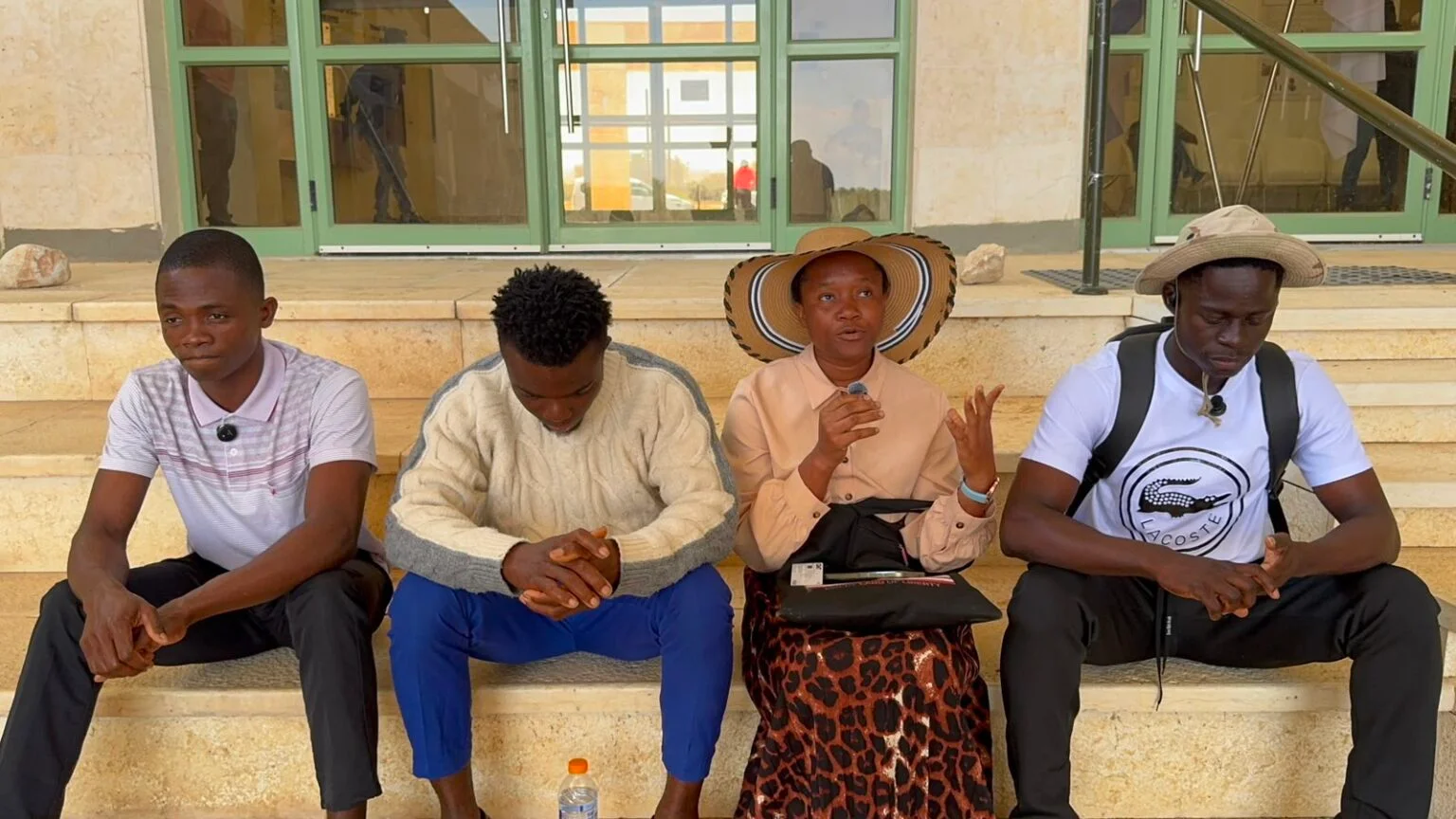
Liberian agriculture students at the Yoel DeMalach Center for Desert Agriculture
Liberian students at the Yoel DeMalach Center for Desert Agriculture

Across the Negev, individual farmers are proving that technology can transform even the harshest environments. Elisha uses high-pressure drip irrigation systems, delivering water directly to plant roots in precisely measured amounts. This method reduces water usage by 30 to 50 percent compared to traditional sprinkler systems. His water comes from desalination plants on the Mediterranean coast, and he manually adds all necessary nutrients to the highly pure water to ensure proper crop growth.

Elisha’s farm grows a diverse range of crops: cherry tomatoes, cucumbers, figs, grapes, lemons, oranges, dates, pomegranates, onions, and about 200 olive trees, protecting him against market fluctuations. The intense sunlight and dry air actually give him an advantage, allowing natural pest control without heavy reliance on chemicals.

A Global Vision

The impact of Israel’s desert farming expertise extends far beyond its borders. The Ramat Negev Center operates as part of a regional innovation ecosystem and hosts international training programs for agricultural professionals and students from developing nations, including many from Africa. In partnership with UNIDO and Israel’s MASHAV agency, Israeli experts are sharing their knowledge of irrigation technologies, water efficiency, andagri-technology with countries like Liberia.

The Negev Foundation is committed to supporting the residents of the Negev. Please help these communities rebuild and thrive.