

Blending Ingenuity and Practicality
Sharon Cherry transformed harsh desert conditions into an opportunity and a successful farm.
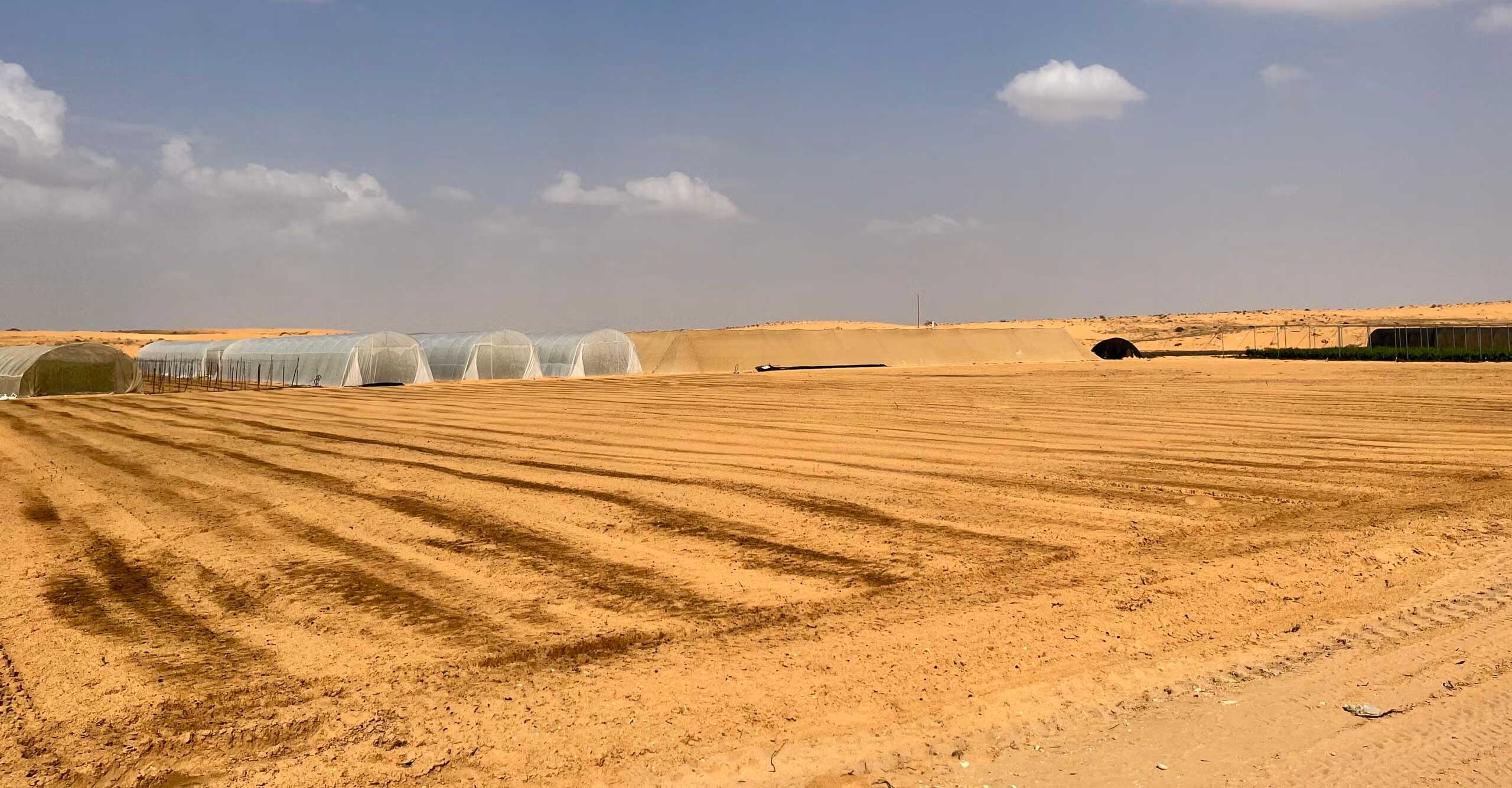
Farm Be’er Milka in the Negev.
Deep in the Negev Desert, not far from Israel’s border with Egypt, lies Be’er Milka, the farm of Sharon Cherry. Cherry was offered a sun-scorched plot of sandy land by the Israeli government ten years ago, after he and his wife decided to move from Tel Aviv. “We had no experience, we had never even grown flowers before,” Cherry explains. “Everybody told us: You are crazy. You are going down. Don’t do it.”
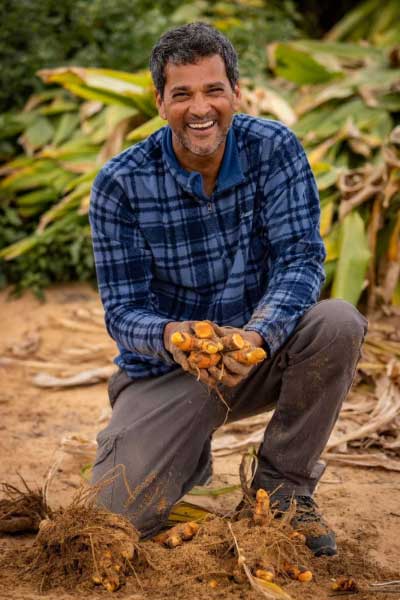
Sharon Cherry holding turmeric grown in his greenhouses.
Cherry was provided with access to electricity, a pipe of brackish desalinated water from the sea, a pipe of fresh water, as well as technical assistance from the nearby Ramat-HaNegev Desert Agro Research Center. Today, he runs the biggest farm in Israel, specializing in vegetables from India, which is the country of his parents’ birth. These include spinach, fresh turmeric, mushrooms, and okra; Cherry says he is the only grower in the world growing okra in greenhouses, where conditions allow the plant to turn from flower to fully grown vegetable in just a few days.
“Where our farm is situated is actually the area of the world best suited to cherry tomatoes, as a result of the hot climate, soil and the salty water from the sea, but this is a very competitive market, and my wife and I did not want to be controlled by fixed market prices,” says Cherry. “Therefore, we brought something new to the Israeli market.”
Cherry uses a combination of low-tech solutions, such as a network of vents, water pipes, and screens that heat and cool his plant nursery, alongside more high-tech, computer-controlled methods. When it is 40°C outside, he can make it 26°C in his greenhouses; when it is 2°C outside at night, it can be 12°C inside.