
Kibbutz fund distributes ‘homecoming kits’ amid return to October 7 communities
Two years after Hamas’s massacre displaced 62,000 southern Israel residents, those returning receive symbolic kits to help restore a sense of home, security, and community.
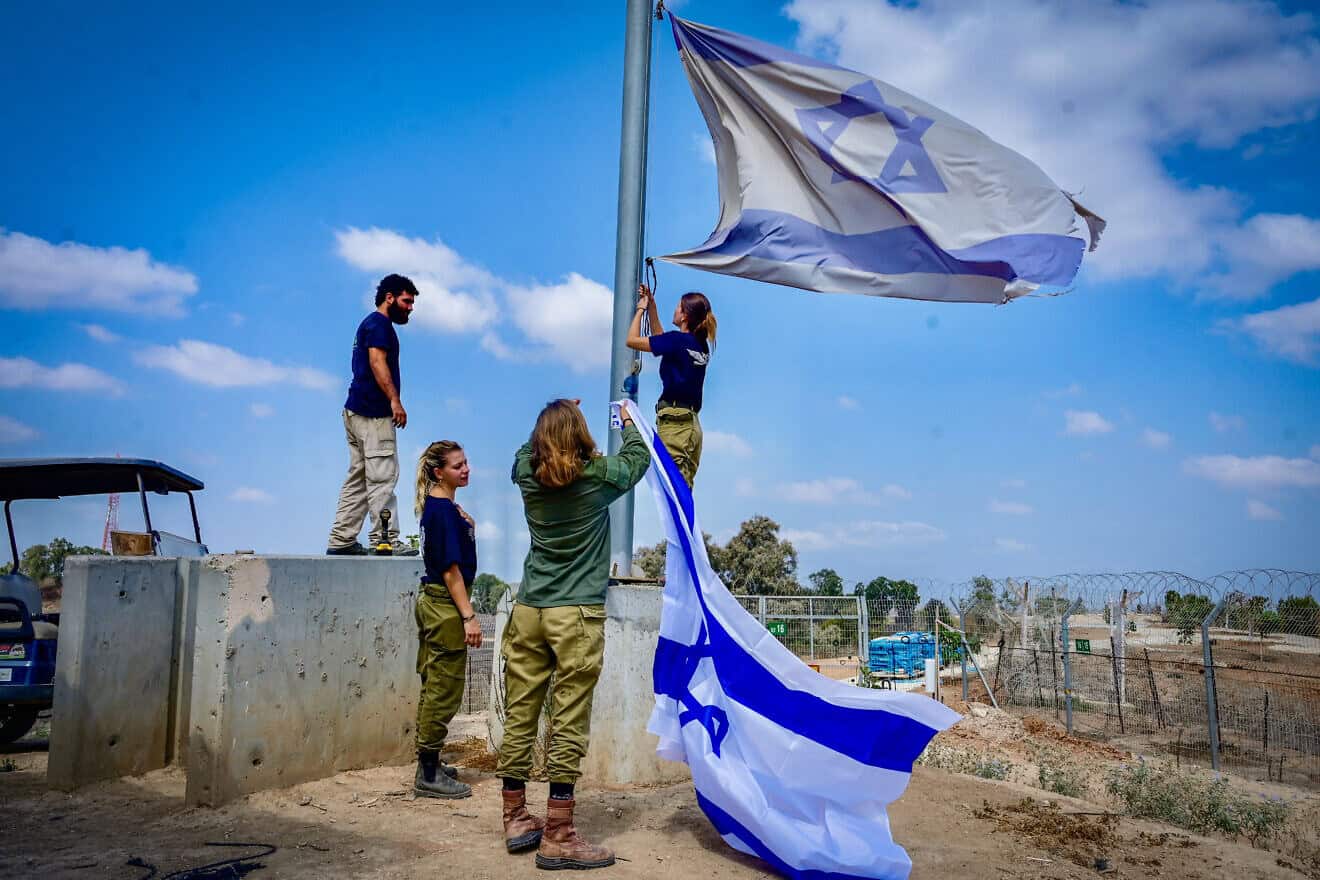
Soldiers hang an Israeli flag in Kibbutz Nir Am, near the Israeli border with the Gaza Strip, on Aug. 12, 2024. Photo by Avshalom Sassoni/Flash90.
As residents of southern Israel prepare to return to Western Negev kibbutzim devastated by Hamas on Oct. 7, 2023, the Kibbutz Movement Rehabilitation Fund, supported by Bituach Haklai (“Agricultural Insurance”), is distributing what they are calling homecoming kits.
Nearly two years ago, Hamas and Palestinian terrorists infiltrated Israel by air, land and sea, killing more than 1,200 and taking 251 hostages. In the aftermath, more than 62,000 civilians were displaced from towns near the Gaza Strip. Today, many of them have begun returning home.
For families resettling once-flourishing communities, the challenge is not only rebuilding destroyed homes and infrastructure but also restoring a sense of safety, security, and belonging.
“Our primary mission is the rehabilitation of Israel’s kibbutzim and kibbutz communities in the north and south. We are engaged not only in physical construction but also in reviving the spirit,” said NeriShotan, CEO of the Kibbutz Movement Rehabilitation Fund. “Just as we support initiatives in infrastructure, education, employment, and other projects, we see supreme importance in investing in the emotional rehabilitation of these communities, which are the beating heart of the kibbutzim. We are here for them, long term, to ensure every family returns not only to a house but to a home—one that offers belonging, security, and hope,” he added. The kits include seeds for planting, symbolizing hope and renewal; calming herbal tea; a purification kit; and cards encouraging families to hold a homecoming ceremony.
“The kit was born out of genuine listening to representatives of the kibbutzim in the Gaza Envelope,” said Ayelet Haris, head of the Kibbutz Movement’s Society and Community Division. “In our meetings, people spoke about the longing for home, the struggle to reconnect with the outside world, and the desire for community—a neighbor you can once again ask for a cup of milk.” “The kit is our way of telling families, ‘We are with you,’ and providing a layer of support during the moving and difficult moment of returning home,” she added.
Our dedication to Negev communities and families defines us, and the need for support is clear and urgent. Our partners’ support has led to incredible accomplishments.
Current projects in the region include:
The Ramat HaNegev Quality of Life Fund. The goal of this fund is to ensure that communities in the Negev have access to the financial resources they need to enhance economic growth and quality of life initiatives, and will assist new and existing communities with the creation and maintenance of projects for education, recreation, and social and cultural enhancement.
Wellness Projects in Merhavim. Many residents of the Merhavim Regional Council suffer directly from the events of October 7th. To address these challenges, the council has worked hard to mobilize resources to establish a Resilience Center. In addition to the services provided at the Resilience Center, the council has identified additional needs for the project, such as a Health Center, a Clubhouse for Senior Residents, and providing equipment for Youth Centers in the area.
Sha’ar Hanegev Programs for Youth. The Negev Foundation seeks partners to support youth programs in the Sha’ar HaNegev region as residents work to rebuild their lives and communities. Approximately 60% of Western Negev residents are experiencing moderate to high symptoms of stress, and nearly 50% are showing signs of post-traumatic stress. Ranging from art and science to sports, the program aims to support the youth of the region who experienced trauma from the events of October 7.