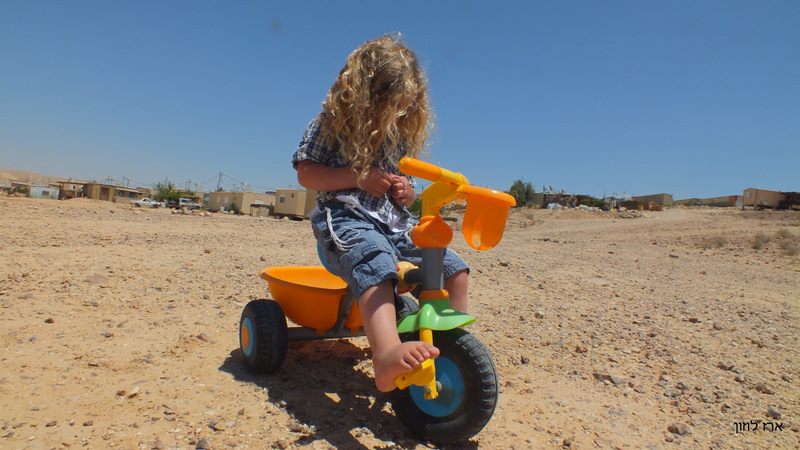

Merchav Am (literally National Expanse) is a small kibbutz located on a hillside facing the Halukim ridge between the southern city of Yeruchum and kibbutz of Sde Boker in the Ramat Ha Negev region of the Negev. Founded in 2001 by the Or Movement, Merchav Am is the first orthodox community established in the region. Made up of about 50 families, and still growing, Merchav Am serves as a model of a developing settlement rich in community culture. The village also holds Torah lessons for men and women, cultural activities on festivals and other special events, lectures on matters of common interest, Sabbath meals together and more. The children enjoy high-quality orthodox education, including pre-school day care, a kindergarten up to school age. An orthodox elementary school, a high school Yeshiva for boys and a separate “Ulpana” for girls are only some of the educational options offered. Informal education for children and young adults is also afforded proper attention in addition to activities in the local branch of the B’nai Akiva youth movement.
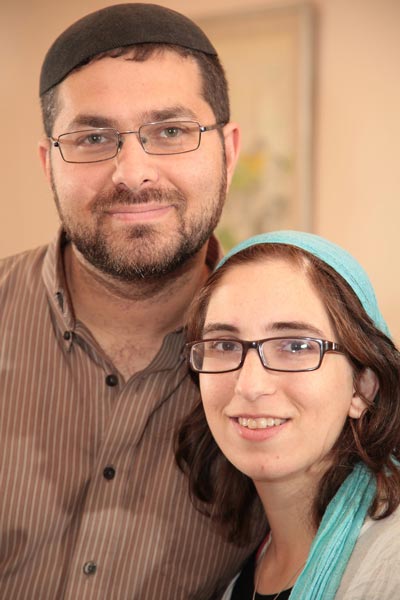
The Speiser Family
The Speiser Family moved to Merchav Am in 2013 after making aliya from New Jersey to a community on the outskirts of Jerusalem in 2009. At the time, Merchav Am was made up of 40 families, about two-thirds of them living in temporary housing. Allison Speiser, her husband and three children moved into a 645 square foot caravan where they lived for the next three years and through the arrival of two more children.
The Speisers now live in one of the newly built homes of Merchav Am. Their children go to school in the village and Allison works for the Ben Gurion Heritage Institute, running seminars and workshops as well as guiding tours for tourists and Israelis alike. Each member of the family actively contributes to the sustainability and growth of the community, whether it is Allison and her husband helping to plan and execute programs for men and women’s torah learning and the holidays for the surrounding villages or their children who have become leaders in the local youth movements. Indeed, what the Speiser family has shown is a reflection of the deep love and commitment to the Negev shown by all of Merchav Am.
Q: What is something most people do not know about the Negev?
A: Most people don’t realize that people live in the Negev! For decades the negev has been a pit stop on the way to Eilat…or if you were living here it was a place you wanted to leave. Over the past 10-15 years people have been looking at the negev as a place they could make their home.
Q: Why did you and your husband choose to move to Merchav Am?
A: We moved to Israel in 2009 but we felt that we weren’t really doing anything to contribute to the land of Israel. We felt like Israel really needed people to go to the south where it was the greatest challenge to bring people. The negev, and Merchav Am, was a place that needed us as much as we were looking for the right placed for us. Merchav Am was a small, wonderfully diverse community with people from all over the world. Everyone was there because they wanted to be there. Merchav Am is a community of people who deliberately chose to be there together.
Q: What is the role of Merchav Am in the Negev? What is your role?
A: There have not been any new communities started in the Negev for around 15 years. In rapidly growing country like Israel this is a strange occurrence. Merchav Am came into being around the turning point when people started coming back to the Negev. That fact that Merchav Am is growing and thriving proves that we can come to the Negev, essentially empty land, a build a growing, thriving community.
Since its inception Merchav Am has been working to increase the interconnectedness of communities in the Negev. Being an open minded religious community in a historically secular area, much of this work lies in creating opportunities for the communities in the area to come together and celebrate, especially around the holidays. More than anything though, the Jewish people need to be here in the Negev. The role of Merchav Am is to be here and to establish roots and community so that it is easier for other people to come.
My role is just telling our story and educating both inside and outside of Israel. This is a huge part in the story of Israel. This is neo zionism. This is the pioneering of today. Merchav am is a great story but I would not yet call it a success story because we are still on the path. A new community has been created but we need to be able to sustain ourselves. This is the same story of many places in the negev. We need more stories where new resources come in but old resources are sustained; new programming comes in but old programming is sustained alongside.
Q: What is your favorite part of the Negev?
A: The Negev is serene. It is quiet, missing the tension and stress of larger cities; The whole area runs on “desert time”. I never pictured myself in the Negev. It was never even a thought that crossed my mind. Then we ended up here and I was hooked. It was not love at first sight; your love at first sight relationship is not always your strongest relationship. The relationship that you have to work at is more meaningful and that is how I look at my relationship with the desert. For me, living here is about building that relationship. There is incredible beauty here, amazing hiking and tons of history. Living here, or even being a tourist here, can be challenging but that is where a lot of the fun is.
Q: Where does the future of the Negev lie?
A: The future of the Negev lies in the power of the creativity of the people who live here. Life is more challenging, everything is just a little more complicated, takes a little more planning, which leads to incredible creativity. You can see incredible creativity emerge in all fields: out of the box thinking in education, beautiful desert architecture, research in desert and agricultural studies, and the military and its approach to training.
Slowly but surely more and more people are moving to the Negev. There is a significant move in the military and tech industry to come down to the negev, as well as people who move to the Negev for its unique diversity and high quality of life.
The future of Israel is in the Negev. If we are going to be able to sustain what we have all worked so hard to build of Israel as a country we need to work on the next chapter and the Negev is the next chapter.